IP68 Submersible Dewatering Pump for Mine & Site Duty
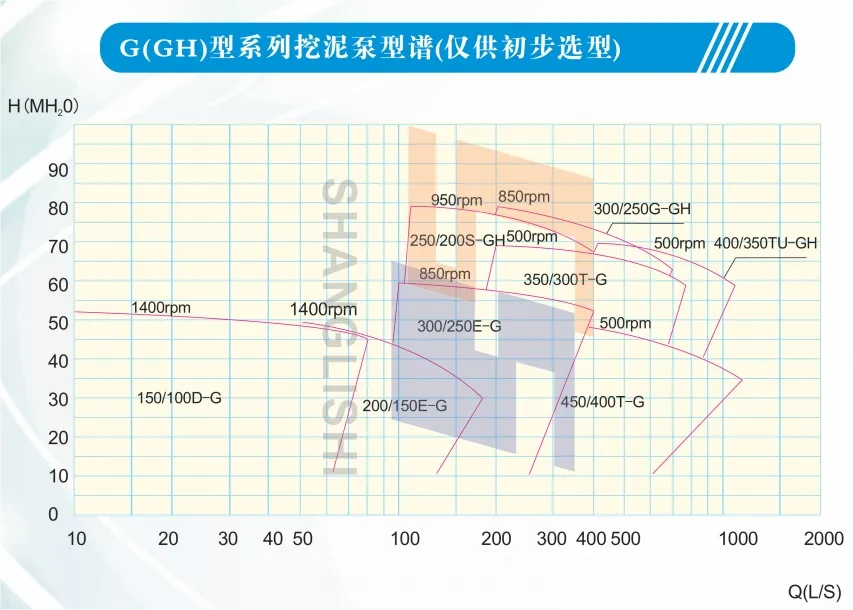
The SZBQ submersible dewatering pump handles 10–6000 m³/h against 8–60 m of head, in calibres of 80–500 mm with Ø150–600 mm impellers, driven by a 3–450 kW motor. The IP68 4-pole IE3 motor runs on 380 V / 3-ph / 50 Hz (customisable 380–600 V, 50–60 Hz) with Class-F insulation. Duty limits: medium ≤70 °C (typically ≤60 °C), particle ≤50 mm, solids up to 60%, submergence ≤20 m, pH 6–8 (4–10 industrial), SG ≤1.3.
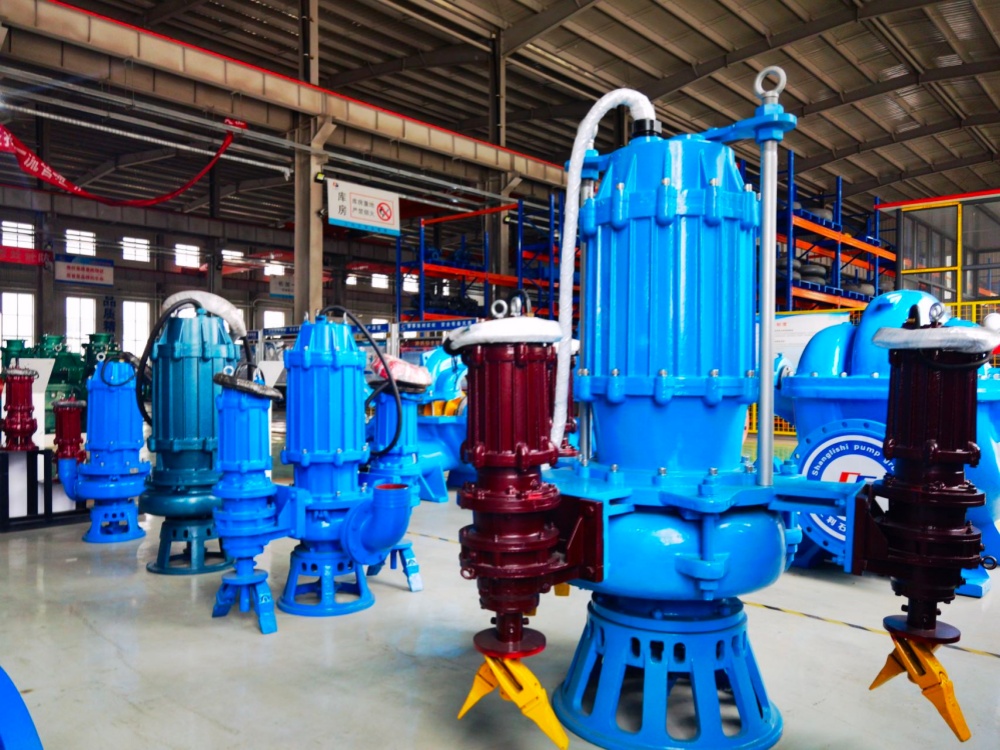
Submersible dewatering duty — removing water that carries whatever the site has put into it, from a pit where a surface pump would lose suction. Priming and suction lift cease to be constraints.
- Fixed installation on quick-fit guide rails — lift the pump without draining the sump
- Mobile installation with no fixed civil work
- Four automatic control configurations including alternating duty and overflow alarm
- Cooling depends on stator casing submergence — specify run-dry sensing where level falls
- Seals renewed at 4,000 h; bearings relubricated at 2,000 h with NLGI #3
- Vibration above 7.1 mm/s indicates impeller imbalance
CE · EAC · ISO 9001 · ISO 14001 · ISO 45001
Overview
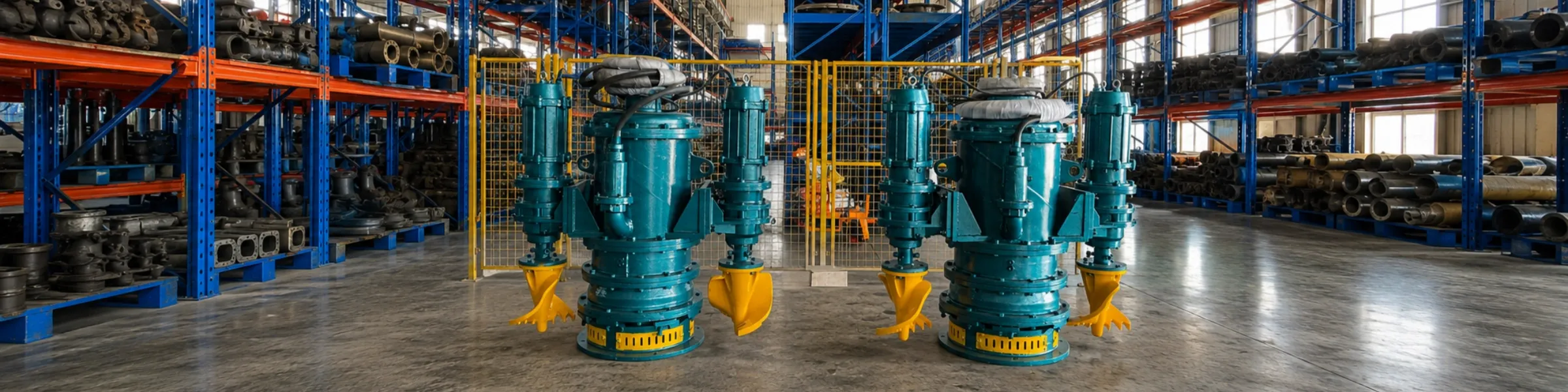
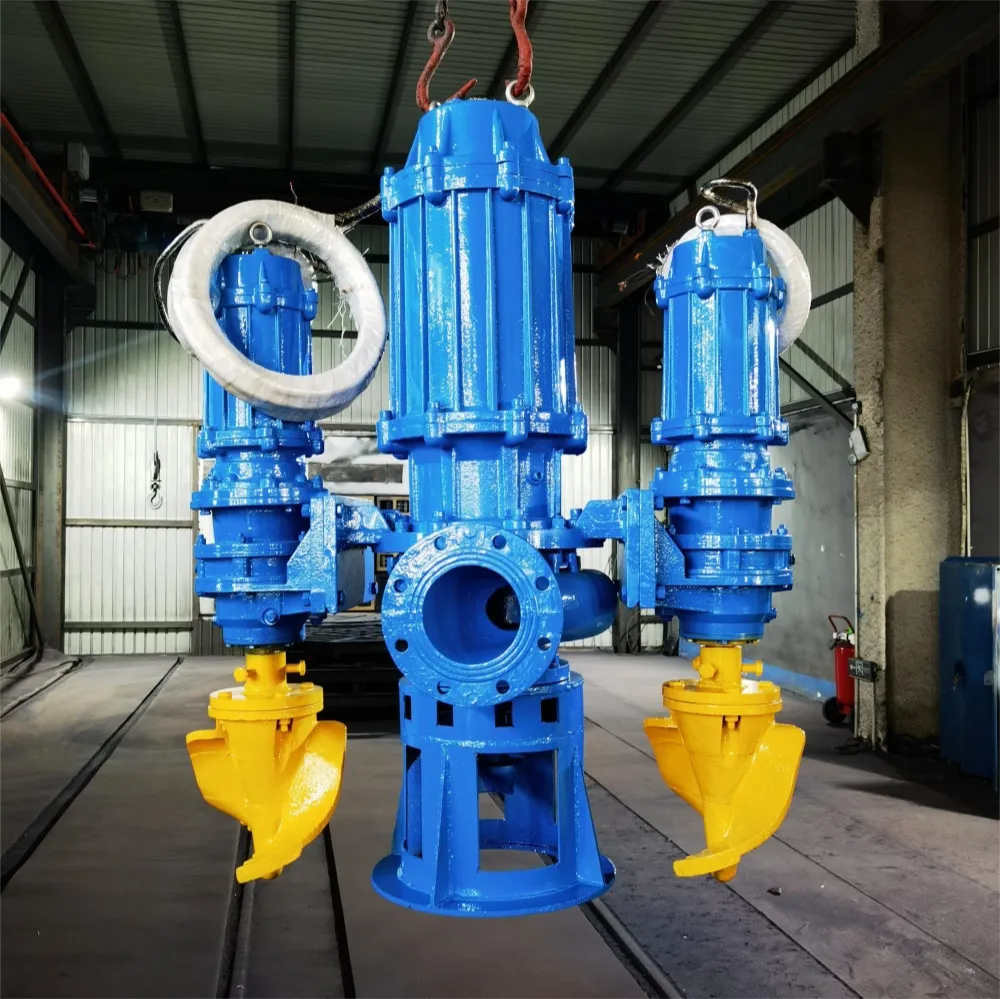
Submersible dewatering duty means removing water that carries whatever the site has put into it — sand, sediment, ash, rock fines — usually from a pit or sump where a surface pump would lose suction. The SZBQ submersible slurry pump is lowered into the liquid and runs immersed, so priming and suction lift cease to be constraints and no pump house or fixed foundation is needed.
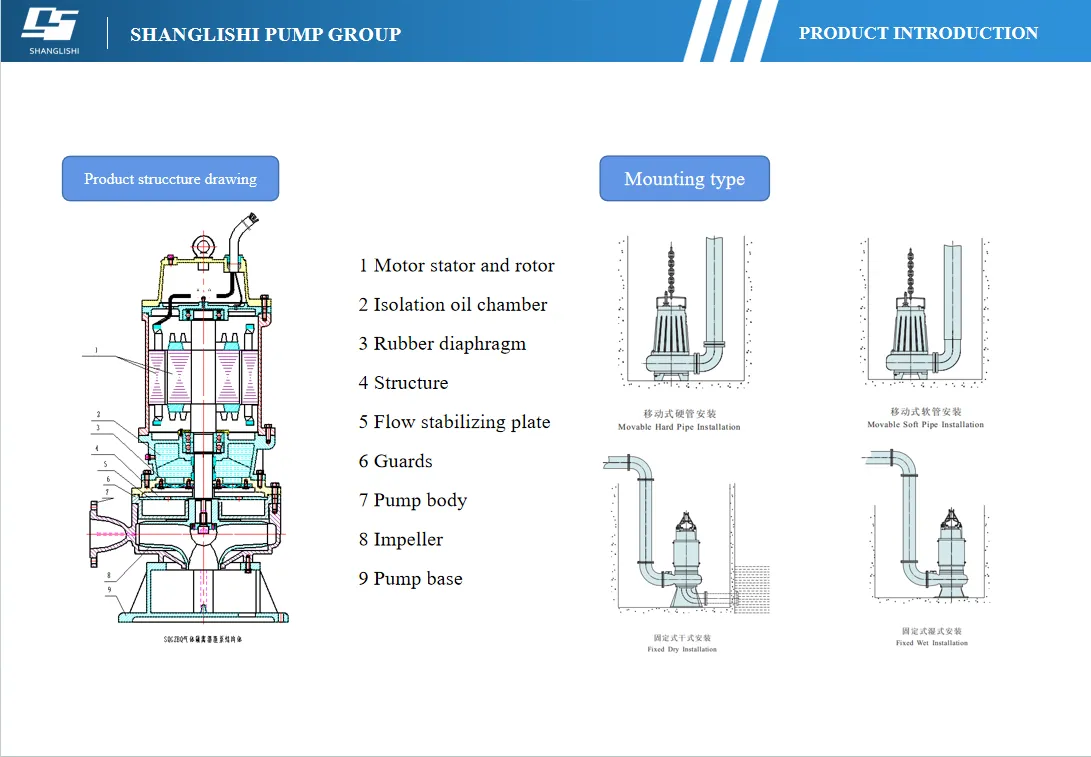
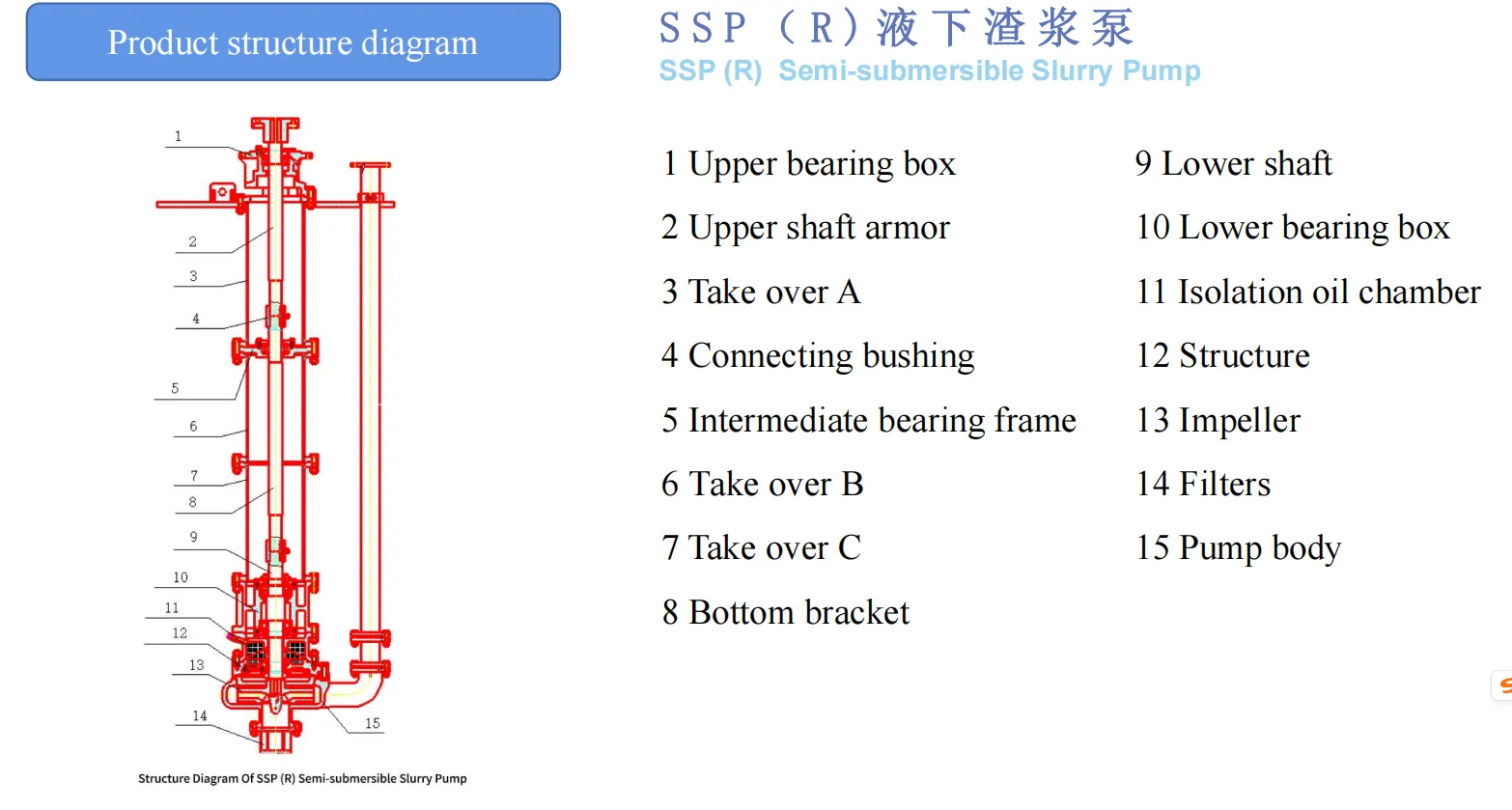
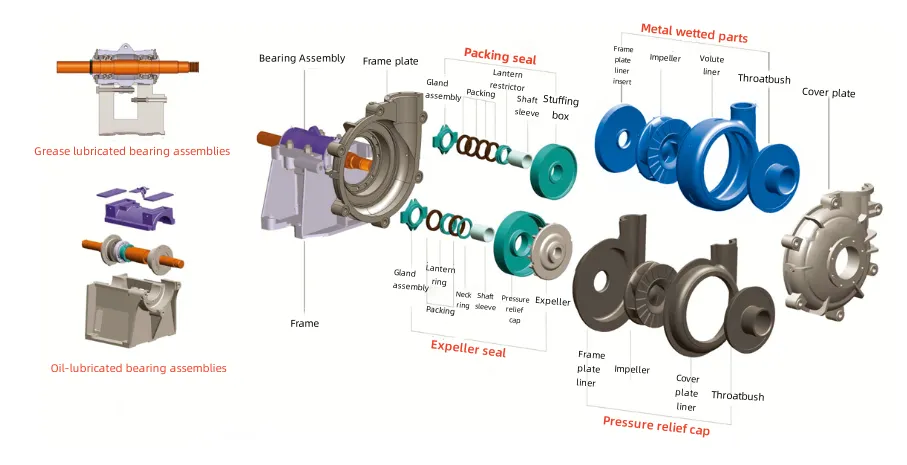
Component callouts — submersible slurry pump structure
- Motor stator and rotor
- Isolation oil chamber
- Rubber diaphragm
- Structure
- Flow stabilizing plate
- Guards
- Pump body
- Impeller
- Pump base
Working conditions
| Inlet / outlet diameter | 65–400 mm (flange dimensions to GB/1724.16-2022) |
|---|---|
| Flow range | 30–2000 m³/h |
| Head range | 6–260 m |
| Speed | 720, 990, 1480 and 2960 r/min |
| Motor power | 3–315 kW |
| Temperature range | Maximum liquid temperature ≤ 40 °C |
| Maximum working pressure | Inlet pressure + pumping pressure: 1.0 MPa(G) for Hsp ≤ 75 m, or 1.6 MPa(G) for Hsp > 75 m. Special configuration to 1.6 MPa(G) or 2.5 MPa(G) |
| Medium | Liquids carrying solid particles such as sand, cinder and tailings. Maximum particle diameter 7–60 mm depending on model |
| Structural design | Single-stage single-suction centrifugal pump, vertical mounting |
Model designation
Example: 100-SZ(B)Q 40-30-7.5
| 100 | Outlet diameter in millimetres |
|---|---|
| SZ(B)Q | Submersible slurry pump |
| SZ | Structure |
| (B) | Automatic protection device |
| 40 | Pump design point flow rate, m³/h |
| 30 | Pump design point head, m |
| 7.5 | Motor power, kW |
Installation Arrangements
- Fixed installation — quick-fit guide-rail components are anchored to the foundation. When service is due the pump is lifted along the rail by chain; on lowering it re-connects automatically to the quick-fit discharge elbow. The sump does not have to be drained to remove the pump.
- Mobile installation — the pump is moved between sumps as required, with no fixed civil work.
Automatic Control
Four control configurations are available and are selected against the duty: standard water supply and drainage; supply and drainage with overflow alarm; continuous automatic alternating drainage; and continuous automatic alternating drainage with overflow alarm. The alternating configurations suit duty and standby sets that must share running hours, and the overflow alarm configurations suit sumps where a rising level must raise an alarm rather than simply flood.
Motor Cooling in Dewatering Service
Motor heat is rejected through the stator casing into the surrounding liquid. Reliable operation requires only that the stator casing remains submerged; cooling improves as submergence increases. In falling-level dewatering, minimum immersion must therefore be maintained — specify run-dry sensing where the level can drop below the motor.
Maintenance Schedule
- Check running current against rated current on each inspection; a persistent deviation indicates a developing overload.
- Confirm cooling flow past the motor casing and that minimum immersion is maintained.
- Renew mechanical seals at 4,000 hours; set impeller clearance to 0.5–1 mm.
- Relubricate bearings with NLGI #3 grease at 2,000-hour intervals.
- Take an oil sample at 2,000-hour intervals to detect seal or bearing wear.
- Flush with clean water for 20 minutes after operation to clear abrasive residue.
- For long shutdown, store drained with anti-corrosion treatment applied.
Condition Indicators
- Vibration rising above 7.1 mm/s indicates impeller imbalance — rebalance or replace the impeller.
- A falling duty point at unchanged speed indicates wear-ring and clearance loss — renew the wear parts.
- Avoid dry running; it is the most common cause of submersible motor failure.
Typical Applications
- Mine and quarry sump dewatering with sand and rock fines in suspension.
- Construction excavation and tunnelling dewatering.
- Municipal drainage sumps and stormwater pits carrying sediment.
- Power plant ash pit and settling pond drainage.
- Dredging support and river desilting.
Selection
Provide the flow and head required, the medium and its particle size and solids concentration, the sump geometry and minimum liquid level, and the available voltage and frequency. We will confirm the model, installation arrangement and control configuration with the quotation.
More Pictures
Send Your Enquiry
| Series | SZQ / SZBQ intelligent submersible slurry pump |
|---|---|
| Discharge size | 80–500 mm |
| Wet-end material | High-chrome alloy (A05) |
| Power supply | 380 V three-phase 50 Hz standard; 380–600 V and 50/60 Hz available to order |
| Medium temperature | Standard duty up to 60 °C; higher temperatures require prior specification |
| Medium pH | 4–10 subject to material selection |
| Medium density | Up to 1300 kg/m³ |
| Solids concentration | Mortar to 45 % by weight; pulp to 60 % by weight |
| Maximum solid size | Not more than 80 % of the smallest flow-passage dimension of the selected pump |
| Submergence | Designed for operation to 20 m |
| Motor enclosure | IP68 submersible motor, class F insulation |
| Shaft sealing | Two independent mechanical seals in series, tungsten carbide faces, oil-chamber barrier |
Can the pump be removed without draining the sump?
Yes, where quick-fit guide rails are fitted. The pump is lifted along the rail by chain and re-connects automatically to the discharge elbow when lowered.
What happens if the liquid level falls below the motor?
Cooling depends on the stator casing remaining submerged, so dry running must be avoided. Maintain minimum immersion and specify run-dry sensing where the level can fall.
How often do the mechanical seals need renewing?
Renew at 4,000 hours as a scheduled item, with impeller clearance reset to 0.5–1 mm at the same time. Oil sampling at 2,000-hour intervals gives earlier warning of seal or bearing wear.
Can two pumps share duty automatically?
Yes. Continuous automatic alternating drainage control is available, with or without an overflow alarm system.
Manufacturer-direct supply · Technical pump-selection support · Export documentation on request.