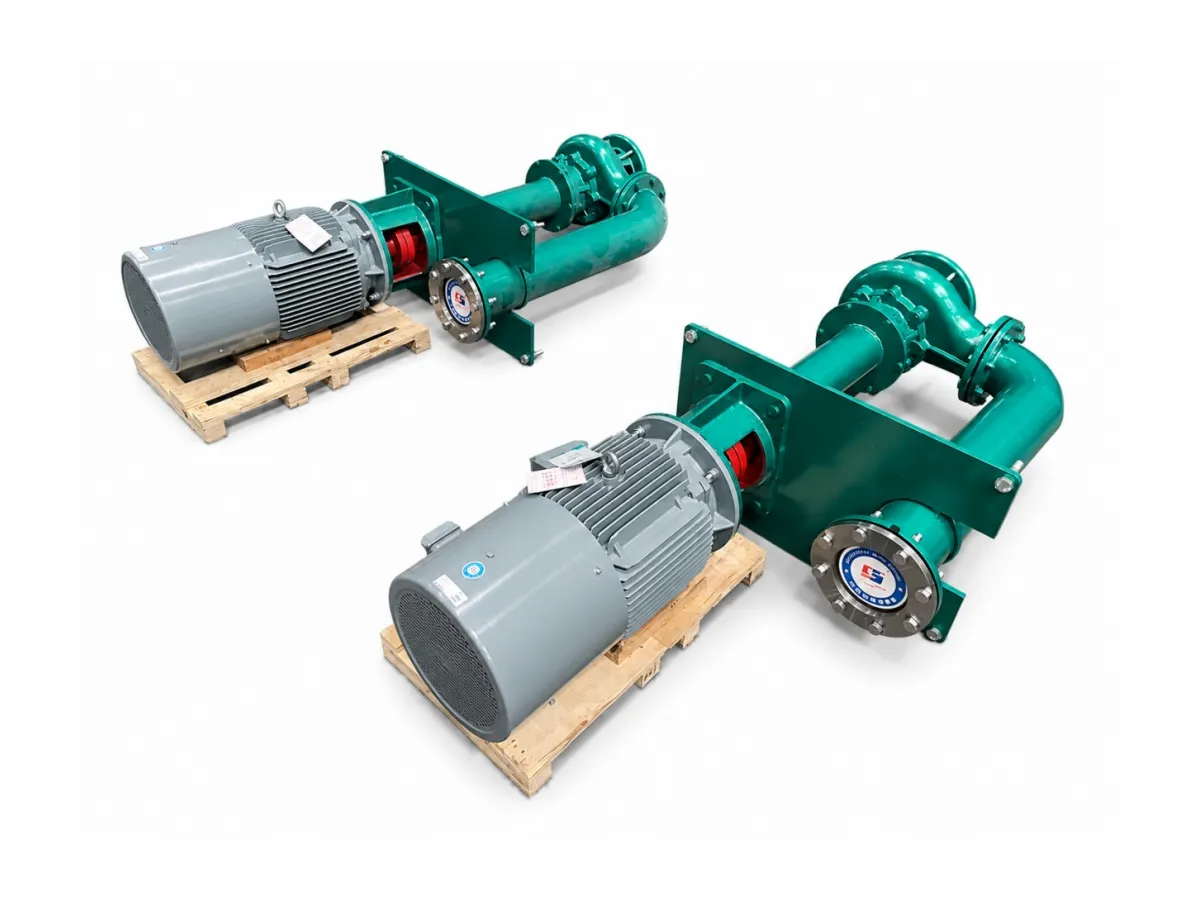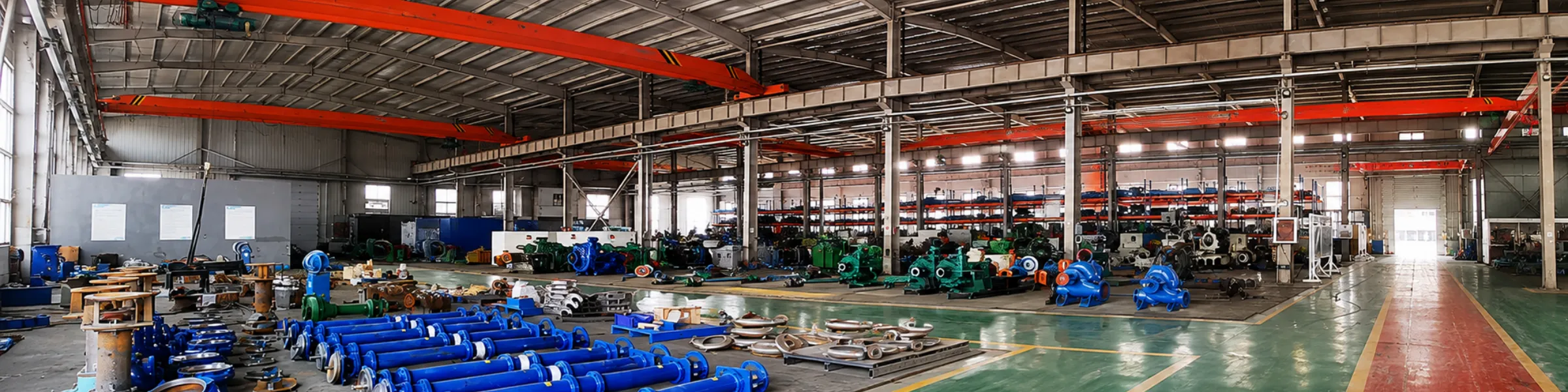
Rubber-Lined Vertical Slurry Pump — SSP(R) Series
SSP(R) rubber-lined vertical (sump) pump for corrosive/abrasive sump duty, running without shaft seal or seal water.
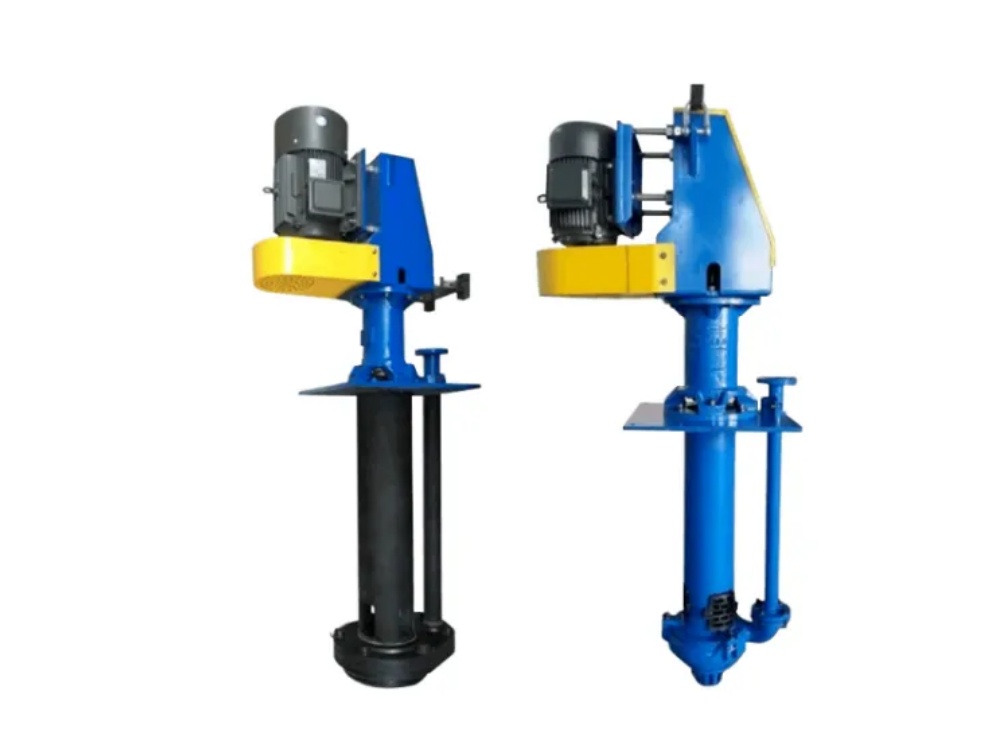
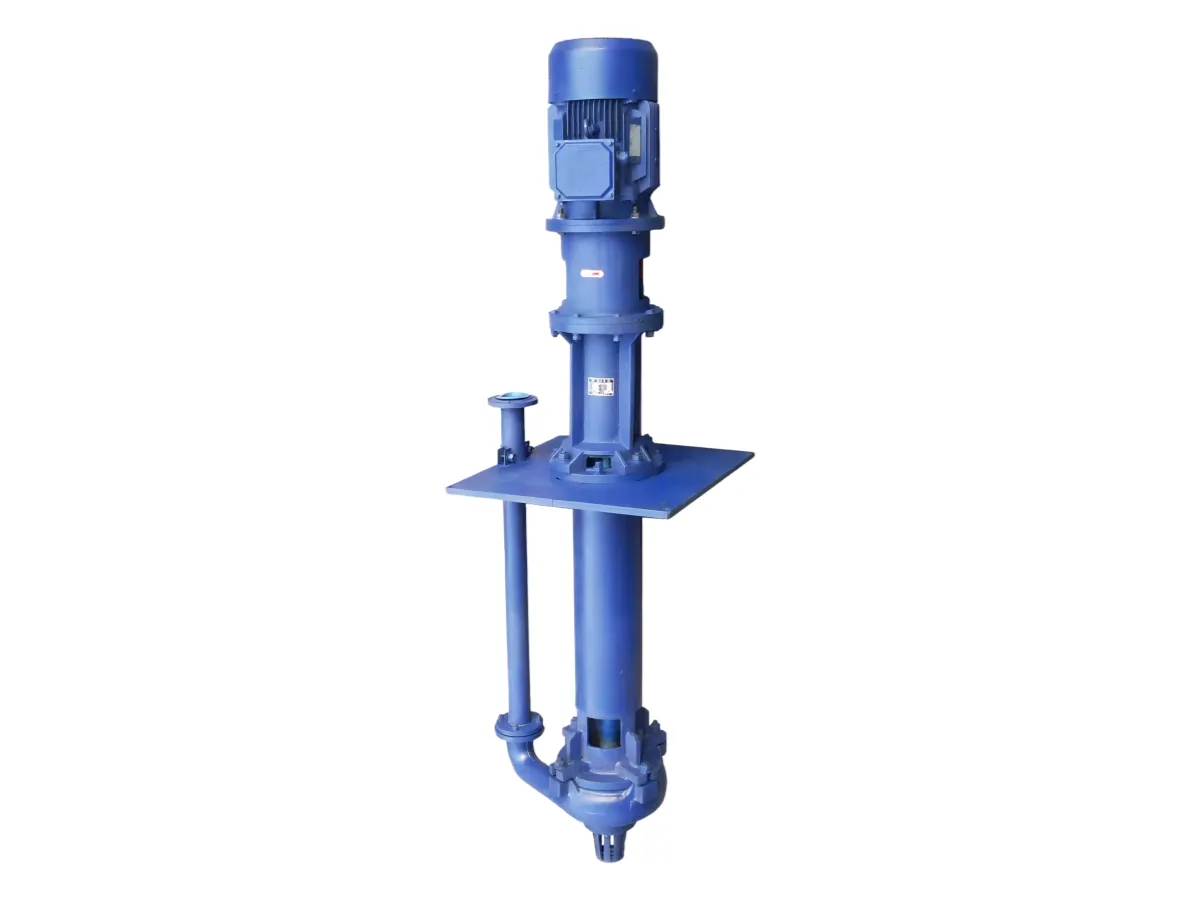
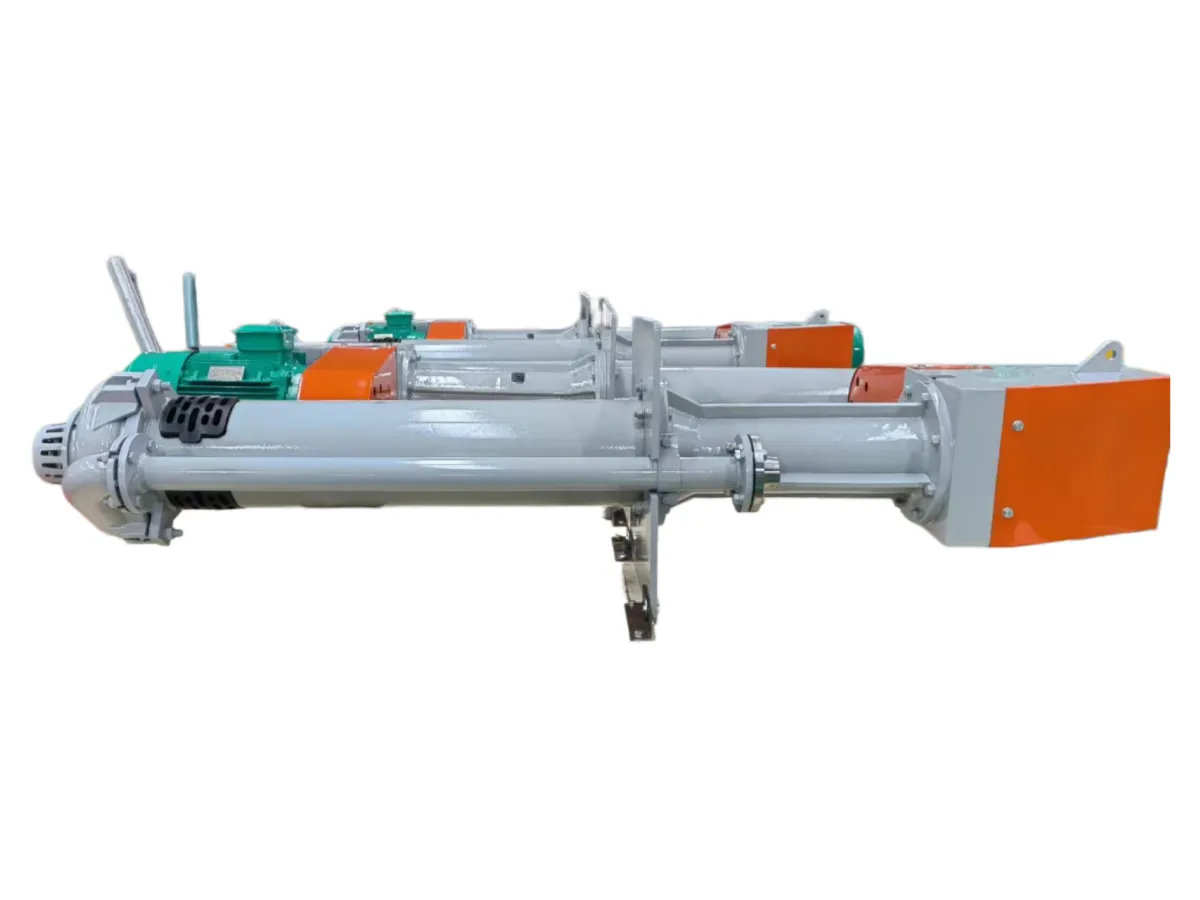
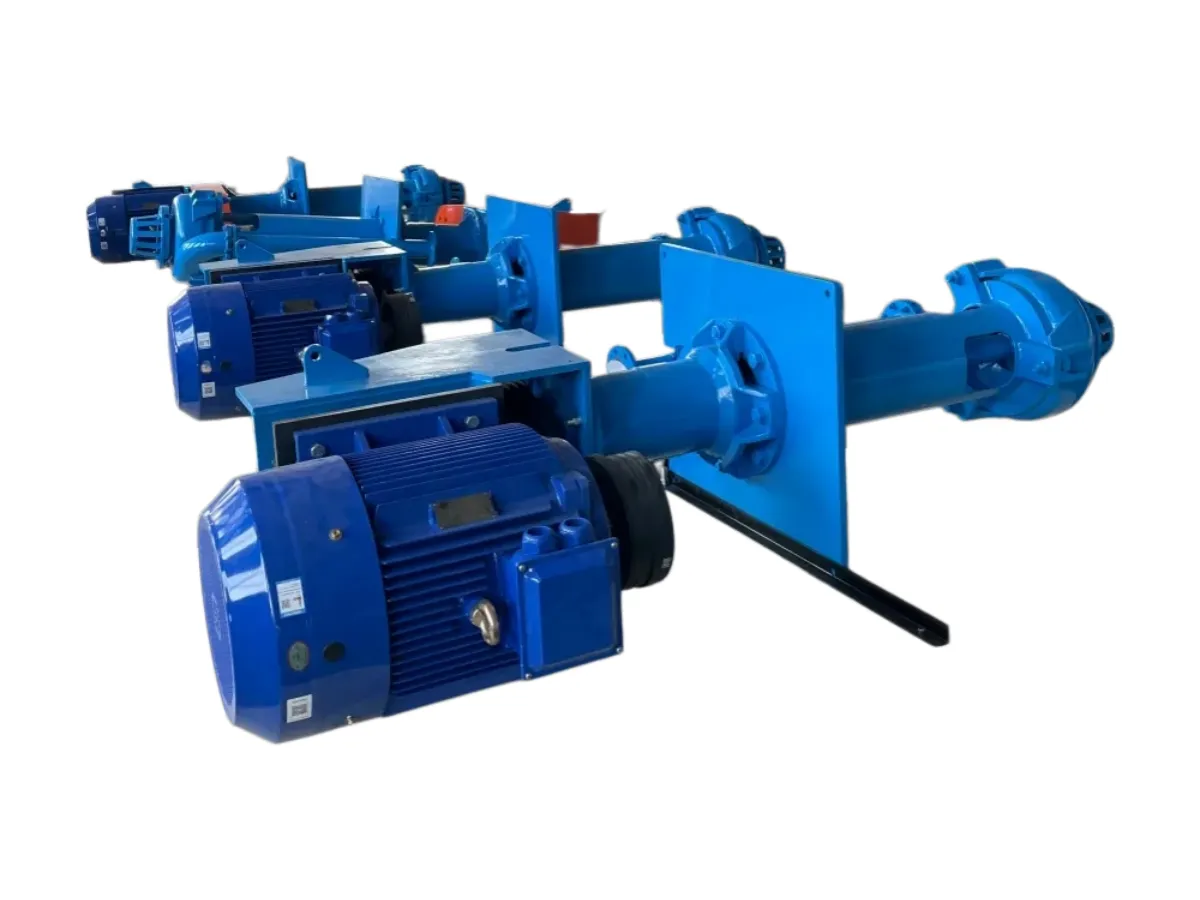
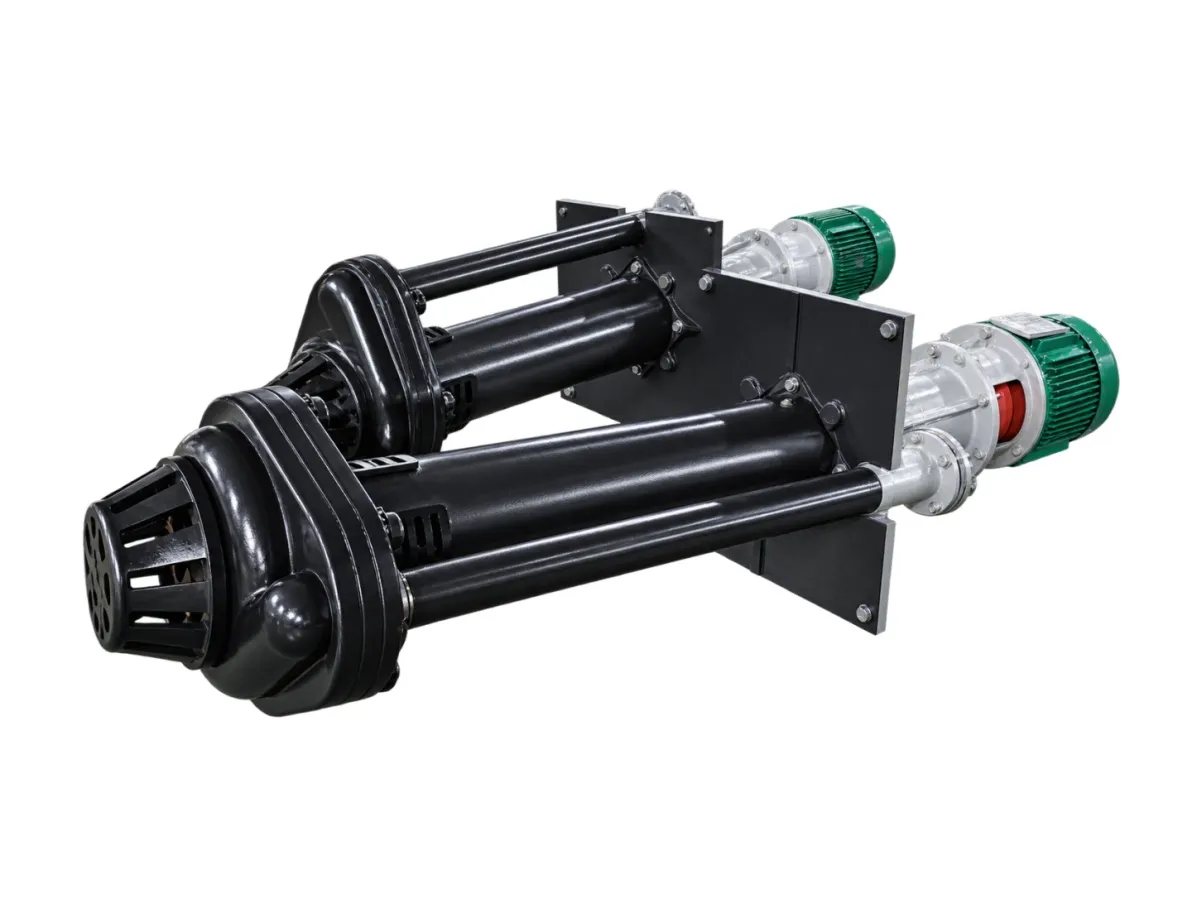
SSPR rubber-lined vertical sump pump — the rubber build of our vertical range, for abrasive sump slurry that does not contain sharp angular particles.
- Rubber lining on all submerged parts, wear and corrosion resistant
- Semi-open impeller with mixing blade at the intake
- No shaft seal and no gland water in the standard build
- Same installation envelope as the metal SSP build
- Extended-shaft builds add a guide bearing requiring flushing water
- For spillage and floor-drainage sumps metal is often the safer default
CE · EAC · ISO 9001 · ISO 14001 · ISO 45001
Overview
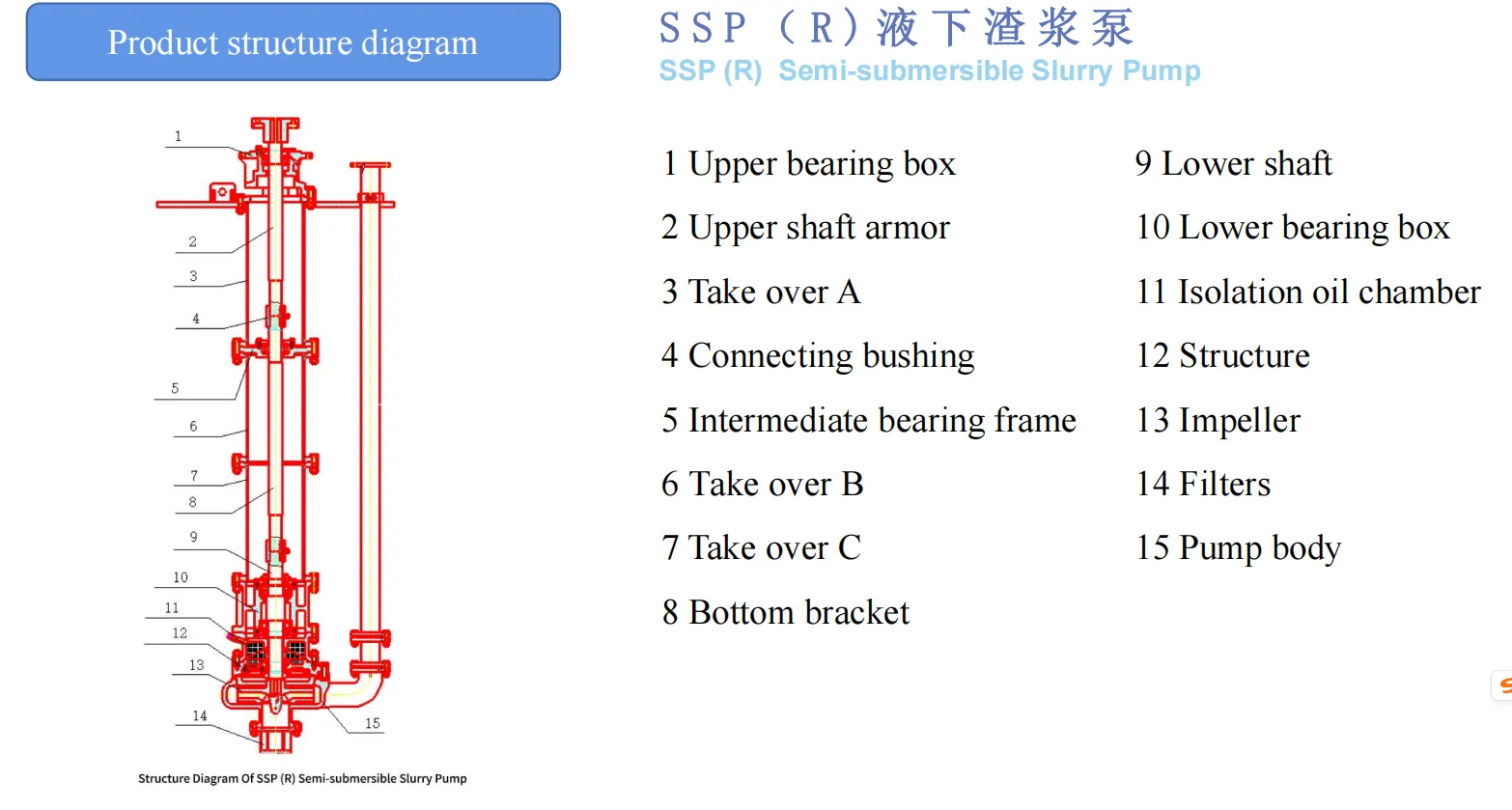
The SSPR is the rubber-lined build of our vertical sump pump range. The pump hangs into the pit from a mounting plate, with only the wet end and column submerged, and the submerged parts carry rubber lining. It suits abrasive slurry in sump duty that does not contain sharp angular particles.
Working conditions
| Inlet and outlet diameter | 40–300 mm |
|---|---|
| Flow range | 17–1200 m³/h |
| Head range | 4–40 m |
| Speed | 720, 990, 1480 and 2960 r/min |
| Power | 15–200 kW |
| Main models | 40 · 65 · 100 · 150 · 200 · 250 · 300 |
| Application areas | Steel, metallurgy, petroleum, chemical industry, electric power, environmental protection, municipal administration, construction and other industries |
| Medium | Abrasive or corrosive slurries |
| Wet-end material | High-chrome alloy or rubber |
Model designation
Example: 200SV(L)-SSPR
| 200 | Outlet diameter in millimetres |
|---|---|
| SV | Frame type |
| (L) | Extended-length build (omitted on standard-length pumps) |
| SSP | Semi-submersible slurry pump, all-metal build |
| R | Rubber-lined build (omitted on all-metal builds) |
Rubber in a Vertical Sump Application
Sump duty differs from horizontal transfer duty in two ways that affect the lining choice. First, the pump handles whatever reaches the pit floor, so the particle size distribution is less controlled than in a process line. Second, the pump runs intermittently as the level rises and falls, which means solids settle and are re-suspended repeatedly rather than passing once. Elastomer suits the second condition well — repeated fine-particle impingement is exactly the service it is designed for — but the first condition is the reason to confirm what actually enters the pit before specifying rubber.
Construction
- Rubber lining on submerged parts — wear and corrosion resistant.
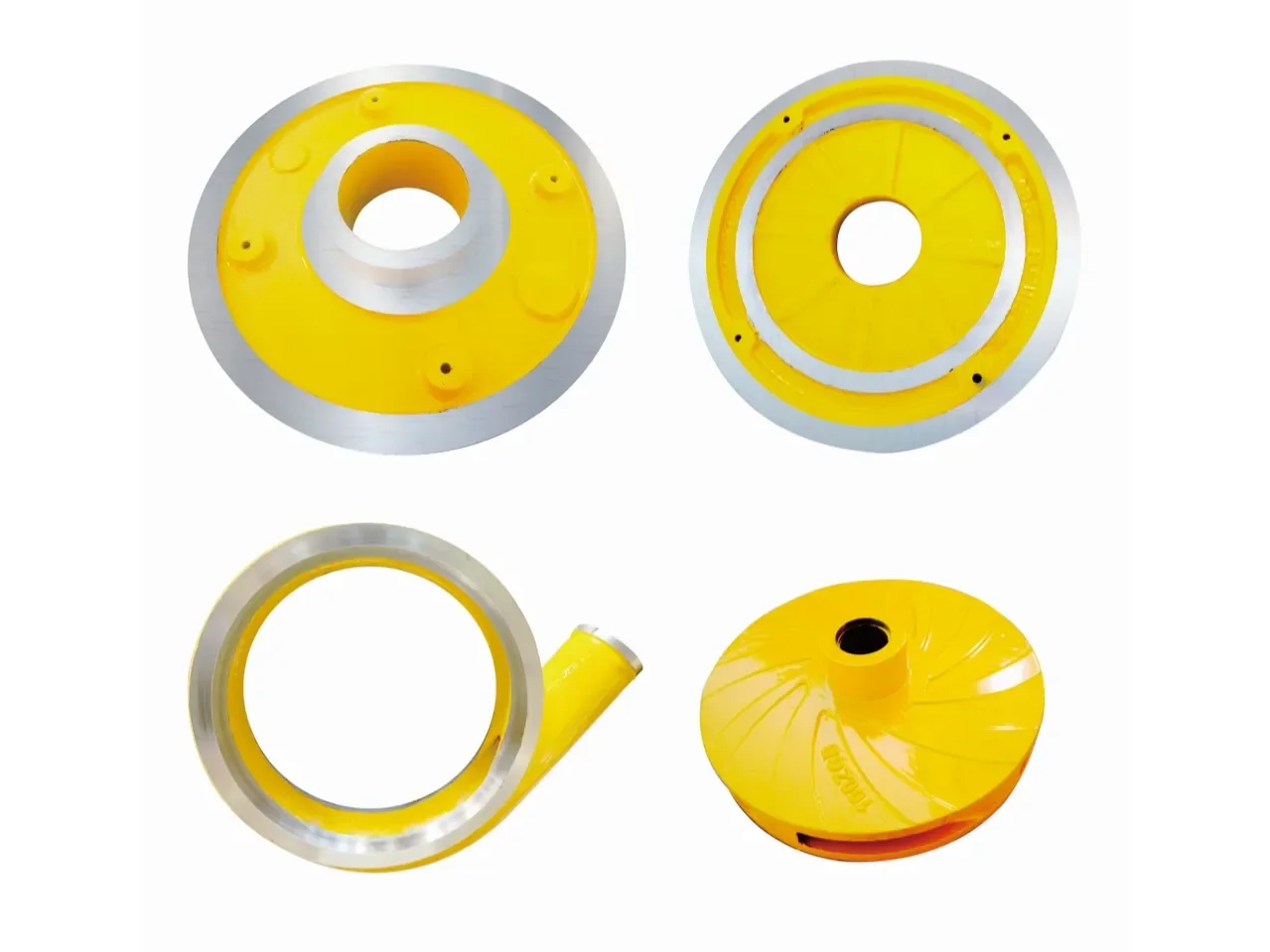
- Semi-open impeller with a mixing blade on the suction-side extension, keeping solids in suspension at the intake instead of letting them consolidate on the pit floor.
- No shaft seal and no shaft seal water — the impeller runs below liquid level, so there is nothing to seal against pressure. For a retrofit this removes the gland water supply, its pipework and its consumption.
- Operates with inadequate suction — the usual reason for choosing a vertical sump pump over a pump mounted outside the pit.
Same Envelope as the Metal Build
SSP metal and SSPR rubber builds share the installation envelope. Where dimensions differ, both values are published in the dimension table on the sump pump pages, so fit against an existing pit can be checked for either build. Sizes run from 40 mm to 300 mm outlet across frame types PV, QV, RV, SV and TV.
Extended-Shaft Builds
Models carrying the (L) suffix are extended-shaft builds for deeper liquid, adding a guide bearing that steadies the shaft over the longer span. The guide bearing area requires flushing water — the one water supply an extended build does need, and it must be allowed for at the design stage even though the standard build needs none.
Selecting Rubber or Metal for a Sump
- Rubber (SSPR) — fine, rounded, high-concentration solids; corrosive liquor; noise-sensitive locations.
- Metal (SSP) — coarse or angular solids, tramp material, or where what reaches the pit floor cannot be controlled.
In spillage and floor-drainage sumps, tramp material is common and metal is often the safer default even where the process slurry itself is fine.
Selection
Send the plate-to-liquid-level and plate-to-floor dimensions, the flow and head required, what reaches the pit and its particle size and concentration, and the medium pH. We will confirm size, frame type, column length and wet-end build.
Send Your Enquiry
| Model designation | Example 40PV(L)-SSPR: 40 → outlet diameter in mm, PV → frame type, L → extended-shaft build, SSPR → rubber-lined (SSP = wear-resistant metal) |
|---|---|
| Frame sizes | 40PV, 65QV, 100RV, 150SV, 200SV, 250TV and 300TV |
| Outlet diameter | 40, 65, 100, 150, 200, 250 and 300 mm |
| Extended length L | 0, 300, 600, 900 and 1200 mm. L = 0 is the standard pump |
| Wetted parts | Rubber lining on all submerged parts (SSPR). The SSP build is wear-resistant metal |
| Impeller | Semi-open, with mixing blade at the intake |
| Shaft sealing | None — the pump runs submerged, so no shaft seal and no gland water are needed |
| Extended-shaft builds | These builds add a guide bearing for deeper liquid levels; flushing water is required at the guide bearing |
| Medium | Abrasive, coarse-grained, high-concentration slurry. The rubber build suits slurry without sharp angular particles |
| Suction condition | Can run under inadequate suction conditions |
Does the rubber build need seal water?
The standard build needs none, as there is no shaft seal. Extended-shaft builds add a guide bearing that does require flushing water.
Rubber or metal for a spillage sump?
Metal is often the safer default, because tramp material reaching the pit floor cannot be controlled. Rubber suits sumps where the incoming solids are known to be fine and rounded.
Does the rubber build fit the same pit as the metal build?
The two builds share the installation envelope. Where individual dimensions differ, both values are published in the dimension table.
What keeps solids from settling at the intake?
A mixing blade on the extension of the impeller suction side keeps solids in suspension at the intake. An agitator intake arrangement is available where deposits consolidate.
Manufacturer-direct supply · Technical pump-selection support · Export documentation on request.