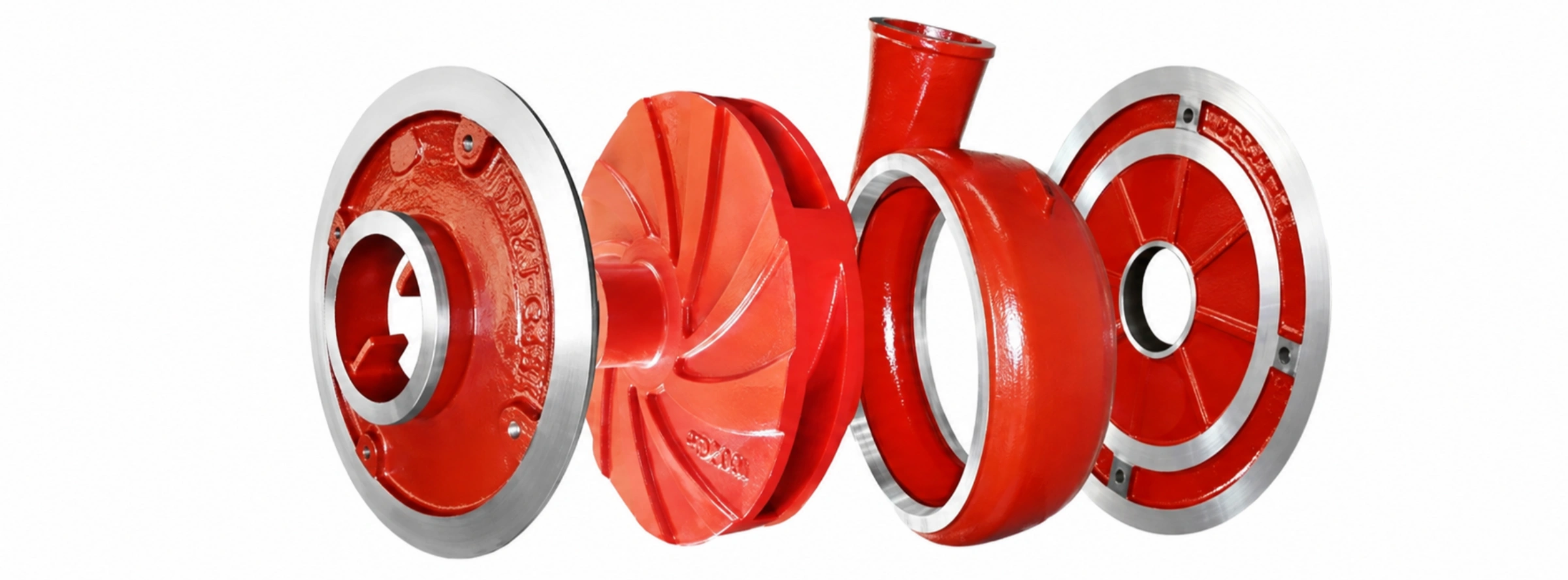
Slurry Pump Shaft Seals — Expeller, Packing and Mechanical
Three sealing arrangements, and the one you choose decides whether the site needs a gland water supply at all. Expeller, packing and mechanical seals with selection limits and flush rates by frame type.
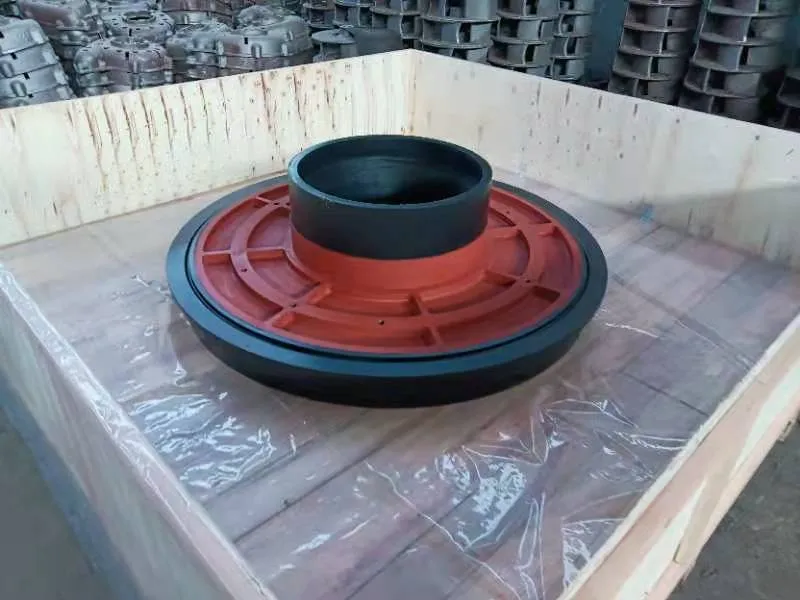
The shaft seal decides whether your site needs a gland water supply at all — and that is a plant-layout decision, not a spare-parts decision. Choose it before the pipework is fixed, not after.
- Three arrangements: expeller (dynamic), packing (gland water), mechanical
- Expeller seal removes the gland water supply, its pipework and its consumption
- Expeller limited to inlet pressure not exceeding 10 % of discharge pressure
- Gland water rate is set by frame type — A 0.15 L/s through to U 2.1 L/s
- Expeller and expeller ring are renewed as a mating pair
- Combination arrangements available for special duties
CE · EAC · ISO 9001 · ISO 14001 · ISO 45001
Three Arrangements
| Arrangement | How it seals | Needs gland water | Where it suits |
|---|---|---|---|
| Expeller (dynamic) | A secondary impeller generates pressure that holds the slurry back while running | No | Where no water supply exists, or where diluting the process is unacceptable |
| Packing | Packing rings compressed in a stuffing box, flushed with clean water | Yes | General duty; the most tolerant arrangement |
| Mechanical | Rotating and stationary faces running together | Usually low or none | Where leakage cannot be tolerated, or the medium must not be diluted |
The Expeller Has One Hard Limit
An expeller seals only while the pump is running, and only within a pressure limit: inlet pressure must not exceed 10 % of discharge pressure. Beyond that the expeller cannot hold the slurry back and the gland will pass.
This is why the decision belongs at plant-layout stage. If the pump will sit under a flooded suction with appreciable inlet pressure, an expeller is not the answer, and the gland water supply has to be designed in from the start.
Gland Water Rate by Frame Type
Where packing is used, the flush rate is set by frame size rather than by duty.
| Frame type | Gland water rate |
|---|---|
| A | 0.15 L/s |
| B / C | 0.20–0.30 L/s |
| D / E | 0.40–0.60 L/s |
| F / G | 0.70–0.90 L/s |
| R / RS / S | 1.0–1.4 L/s |
| ST / T / TU | 1.5–1.9 L/s |
| U | 2.1 L/s |
Water should be clean and supplied at a pressure above the discharge pressure at the gland. Too little flow lets slurry into the packing; too much dilutes the process and wastes water.
Reading the Symptoms
- Leaking while running — clearance between expeller and expeller ring. Renew them as a mating pair; a new part against a worn partner restores only part of the sealing.
- Leaking only when stopped — the packing has set, not the expeller. Repack, and confirm the packing grade against working pressure.
- Packing burning or scoring the sleeve — flush rate too low, or the water is not clean.
- Process dilution — flush rate higher than the frame requires; or the duty would suit an expeller instead.
What to Send With Your Enquiry
Send the pump model and frame type, the inlet and discharge pressures, whether clean water is available at the gland and at what pressure, and whether dilution of the process is acceptable. Those four items settle the arrangement.
Send Your Enquiry
Can we run without a gland water supply?
Yes, with an expeller seal — provided inlet pressure does not exceed 10 % of discharge pressure. Beyond that limit the expeller cannot hold the slurry back.
How much gland water does packing need?
It is set by frame type, from 0.15 L/s on frame A to 2.1 L/s on frame U. Water must be clean and supplied above the discharge pressure at the gland.
The gland leaks while running — what is worn?
The clearance between expeller and expeller ring. Renew both as a mating pair; fitting one new part against a worn partner restores only part of the sealing.
The gland leaks only when the pump is stopped.
That points to the packing rather than the expeller. Repack and confirm the packing grade against the working pressure.
When is a mechanical seal the right choice?
Where leakage cannot be tolerated or the medium must not be diluted. Send the medium and the pressures and we will confirm.
Manufacturer-direct supply · Technical pump-selection support · Export documentation on request.