Submersible Sewage Pump for Municipal & Industrial Use
Municipal sewage stations and industrial wastewater need anti-clog pumping of raw sewage, mixed and mud water, often with fibrous solids.
Municipal sewage stations and industrial wastewater — raw sewage carries hard solids and long fibre, and the wet well cannot be taken out of service. The pump is selected for what will not pass, not for the average.
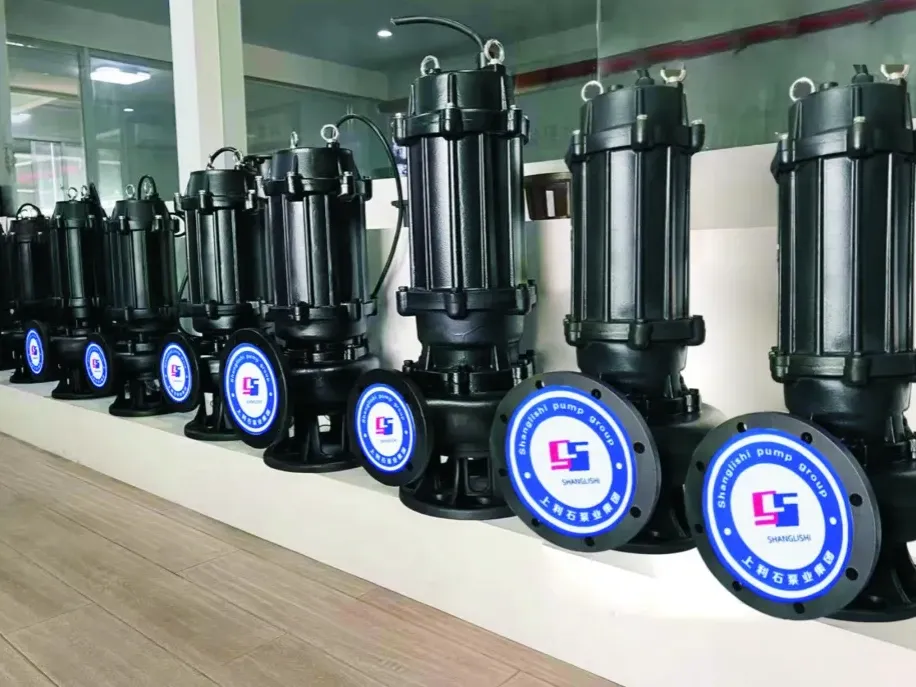
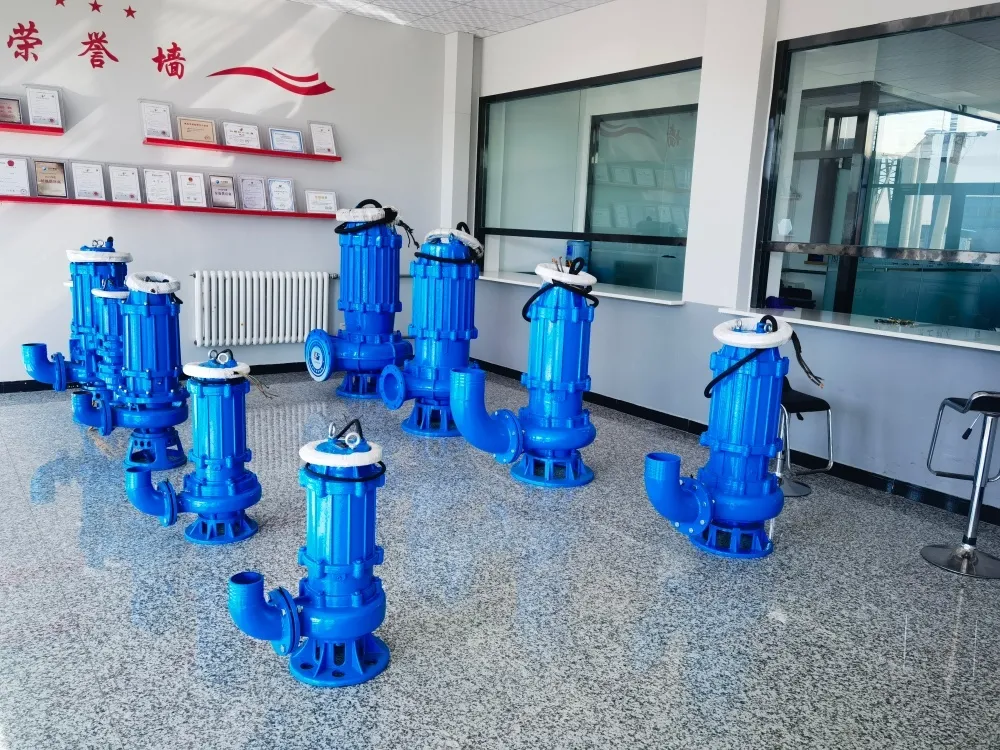
- SWQ submersible sewage pump, solids to 50 mm, flow to 500 m³/h
- Single-, two- or three-vane impeller selected against fibre content
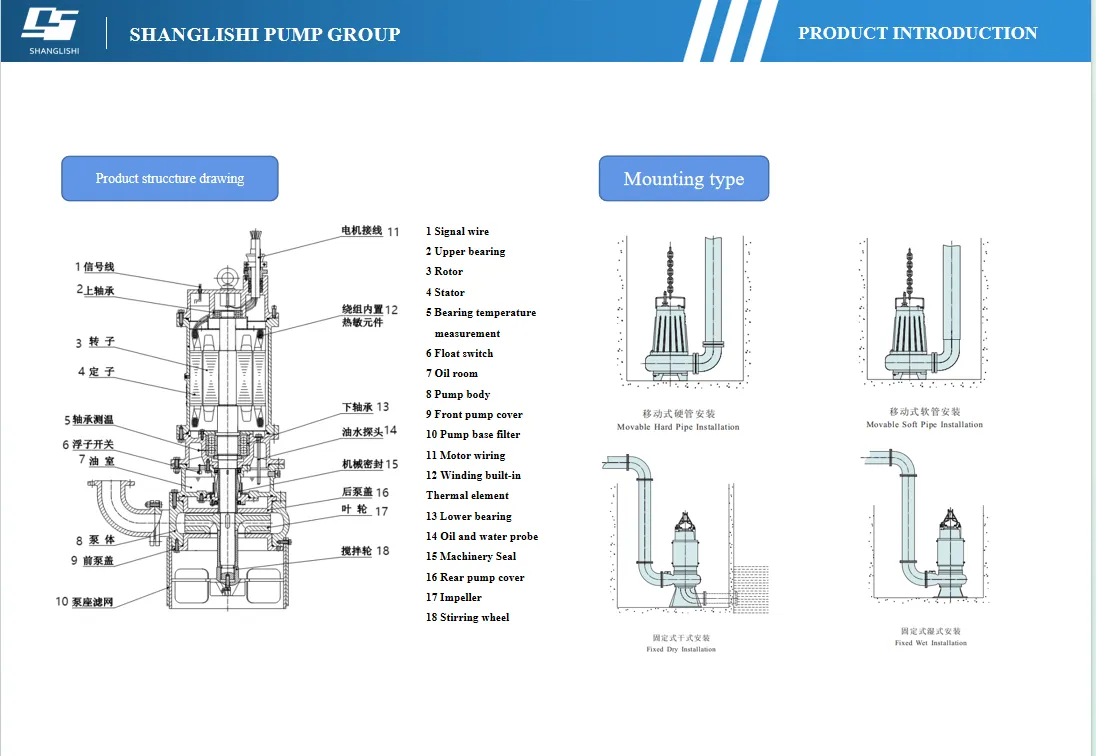
- Two mechanical seals in series with oil-chamber barrier
- Stator thermal switches open at 125 °C; leakage probe cuts power
- Cast iron, SS304 or SS316 to suit the effluent
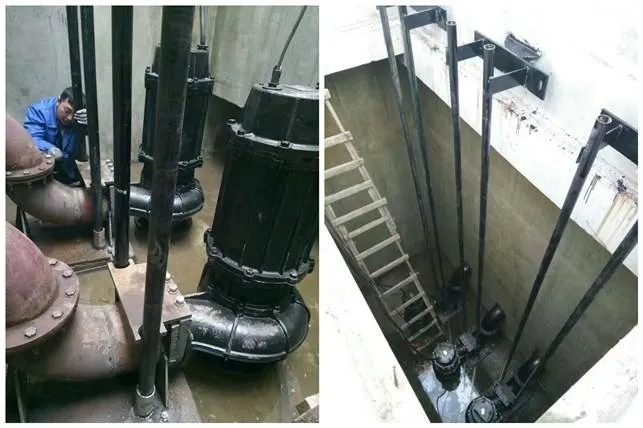
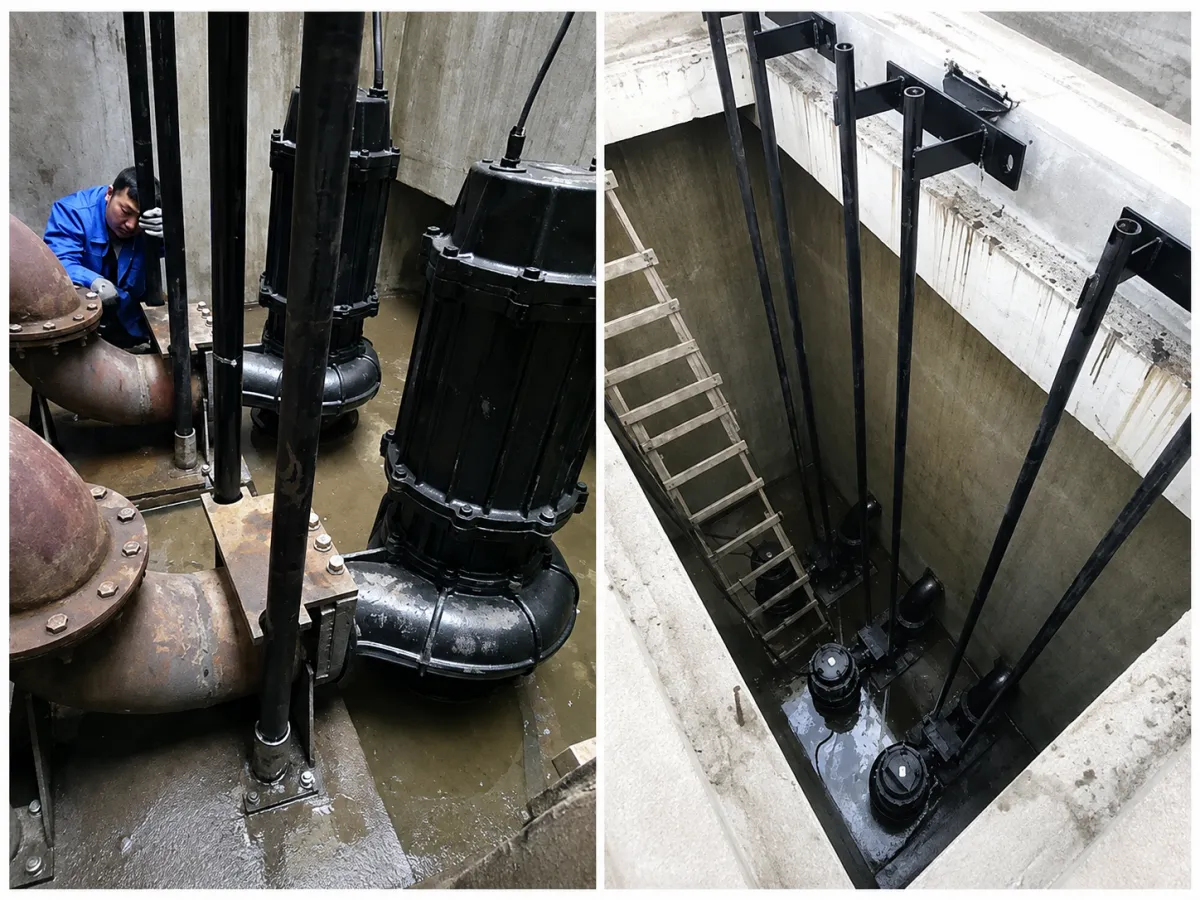
- Automatic coupling on guide rail — lift without draining the well
CE · EAC · ISO 9001 · ISO 14001 · ISO 45001
What This Duty Demands
Sewage duty fails at the intake. Rags, wipes and fibre wrap the impeller vane inlet; grit settles and consolidates between pumping cycles; and a blockage that is not detected quickly becomes a burnt motor rather than a cleaning job.
- Municipal pumping stations — raw sewage with high fibre content, continuous duty, no standby window.
- Industrial effluent — solids and fibre plus whatever the process adds; material selection matters more than in municipal duty.
- Stormwater and drainage pits — intermittent duty with settled grit at the floor.
- Sludge transfer — higher solids concentration, viscous.
Recommended Pump & Material
The SWQ submersible sewage pump handles solids to 50 mm at flows to 500 m³/h. Impeller form is the key decision: single-vane gives the largest free passage for fibre, two- and three-vane give a smoother curve where the medium is less demanding. Wet-end material is cast iron for municipal duty, SS304 or SS316 where the effluent is aggressive.
Protection is what keeps a blockage from becoming a motor replacement: three stator thermal switches opening at 125 °C, an oil-chamber leakage probe that cuts power, a motor-cavity float switch, and from 30 kW upward a cable-gland leakage probe.
Key Selection Parameters
| Fibre content | The single most useful piece of information — it decides impeller form |
|---|---|
| Largest solid expected | Not the average; 50 mm is the maximum passage |
| Flow and head | Design point plus the maximum the station must handle |
| Effluent chemistry | Decides cast iron vs SS304 vs SS316 |
| Wet well geometry | Plate-to-floor depth and whether guide rails can be fitted |
| Duty cycle | Continuous, or start-stop against level |
| Power supply | Voltage and frequency; 0.75–315 kW available |
What to Send Us
Send the flow and head, what the well actually receives (fibre content, largest solid, grit loading), the effluent chemistry, the well depth and the available power supply. We will confirm the impeller form, the material and the installation arrangement.
On Site
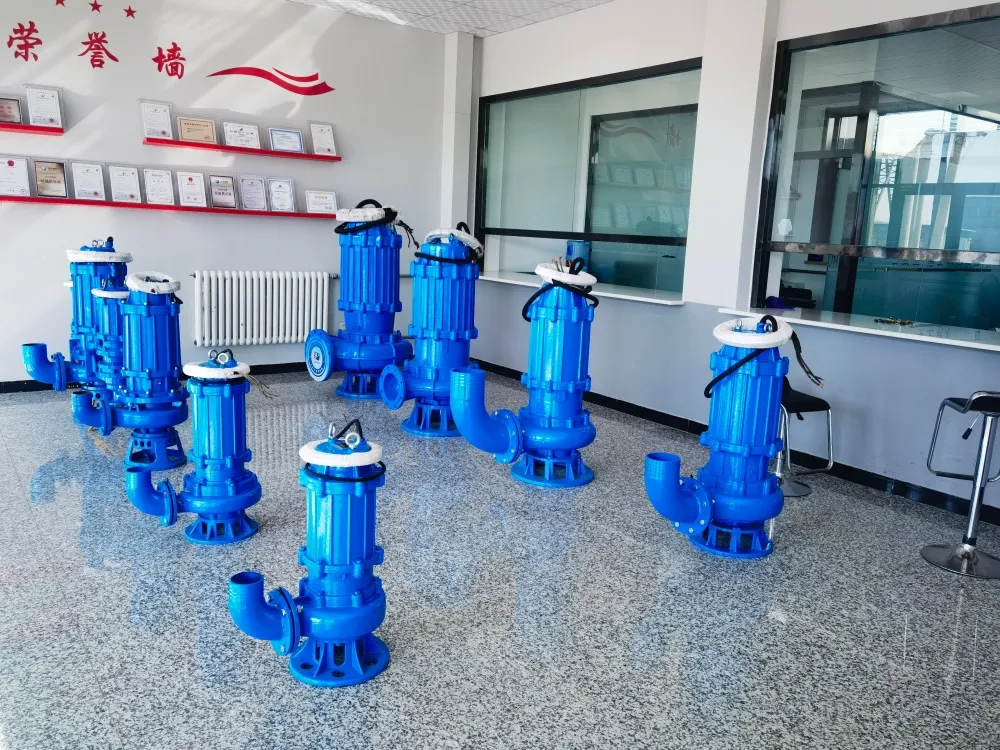
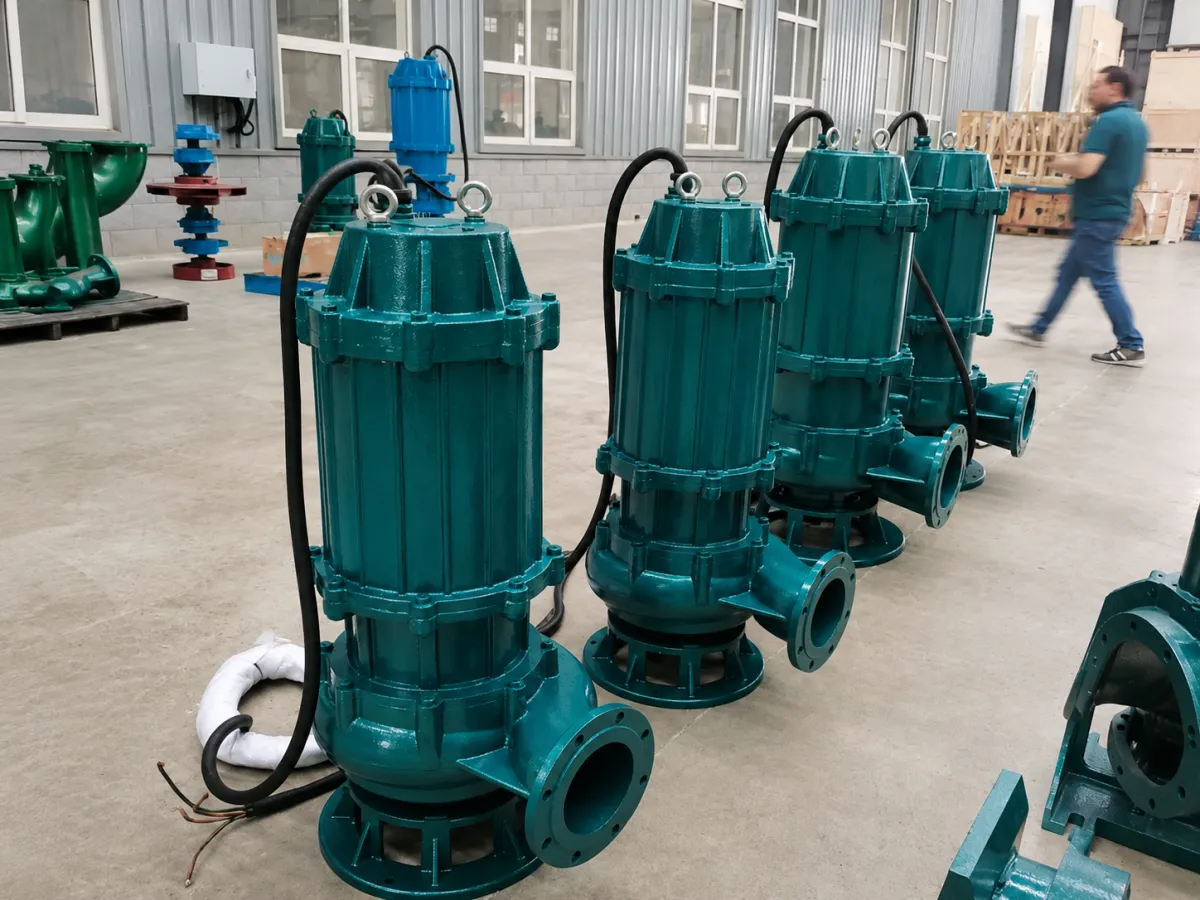
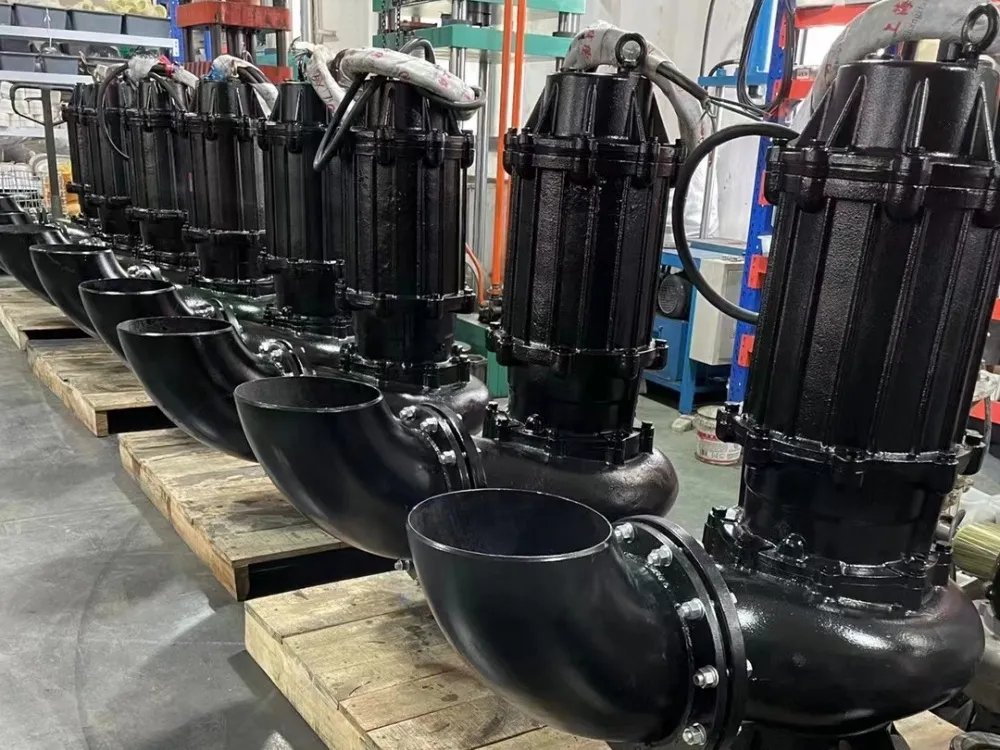
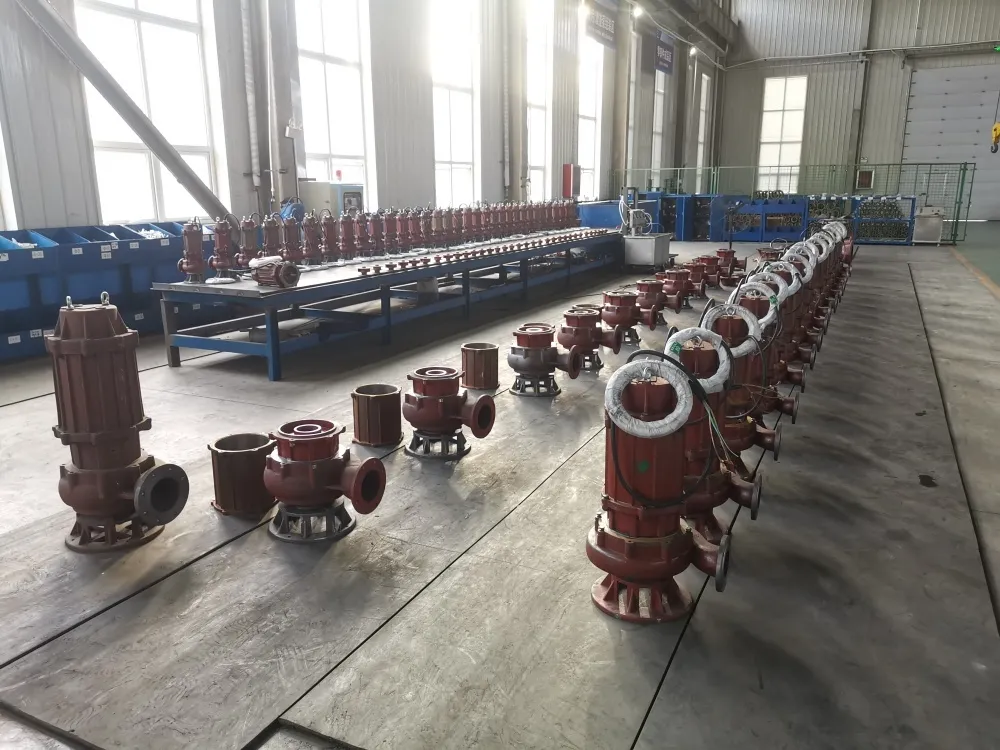
Send Your Enquiry
Which impeller form for high-fibre sewage?
Single-vane. It gives the largest free passage and is least likely to collect rags at the vane inlet. Two- and three-vane forms suit lower-fibre duty where a smoother curve matters more.
What stops a blockage from burning out the motor?
Three thermal switches in the stator opening at 125 °C, plus independent monitoring of oil-chamber leakage, motor-cavity water and bearing temperature.
Can the pump be removed without draining the well?
Yes, with automatic coupling on a guide rail. The pump lifts along the rail and re-seats on the discharge elbow automatically.
What material for aggressive industrial effluent?
SS304 or SS316 rather than cast iron. Send the effluent chemistry and we will confirm.
Manufacturer-direct supply · Technical pump-selection support · Export documentation on request.