Gravel Sand Pumps for River Sand & Gravel Dredging
River-sand and gravel dredging moves large, highly abrasive particles continuously from riverbeds and pits; passing size and wear life dominate.
River sand and gravel dredging — the largest particles in slurry pumping. Selection is decided by the biggest stone that will reach the suction, before flow and head are considered at all.
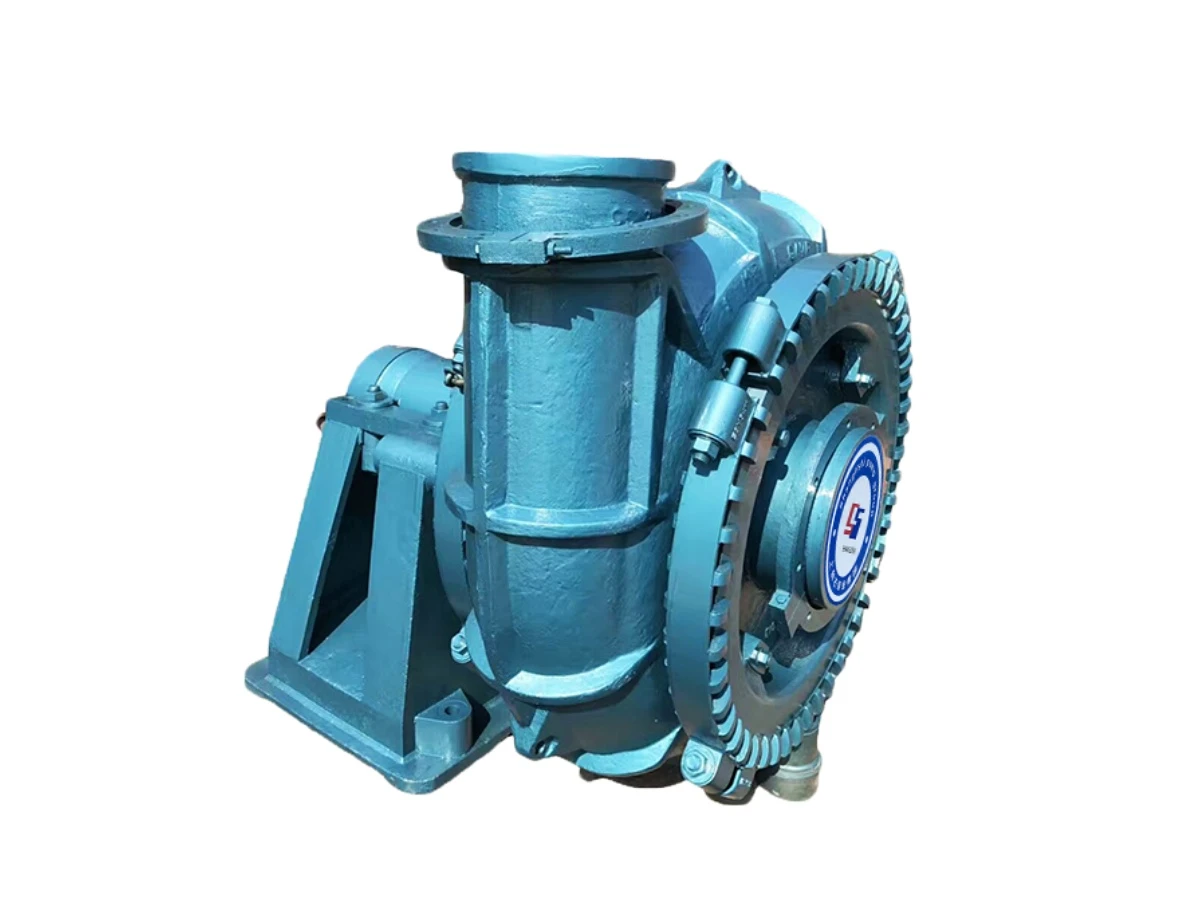
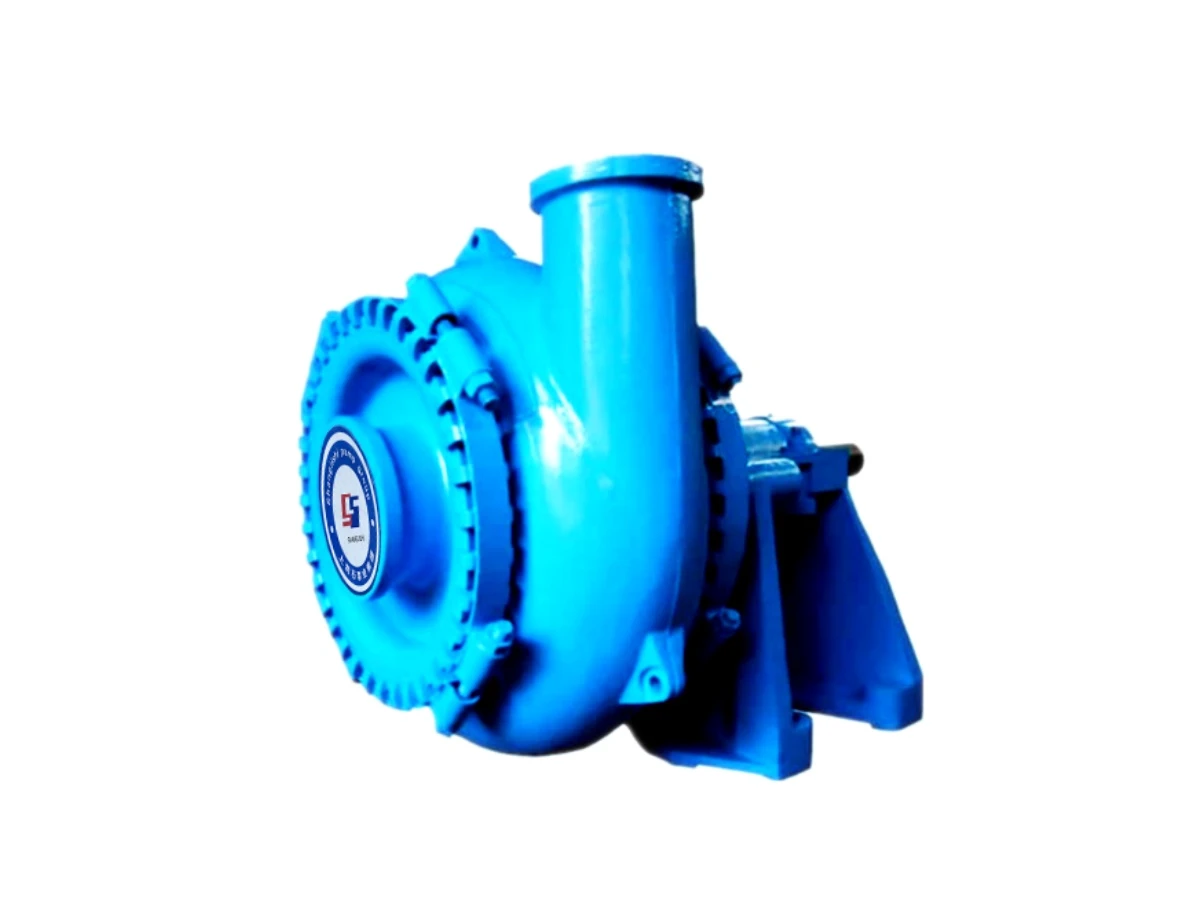
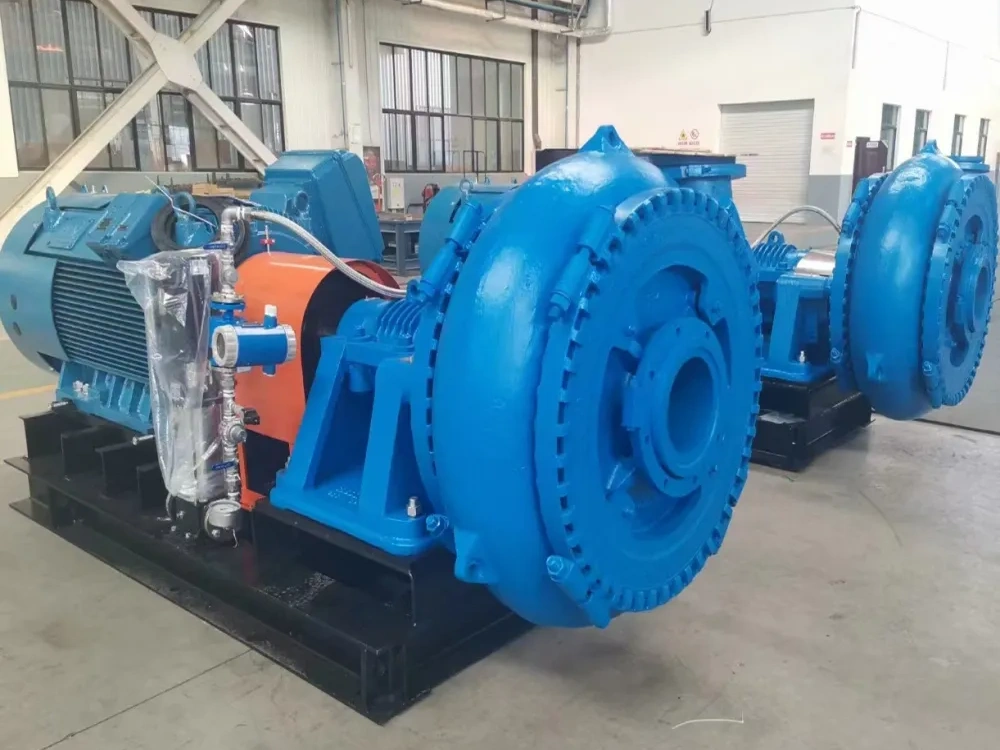
- SG / SGH gravel pump, single-casing with no liner to break
- Maximum particle 82–254 mm depending on model
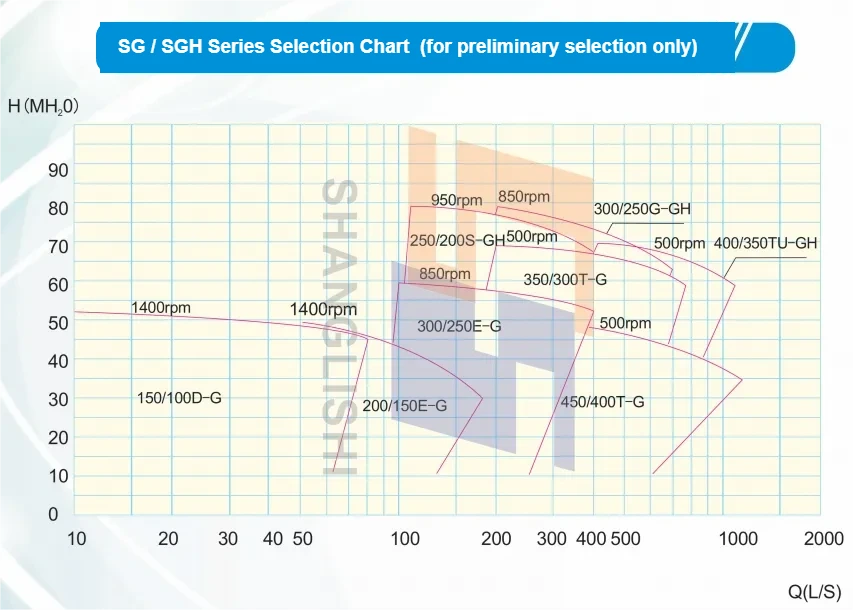
- Capacity 10–1060 L/s; head to 80 m on the SGH build
- Full wall thickness in wear-resistant metal — no thin liner to fail
- Discharge rotatable to any orientation for dredge and pontoon pipework
- A22 cast steel casings; A25 weldable where on-site repair matters
CE · EAC · ISO 9001 · ISO 14001 · ISO 45001
What This Duty Demands
Gravel duty is set by the largest solid, not the average. A pump selected on flow and head that ignores particle size will block on the first oversize stone, and on a dredge that is a shift lost rather than a maintenance item.
- River sand extraction — continuous, high volume, particles graded from sand to cobble.
- Gravel dredging — the coarsest duty; a liner would be broken rather than worn.
- Channel desilting — finer material but unpredictable debris.
- Land reclamation fill — long discharge lines, so the high-head SGH build.
Recommended Pump & Material
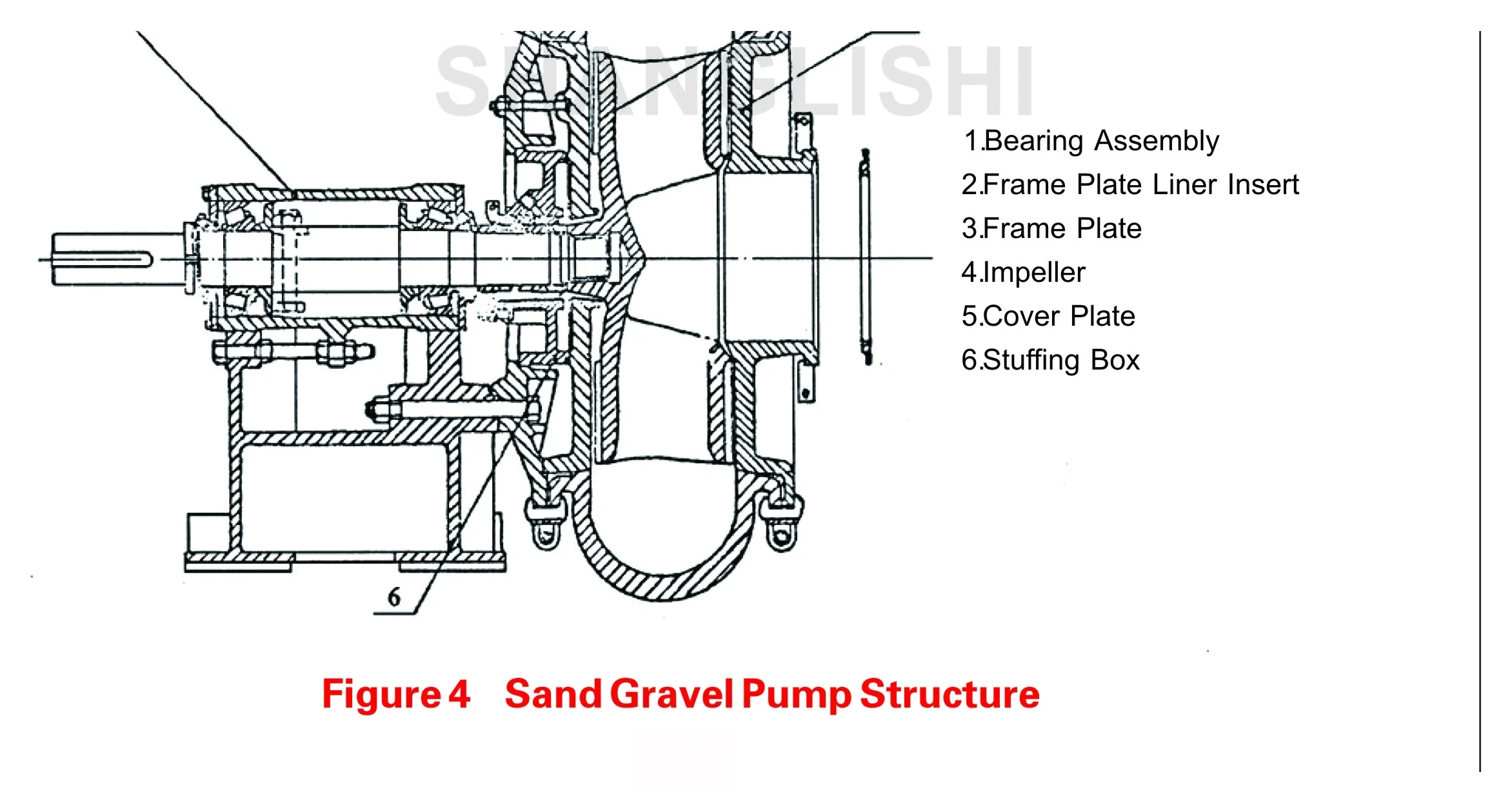
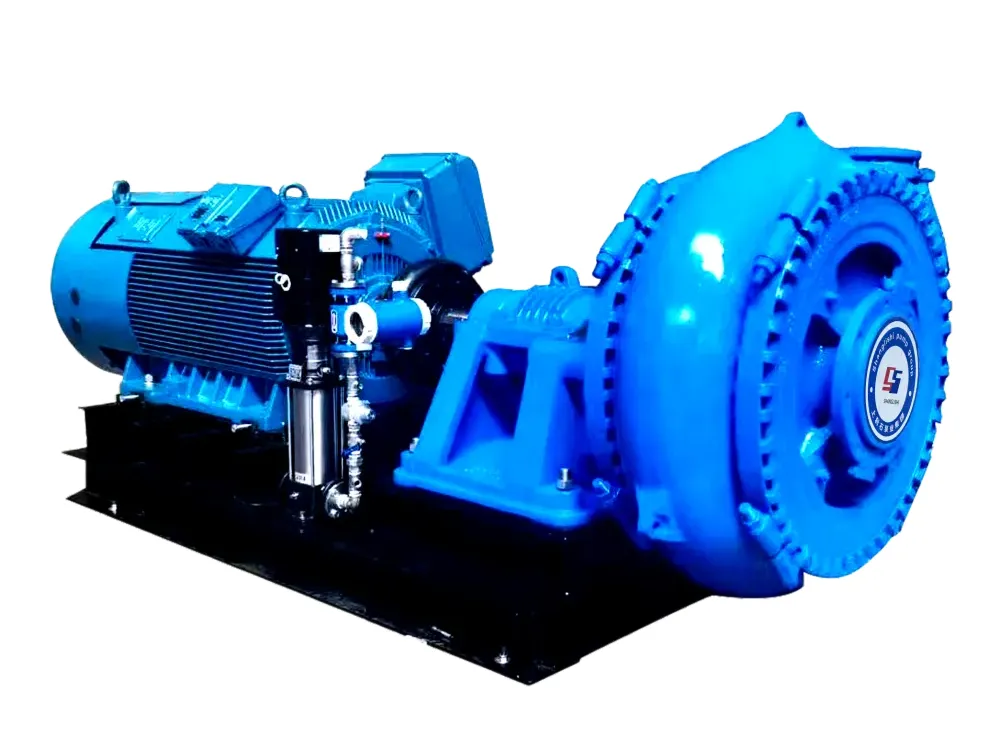
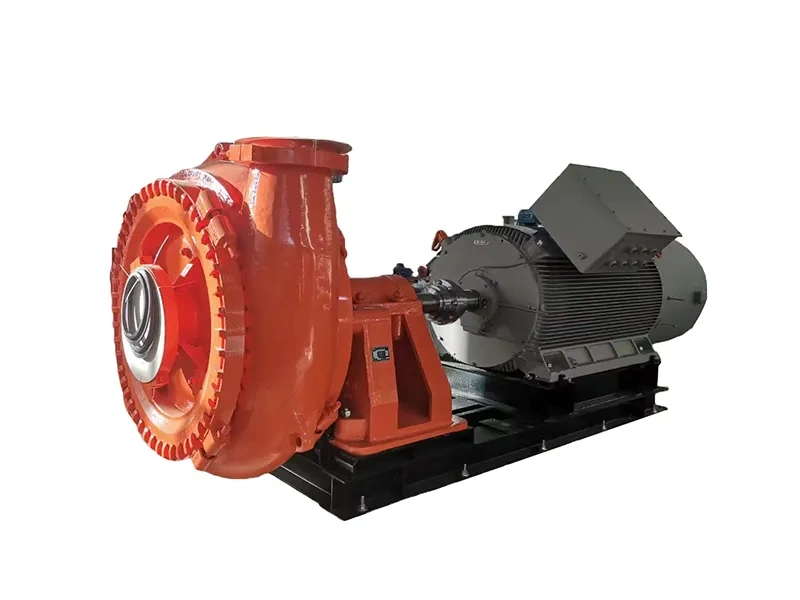
Gravel pumps are built single-casing: body, cover and impeller are all cast in wear-resistant metal with no separate liner. That is deliberate — on coarse gravel a liner is broken rather than worn, and the load then passes to a shell never intended to carry it. Single-casing puts the full wall thickness in wear material.
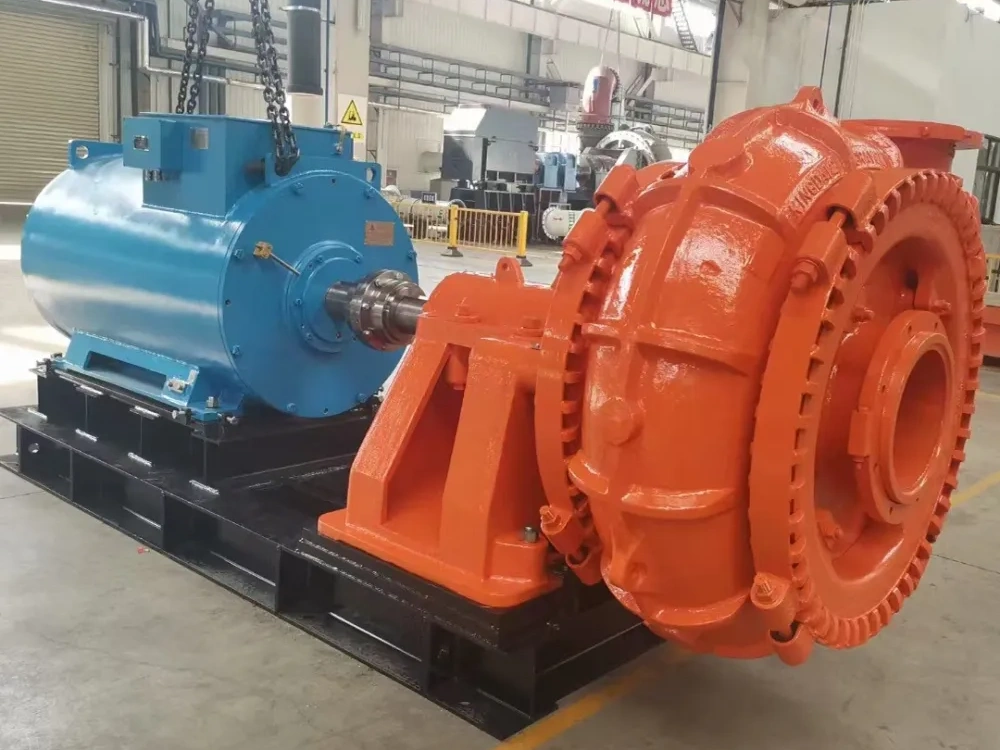
The SG models cover heads to about 66 m; the SGH high-head build reaches 78–80 m at the same coarse-solids capability, for long discharge lines and high lift. Casing and cover are joined by a clamping arrangement and the discharge rotates to any orientation, which is what makes the pump fit an existing dredge or pontoon layout.
Key Selection Parameters
| Largest particle reaching the suction | The first selection criterion — 82 to 254 mm across the range |
|---|---|
| Particle size distribution | Decides the wear material as distinct from the pump size |
| Solids concentration and mixture density | Sets the head the pump must generate |
| Flow and total head | Including the full discharge line and any floating section |
| Drive arrangement and available speed | Belt, coupling or engine drive |
| Suction geometry | Keep the line short and direct; avoid high points |
| Repair capability on site | A25 weldable grade matters where castings cannot be shipped out |
What to Send Us
Send the largest particle size reaching the suction, the particle size distribution, the solids concentration and mixture density, the flow and total head including the discharge line, and the drive arrangement. We will confirm the model and the wear material and issue the performance curve.
On Site
Send Your Enquiry
Why is there no replaceable liner?
On coarse gravel duty a liner is broken rather than worn. Single-casing construction puts the full wall thickness in wear-resistant metal so there is no thin liner to fail.
How large a stone will the pump pass?
From 82 mm on the smallest size to 254 mm on the largest. The maximum particle diameter for each model is published in the performance table.
SG or SGH?
SG covers heads to about 66 m; SGH reaches 78–80 m with the same coarse-solids capability. Flow ranges overlap, so the head required usually decides.
Can the discharge orientation be set on site?
Yes. Casing and cover are joined by a clamping arrangement and the discharge rotates to any orientation.
Manufacturer-direct supply · Technical pump-selection support · Export documentation on request.