Vertical Slurry Pump for Tank Farm & Mining Sumps
Tank-farm and mine sumps collect settling slurry that must be pumped out reliably from a submerged position without seal water.
Tank-farm and mine sumps — slurry settles at the floor and must be pumped out reliably from a pit where a surface pump cannot hold suction. Fit into the existing pit is decided by column length, not by the duty point.
- SSP(R) vertical sump pump, outlet 40–300 mm, flow 17–1200 m³/h
- No shaft seal and no gland water in the standard build
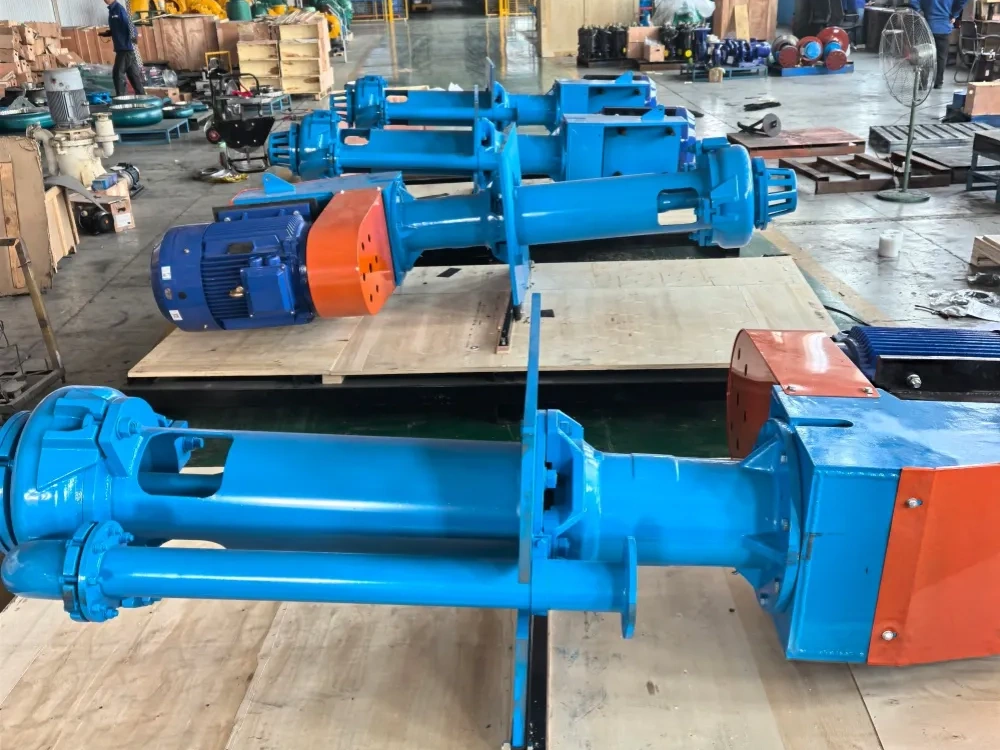
- Semi-open impeller with mixing blade keeps solids in suspension at the intake
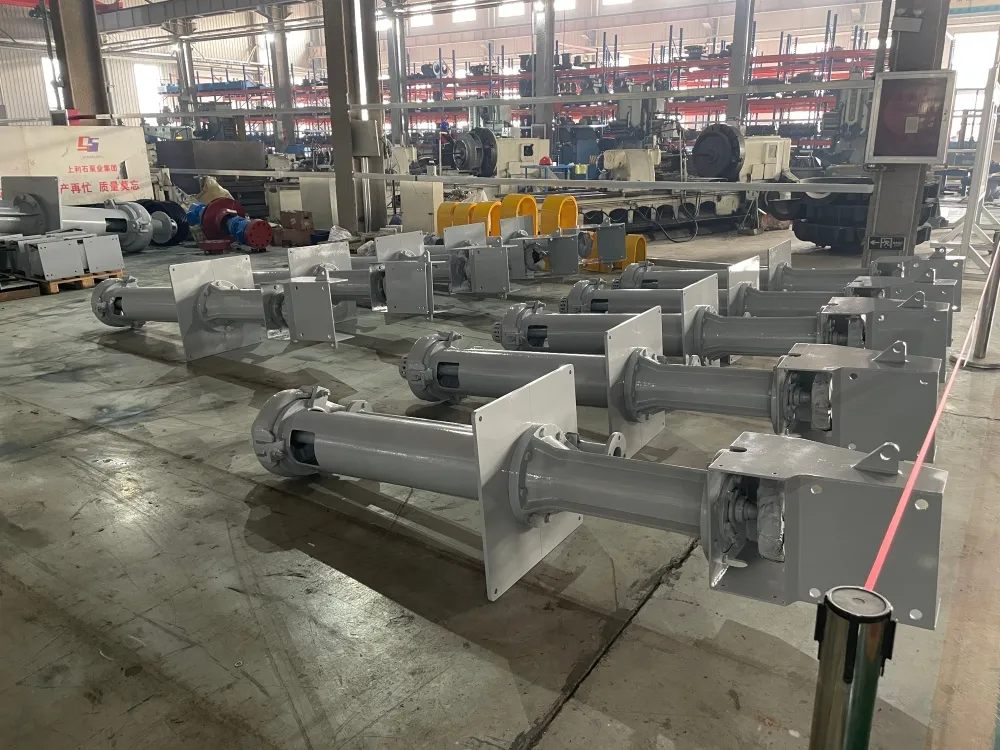
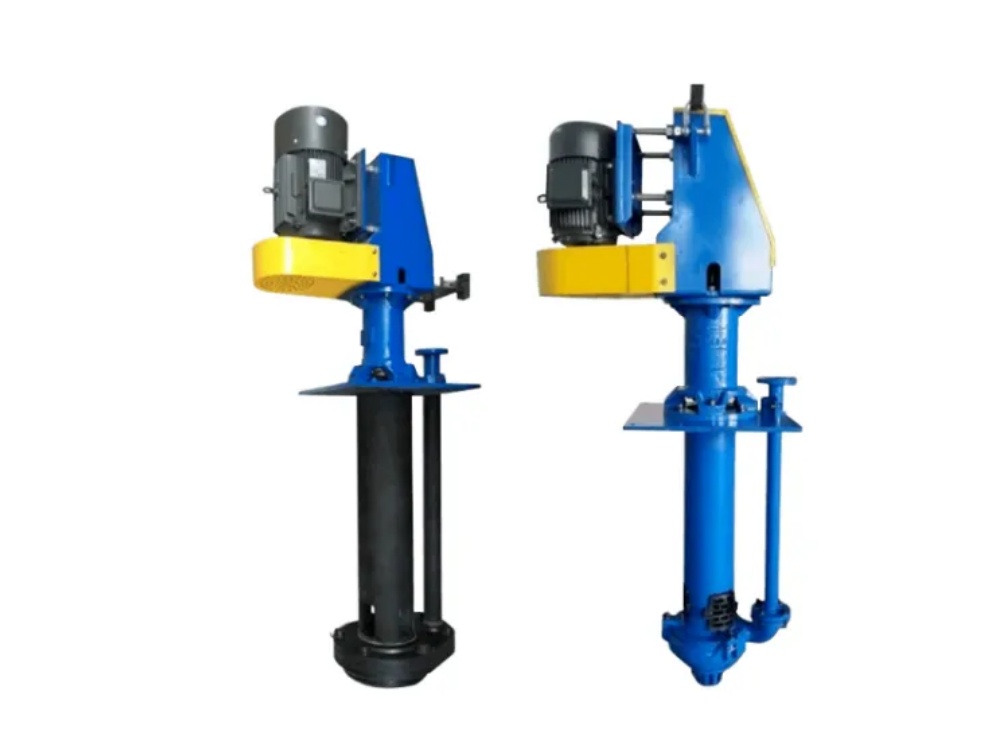
- Column length L in 0 / 300 / 600 / 900 / 1200 mm steps
- SSP all-metal for coarse or angular solids; SSPR rubber for fine rounded solids
- Extended-shaft builds add a guide bearing — this area does need flushing water
CE · EAC · ISO 9001 · ISO 14001 · ISO 45001
What This Duty Demands
A sump pump goes into a pit that already exists. The floor level, the mounting plate and the discharge line are all fixed, so the dimension that decides whether a pump can be installed is the column length and the mounting geometry — not the duty point.
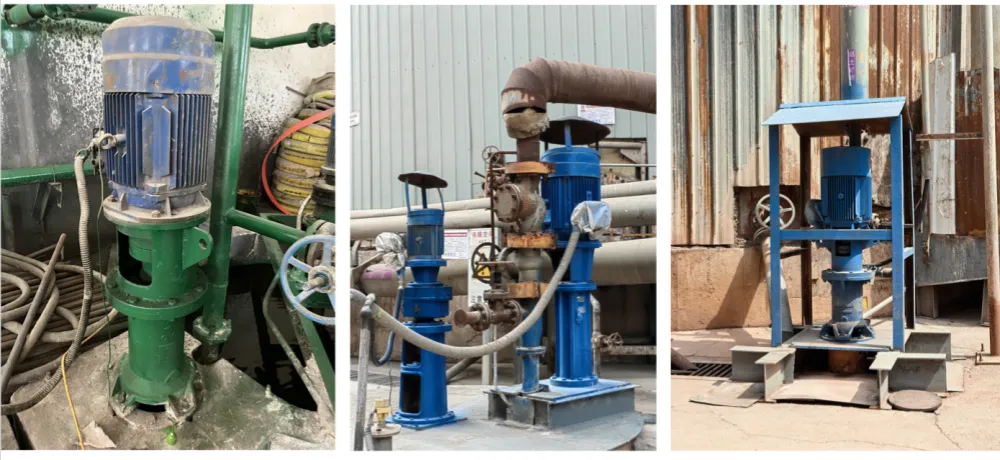
- Mill and flotation floor sumps — collect spillage of unpredictable composition.
- Thickener underflow pits — high solids concentration, consistent composition.
- Tank farm drainage — intermittent duty, sometimes corrosive liquor.
- Mine drainage sumps — sand and rock fines settling at the floor.
Recommended Pump & Material
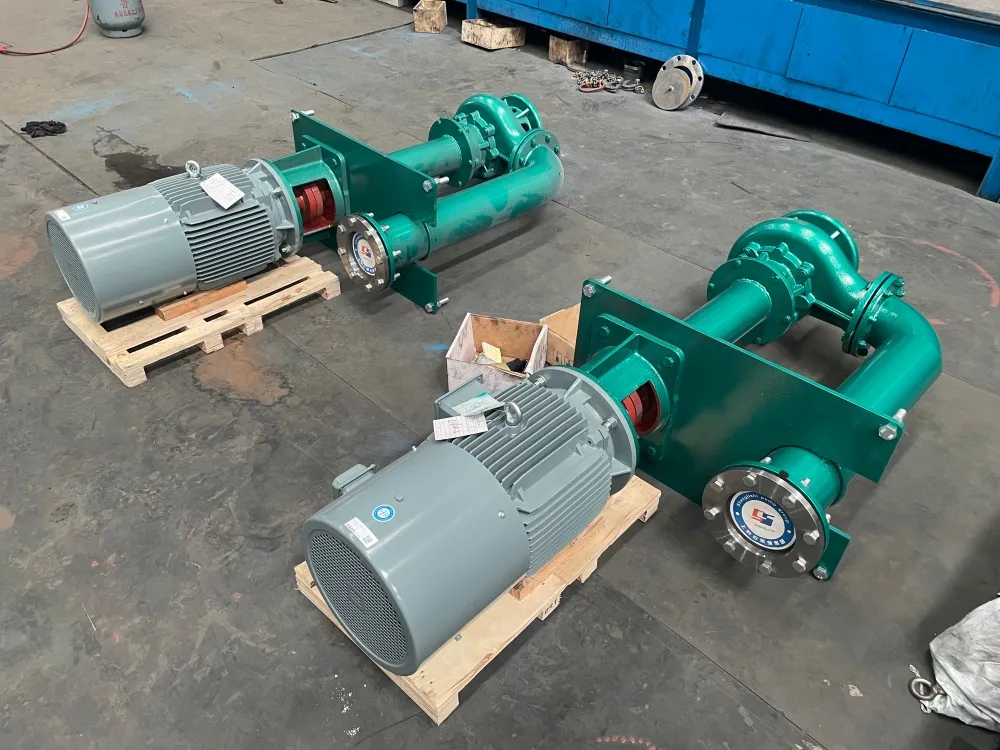
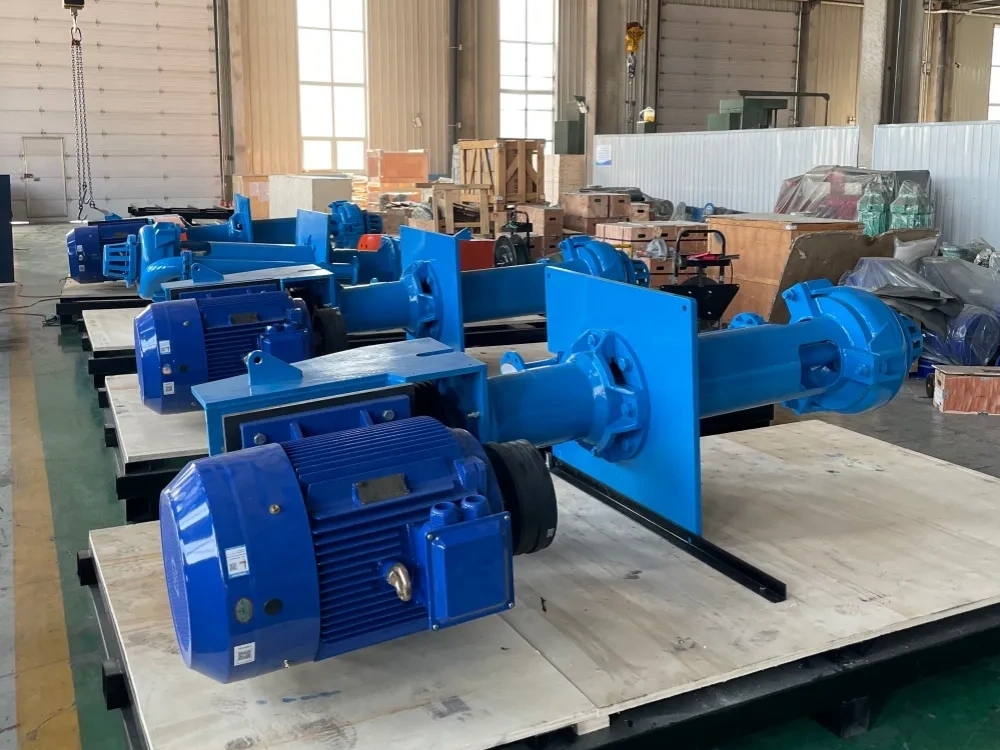
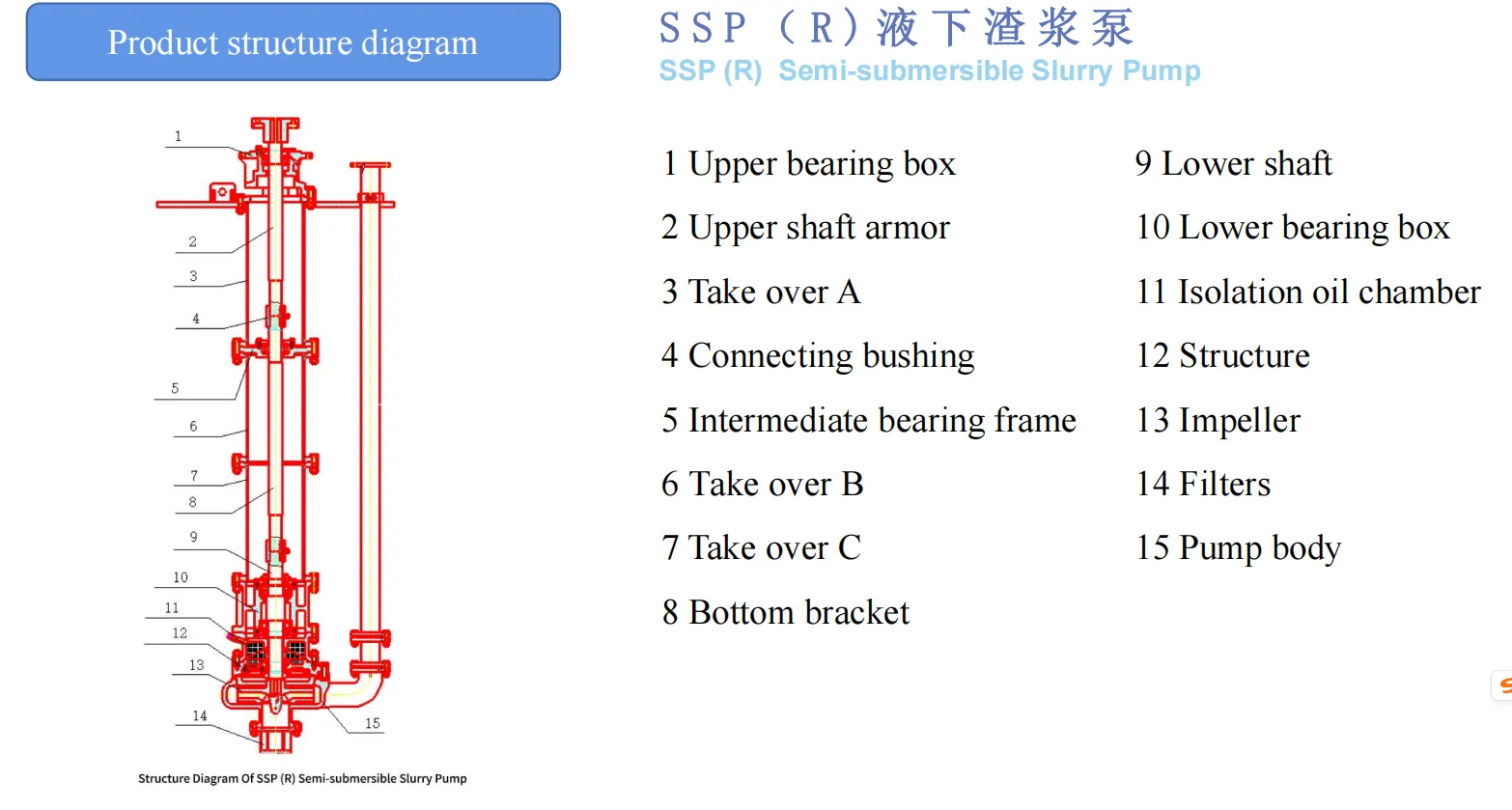
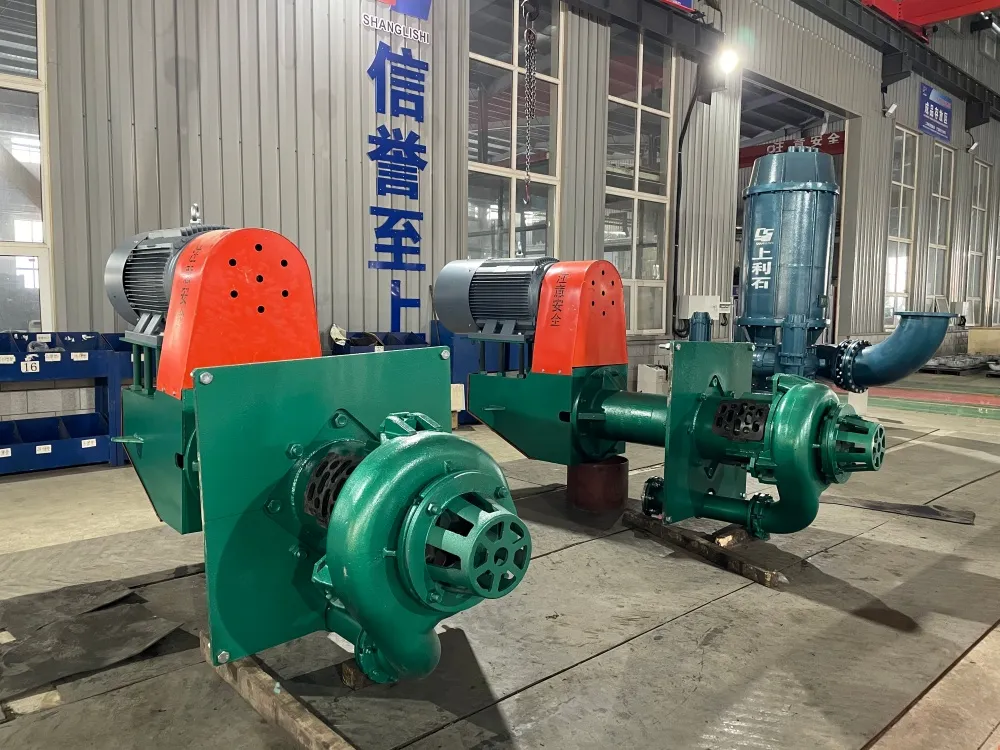
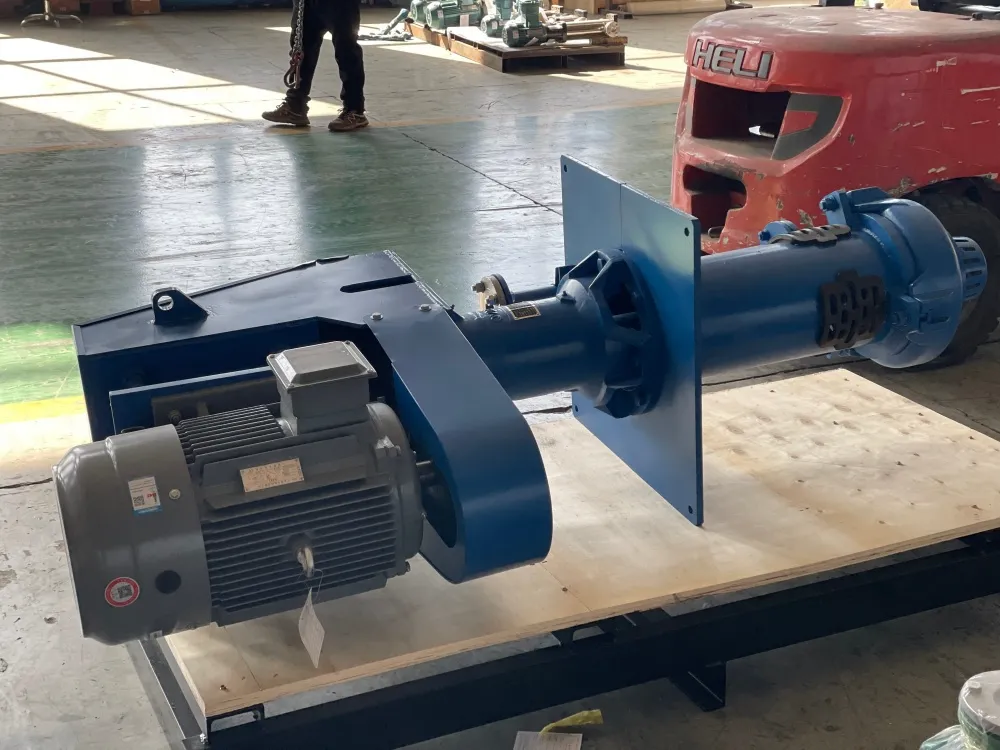
The SSP(R) vertical sump pump hangs into the pit from a mounting plate with only the wet end and column submerged. Because the impeller runs below liquid level there is no shaft seal and no gland water requirement — on a retrofit that removes the seal water supply, its pipework and its consumption entirely.
Wet-end choice follows what actually reaches the pit floor. SSPR rubber-lined suits fine, rounded, high-concentration solids. SSP all-metal is the safer default for spillage and floor-drainage sumps, where tramp material cannot be controlled even if the process slurry itself is fine.
Key Selection Parameters
| Plate-to-floor depth | Determines the column length and whether an extended-shaft build is needed |
|---|---|
| Plate-to-liquid-level depth | Sets the working submergence |
| What reaches the pit floor | Not the process slurry — what actually falls in, including tramp material |
| Solids concentration and particle size | Decides between metal and rubber wet end |
| Medium pH | Affects material selection independently of abrasion |
| Discharge flange details | For checking fit against existing pipework |
| Flushing water availability | Required only for extended-shaft builds |
What to Send Us
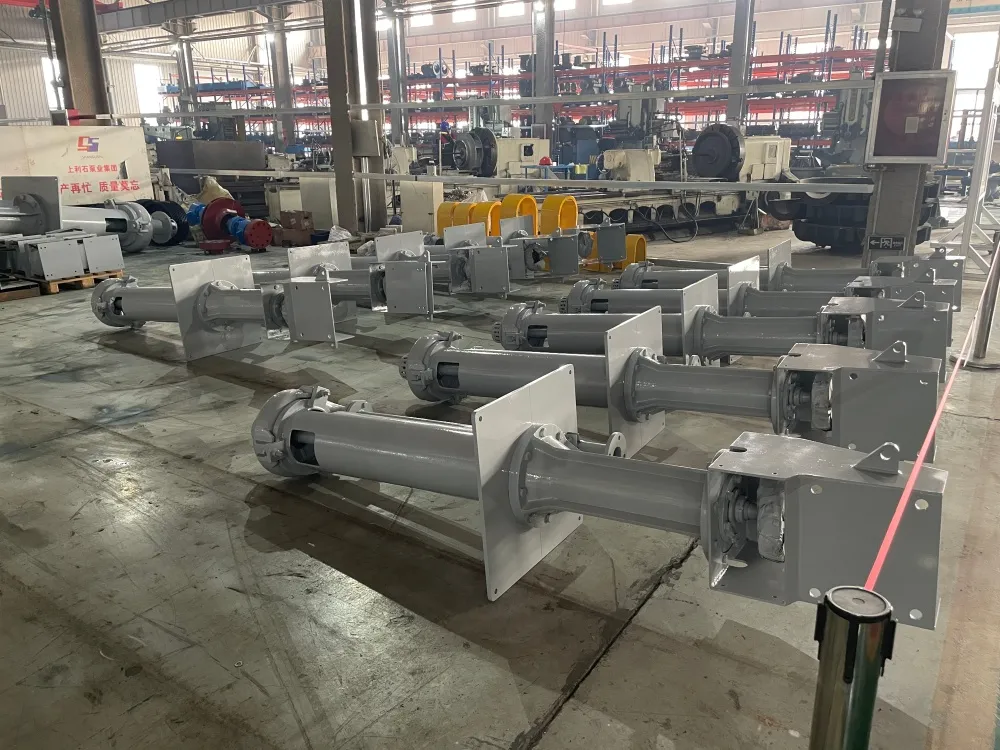
Send the plate-to-floor and plate-to-liquid-level dimensions, the existing discharge flange details, the flow and head required, and what actually reaches the pit floor. We will confirm the size, frame type, column length and wet-end build.
On Site
Send Your Enquiry
Does the pump need seal water?
The standard build needs none, because there is no shaft seal. Extended-shaft builds add a guide bearing which does require flushing water in the bearing area.
How do I know it will fit our existing pit?
Compare the plate-to-floor distance against the D column and the L extension steps, the mounting footprint against E, F, G, H, and the discharge flange against the flange group. All values are published on the sump pump pages.
Rubber or metal wet end for a spillage sump?
Metal is often the safer default, because tramp material reaching the pit floor cannot be controlled. Rubber suits sumps where the incoming solids are known to be fine and rounded.
What keeps solids from settling at the intake?
A mixing blade on the extension of the impeller suction side. An agitator intake arrangement is available where deposits consolidate between running periods.
Manufacturer-direct supply · Technical pump-selection support · Export documentation on request.