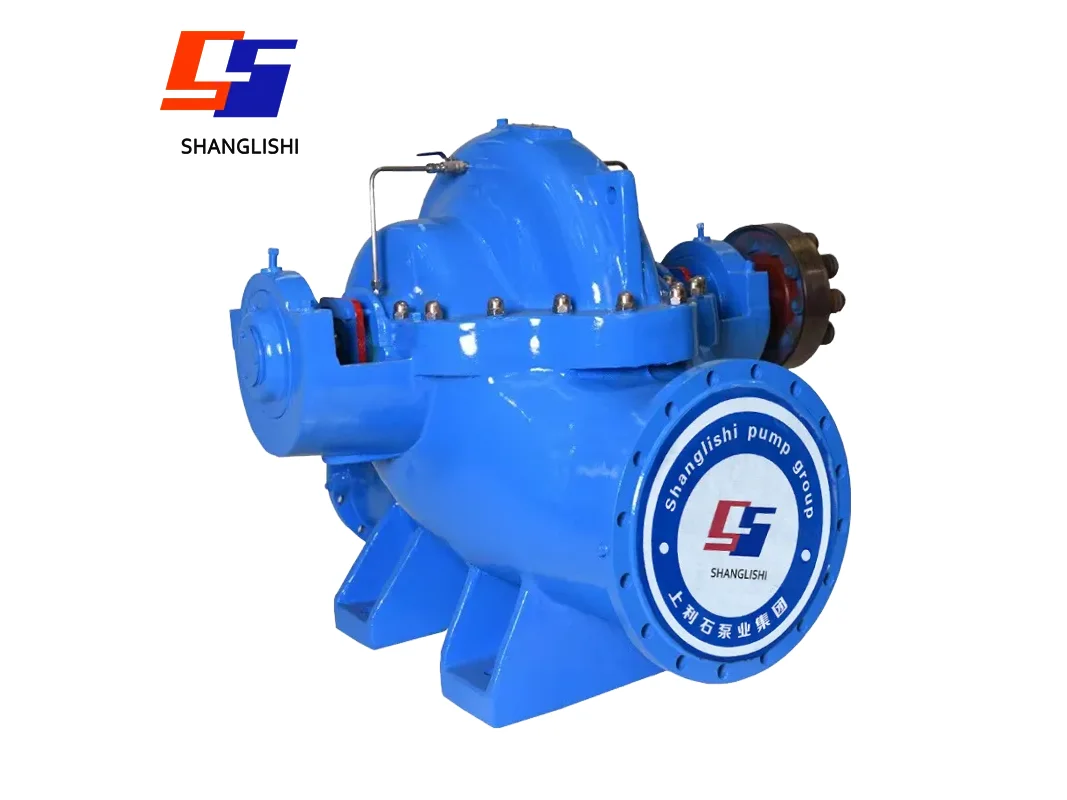
Double Suction Pump for Water Supply & HVAC
Municipal water supply, power-plant cooling and HVAC circulation need high-flow, reliable transfer of clear water with low axial thrust and easy maintenance.
Municipal water supply, power-plant cooling and HVAC circulation — high flow at moderate head, running continuously. The split casing is what makes this duty maintainable without breaking pipework.
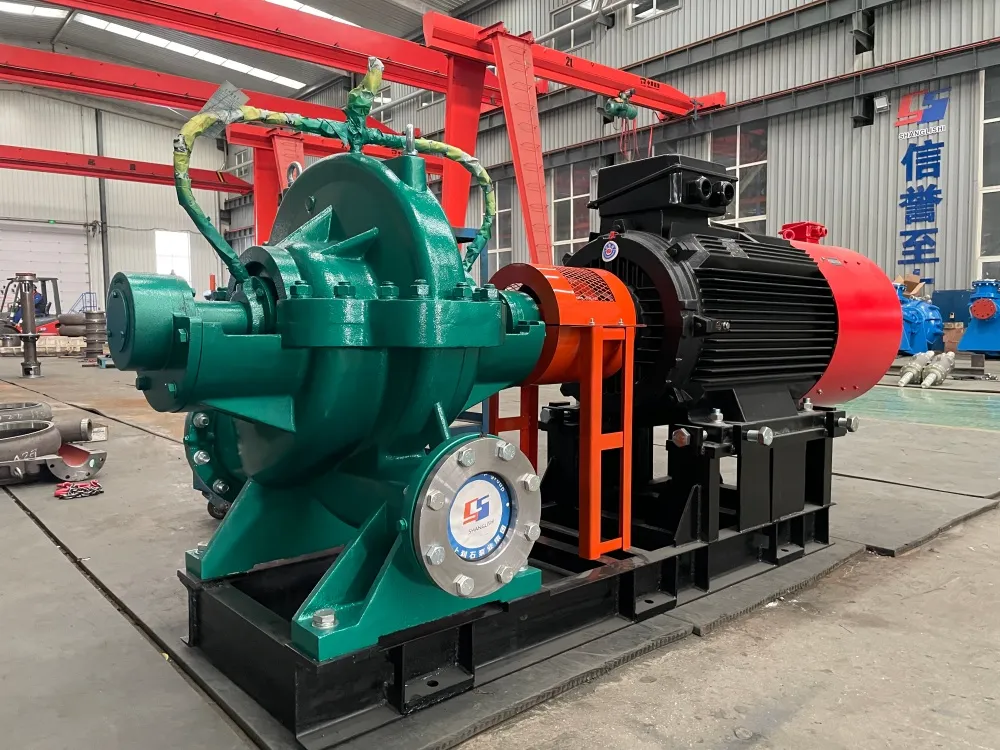
- SOM horizontally split double-suction pump, GB/T5657
- Flow 74–23,500 m³/h; power 15–2500 kW; connections 150–1600 mm
- Rotating assembly lifts out with pipework left bolted in place
- Double suction cancels axial load — bearings carry radial load only
- Cast iron, or SS304 / SS316 / SS316L for treated water
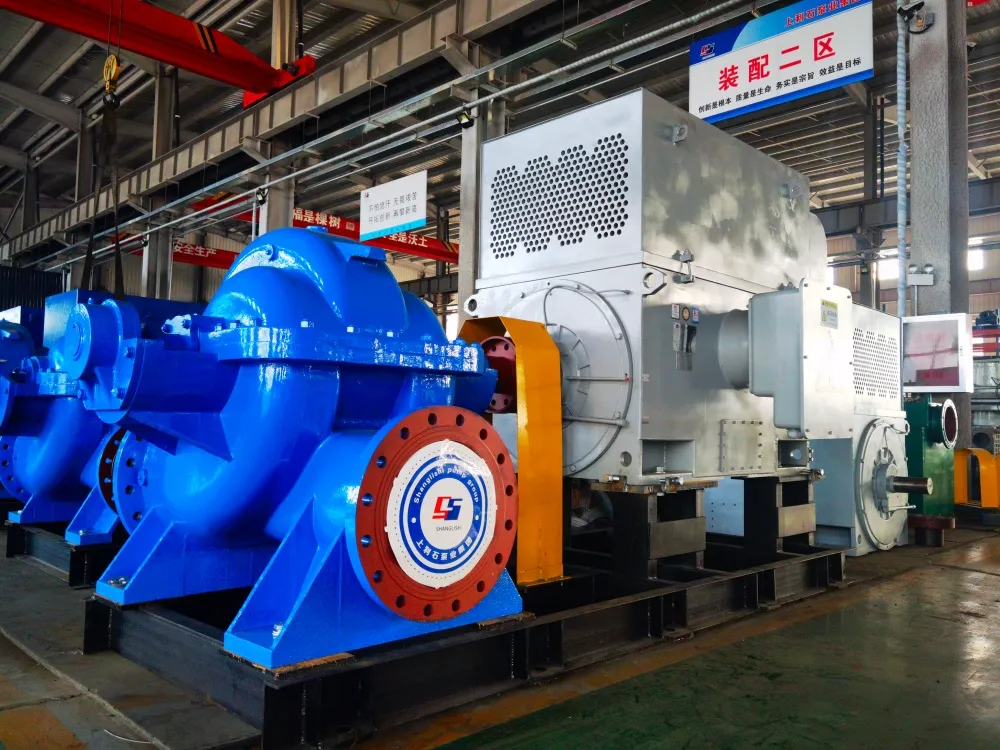
- Driver mountable left or right of the pump as the plant layout requires
CE · EAC · ISO 9001 · ISO 14001 · ISO 45001
What This Duty Demands
These duties are not abrasive, so wear is not the constraint. What matters is availability: the pump runs continuously, the system cannot be shut down for long, and access around it is usually tight.
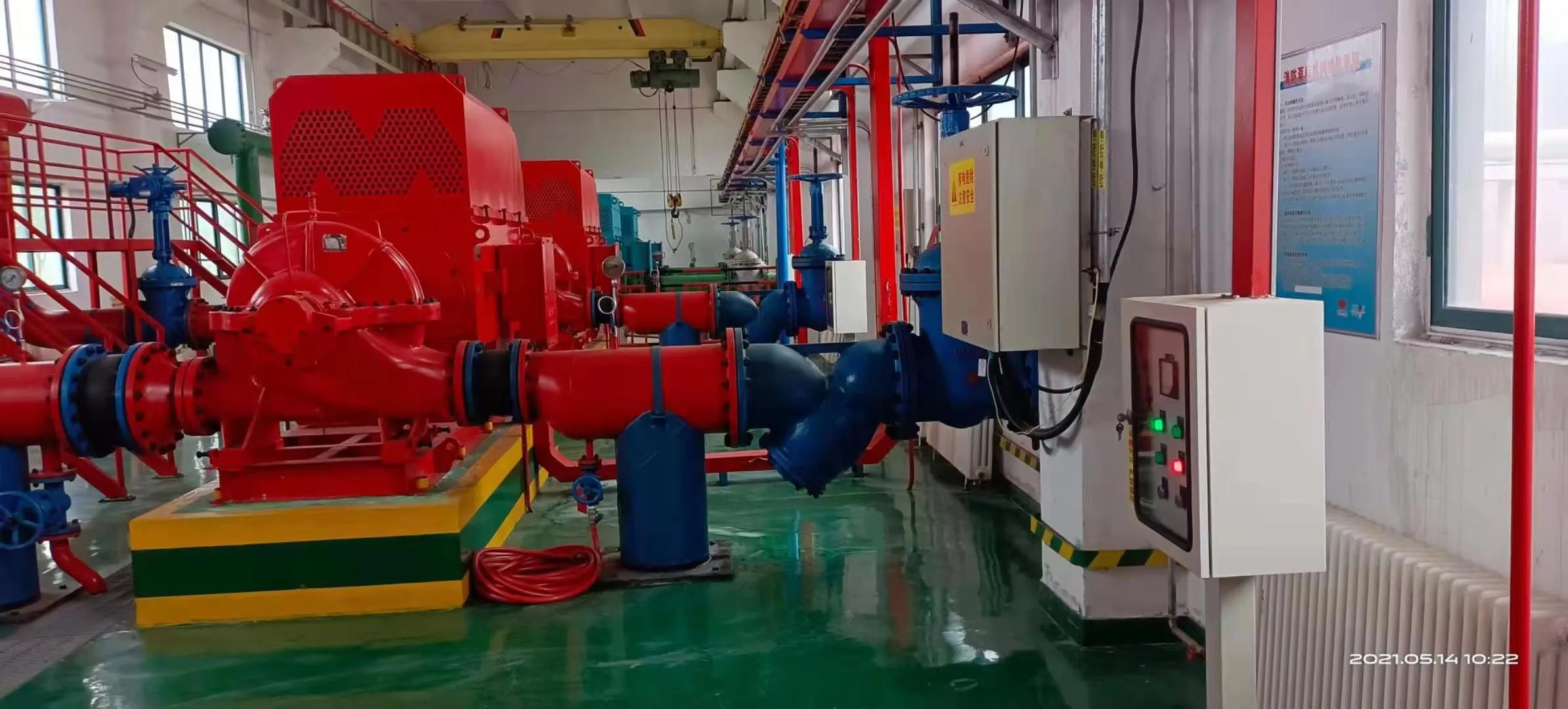
- Municipal water supply — high flow, moderate head, 24-hour duty with tight noise limits in urban stations.
- Power plant circulating water — the highest flows on site; an outage costs generation.
- HVAC chilled and condenser water — part-load operation for much of the year, so efficiency across the range matters more than peak efficiency.
- Industrial process cooling — often with water treatment chemistry that decides the material.
Recommended Pump & Material
The SOM series is a horizontally split, single-stage, double-suction centrifugal pump conforming to GB/T5657. Because the casing splits along the shaft axis, the whole rotating assembly lifts out by removing the top half — suction and discharge pipework stays bolted in place. On a duty that is inspected on a schedule, that single feature usually decides the pump choice.
Double suction means liquid enters the impeller from both sides, so axial hydraulic loads oppose and largely cancel; the bearings carry radial load only. The fully enclosed shaft never contacts the medium, so it does not corrode and is normally reusable at overhaul.
Key Selection Parameters
| Flow and head | Design point and the part-load range the pump must cover |
|---|---|
| Water chemistry | Decides cast iron vs SS304 / SS316 / SS316L |
| Operating temperature | Standard to 80 °C; to 120 °C on request |
| Available NPSH | Particularly on suction-lift installations |
| Driver arrangement | Motor or engine, and which side of the pump it sits |
| Sealing preference | Mechanical or packing; gland water below 0.3 MPa needs no supply component |
| Baseplate and pipework | If replacing an existing pump, send the existing flange and baseplate details |
What to Send Us
Send the flow and head, the medium and its temperature, the water chemistry, the sealing preference and the available power supply. If the pump replaces an existing unit, send the baseplate and flange details as well — the split-case arrangement often allows a direct replacement with pipework unchanged.
On Site
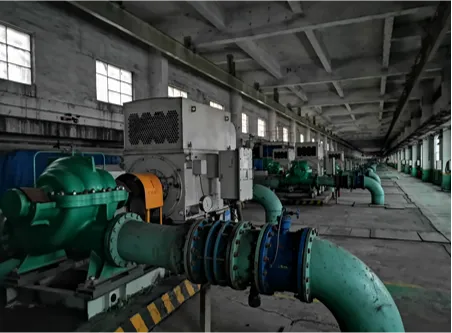
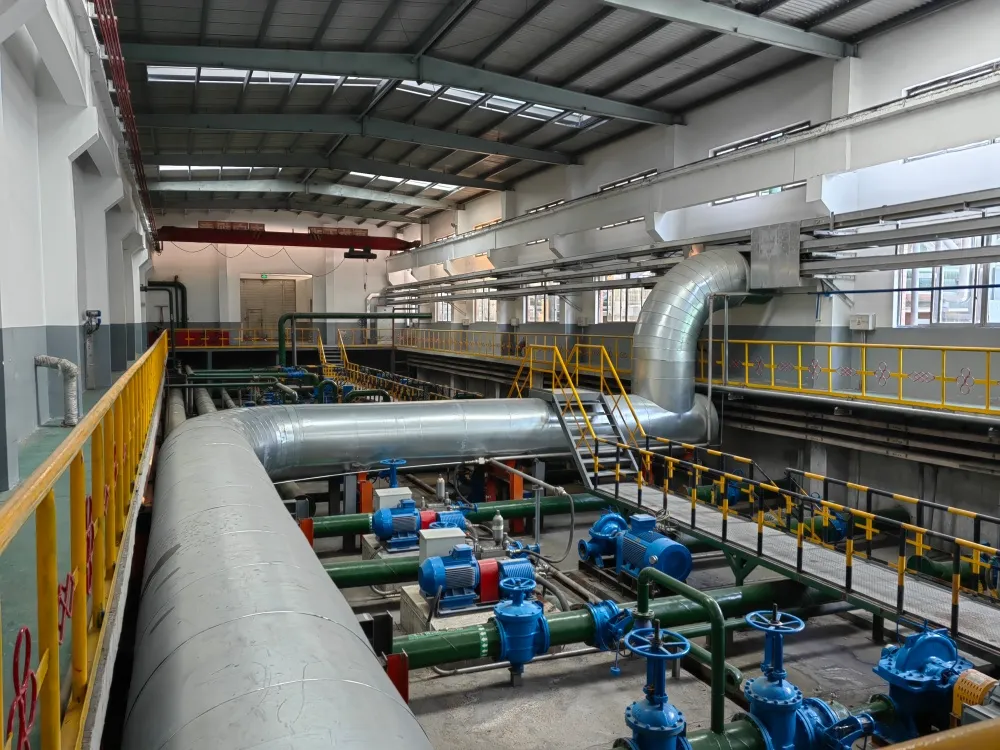
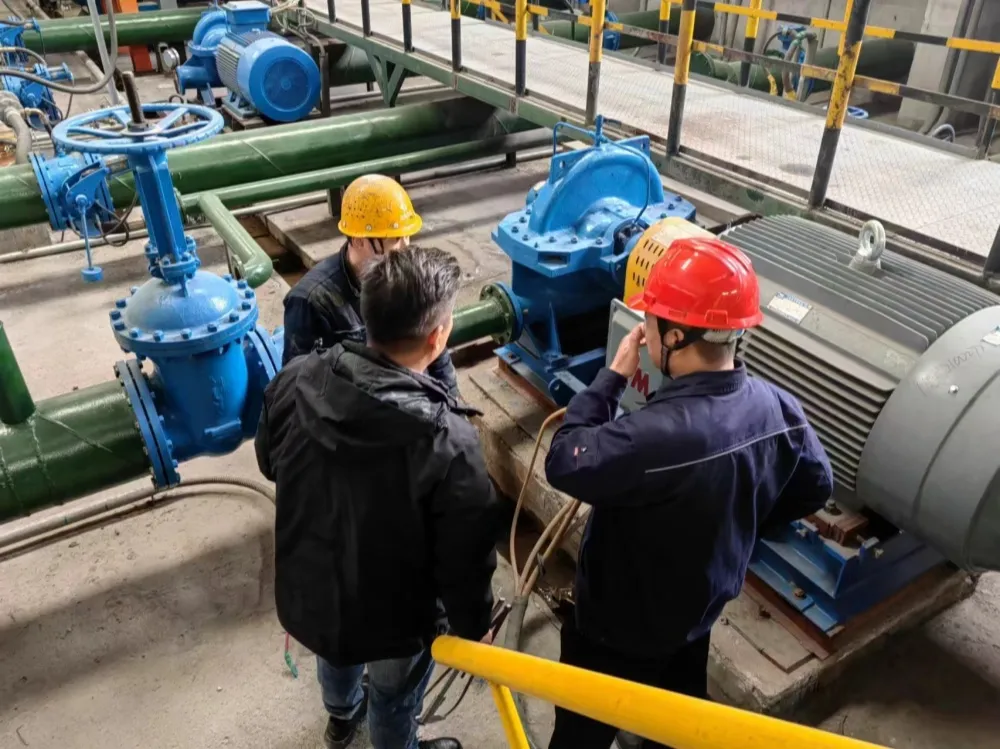
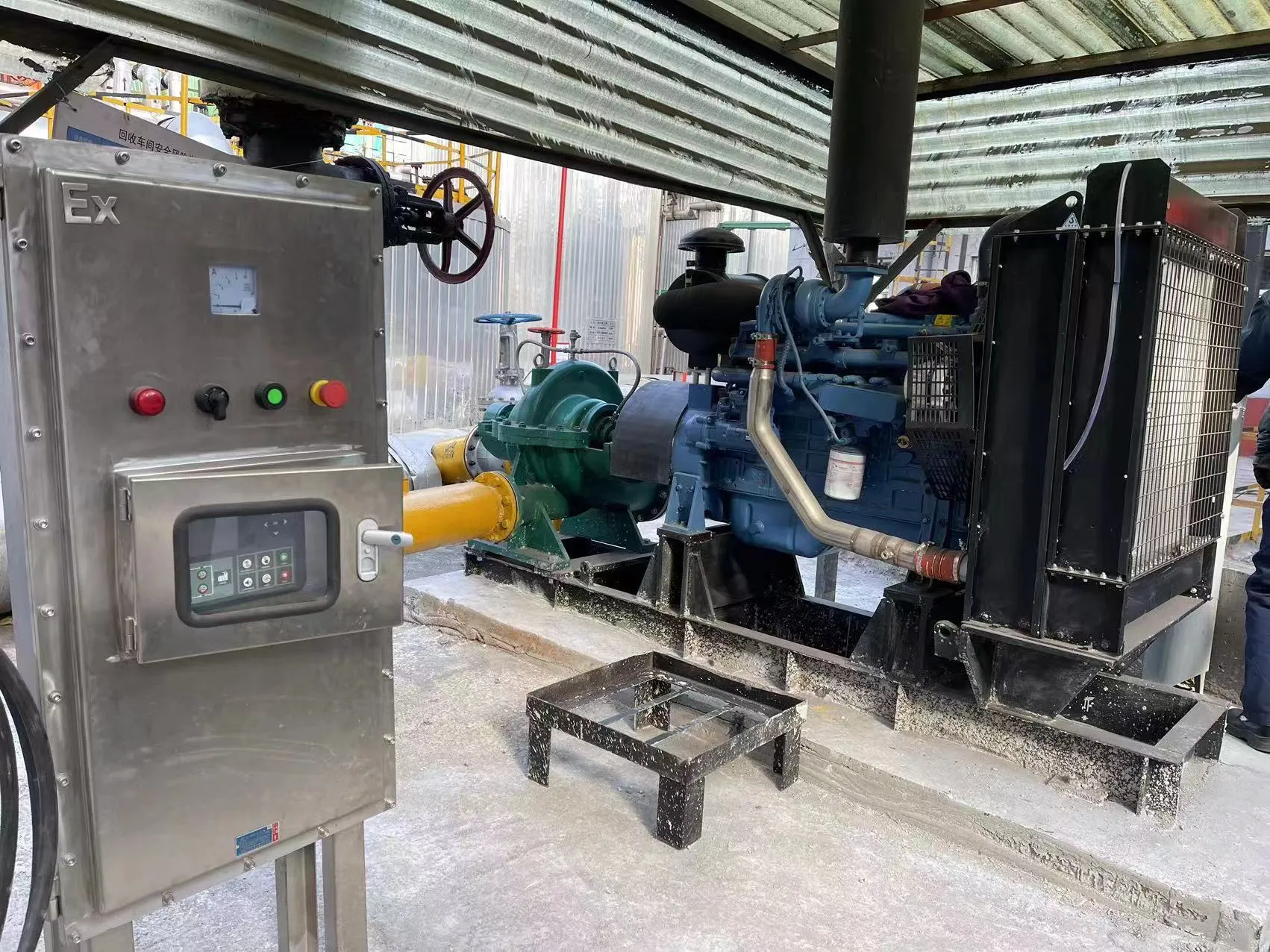
Send Your Enquiry
Why is a split casing worth paying for?
The rotating assembly is removed by lifting the top half of the casing, with suction and discharge pipework left in place. On continuously running duty that shortens every inspection and overhaul.
What flow range does the series cover?
74 to 23,500 m³/h, with power from 15 to 2500 kW and connections 150 to 1600 mm.
Can the driver be on either side?
Yes. Facing the outlet, the driver rotates counter-clockwise on the left side and clockwise on the right side. Specify which suits your layout.
Do we need a sealing water supply?
Not where inlet pressure is below 0.3 MPa(G) — the sealing water pipe component is not required in that case.
Manufacturer-direct supply · Technical pump-selection support · Export documentation on request.