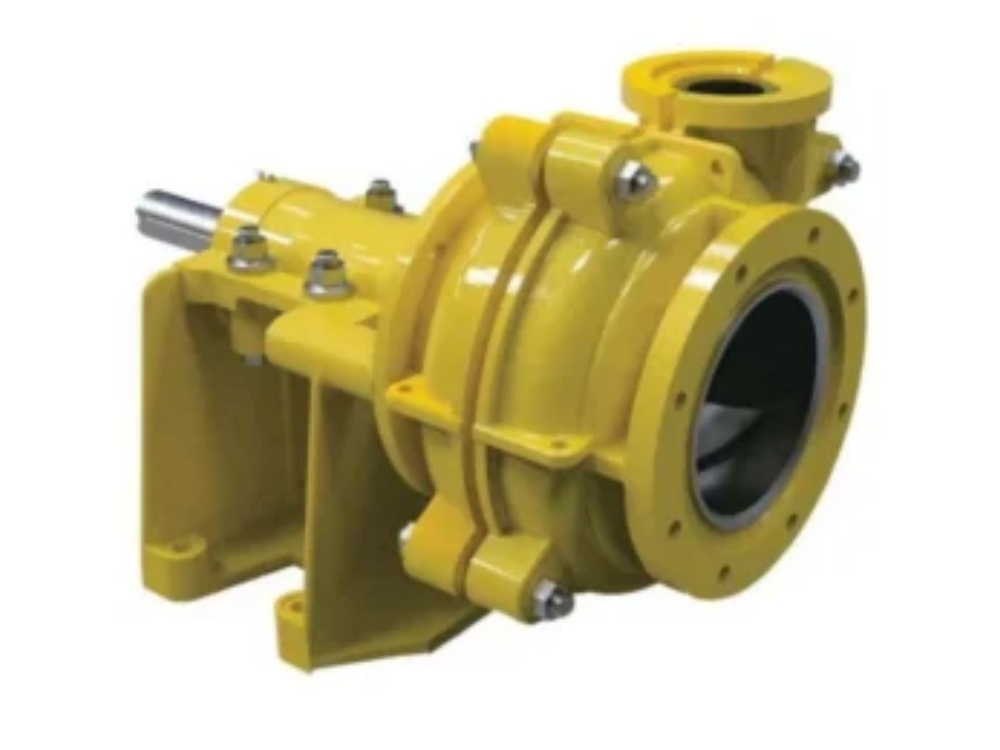
Froth Pump for Flotation & Mineral Processing
Flotation circuits froth-float mineral onto air bubbles; moving that low-density, air-entrained froth between cells needs a froth pump to avoid gas-lock and spillage of mineral-bearing froth.
Flotation circuits — froth is not slurry with air in it as far as a pump is concerned. Air in the impeller eye is the condition a centrifugal pump handles worst, and most froth problems come from application rather than the pump.
- Froth Volume Factor sets the flow: Qf = FVF × Qs, up to 1.8× the airless flow
- Brittle froth FVF 1.1–1.25; medium 1.25–1.5; tenacious 1.5–1.8
- Enlarged inlet and flow inducer raise available NPSH for tenacious froth
- Open impeller induces swirl at the intake to break out air
- Keep total head below 35 m, NPSHr below 3.5 m, pipe velocity below 2–2.5 m/s
- Never raise speed to compensate — over-speeding destroys froth performance
CE · EAC · ISO 9001 · ISO 14001 · ISO 45001
What This Duty Demands
In a flotation circuit, fine mineral attaches to air bubbles and floats; the froth spilling from the cell lip carries the mineral product. Moving it is difficult because the froth occupies far more volume than the slurry it contains, and because the air accumulates in the impeller eye and starves the pump.
- Rougher and scavenger froth — highest volumes, usually brittle to medium froth.
- Cleaner and recleaner froth — finer, often more tenacious; the mineral value per tonne is highest here, so spillage is most costly.
- Concentrate transfer — froth has largely collapsed; conventional slurry pump duty.
- Coal flotation — high froth volumes at low density.
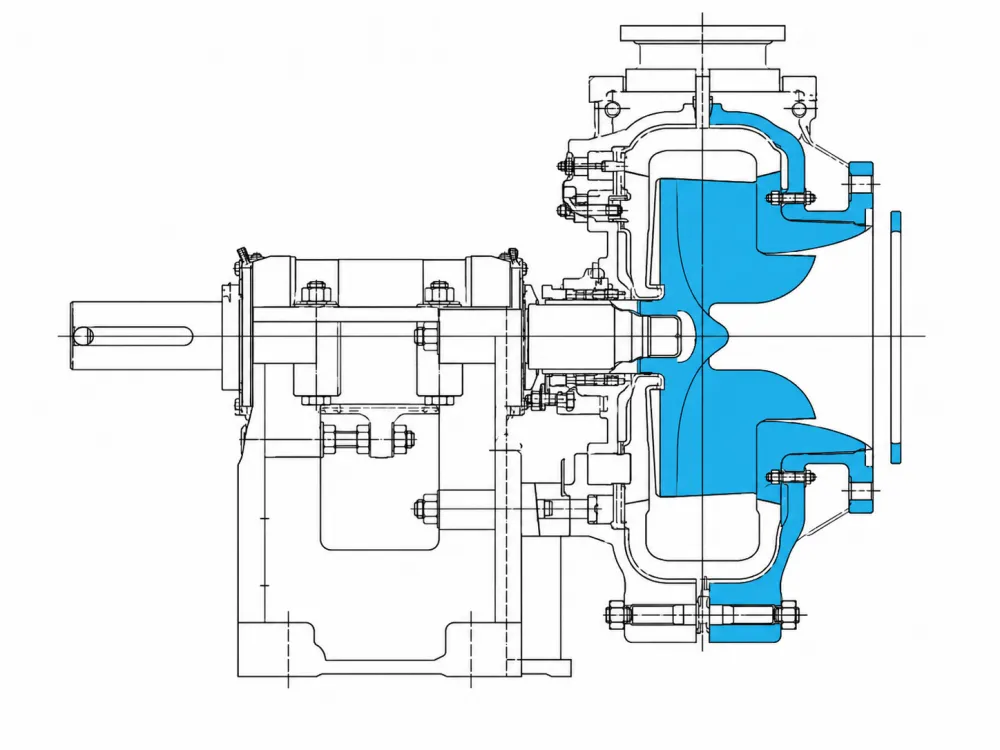
Recommended Pump & Material
Selection starts with the froth character, not the flow. Establish the Froth Volume Factor, calculate the froth flow Qf = FVF × Qs, and select against that. Selecting on the airless slurry flow is the most common error and produces a pump one or two sizes too small.
For brittle froth in a hopper, a vertical froth pump is usually sufficient — submergence alone gets the froth to the impeller. For tenacious froth, the horizontal froth pump with an enlarged inlet and a flow inducer is the better answer, because it raises the NPSH available rather than relying on the froth to break down on its own.
Key Selection Parameters
| Froth character | Brittle, medium or tenacious — or the measured Froth Volume Factor |
|---|---|
| Airless slurry flow Qs | The froth flow is derived from this, not used directly |
| Solids concentration | Of the airless slurry |
| Static head and line length | Keep total head below 35 m where possible |
| Available NPSH at the inlet | The quantity that limits froth pumping |
| Hopper geometry | Depth from mounting plate to working level, for vertical selection |
| Speed control available | Concentration varies; fixed speed is a constraint |
What to Send Us
Send the airless slurry flow and solids concentration, the froth character or measured FVF, the static head and discharge line details, and the available NPSH. We will work the ten-step froth selection procedure and issue the pump and impeller selection with the froth system curve.
Send Your Enquiry
Why can I not select on the slurry flow?
Because froth occupies more volume than the slurry it contains. The pump must pass Qf = FVF × Qs, which for tenacious froth is up to 1.8 times the airless flow.
The pump is not keeping up — should we increase speed?
No. Over-speeding is the most damaging response in froth duty; it produces unsteady flow and oscillating discharge pressure. Reduce speed and review the inlet arrangement and the selection.
Vertical or horizontal froth pump?
Froth character decides. Vertical suits light and brittle froths. For tenacious froth requiring an enlarged inlet and flow inducer, horizontal is generally the better answer.
The froth hopper keeps overflowing — what does that mean?
It is a reliable sign the pump is not coping. Check the FVF used in the selection and the inlet arrangement. Spillage should not be tolerated, because the froth carries the mineral product.
Manufacturer-direct supply · Technical pump-selection support · Export documentation on request.