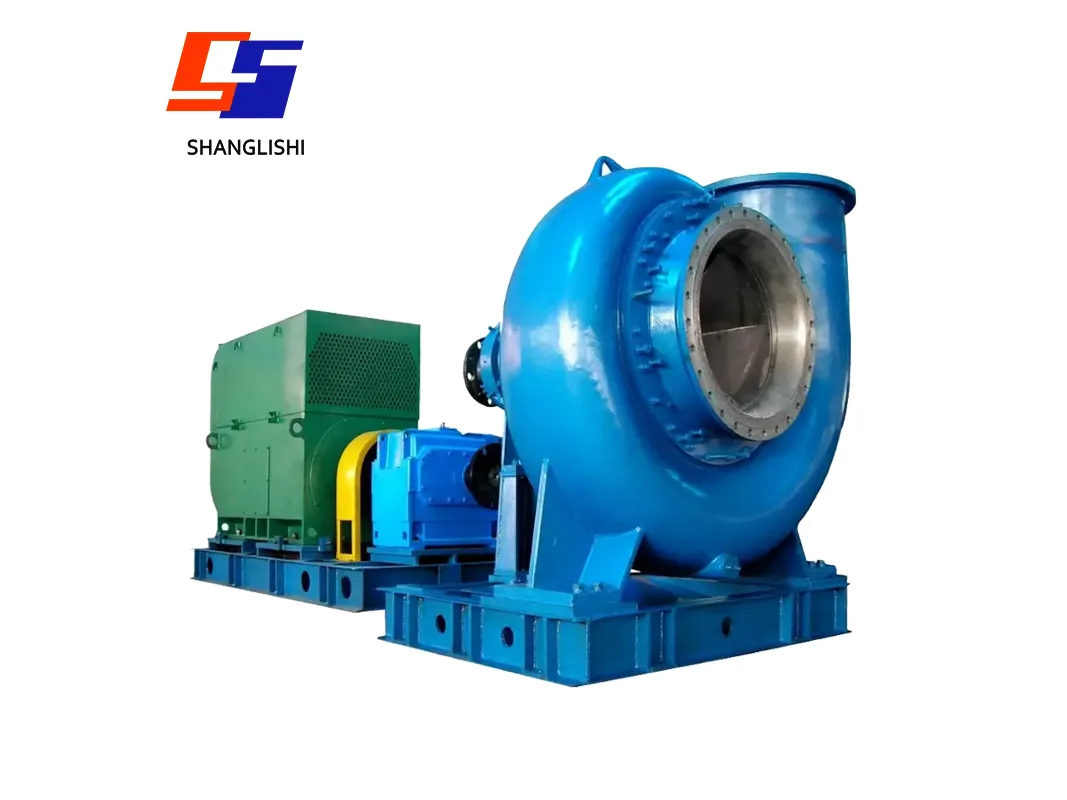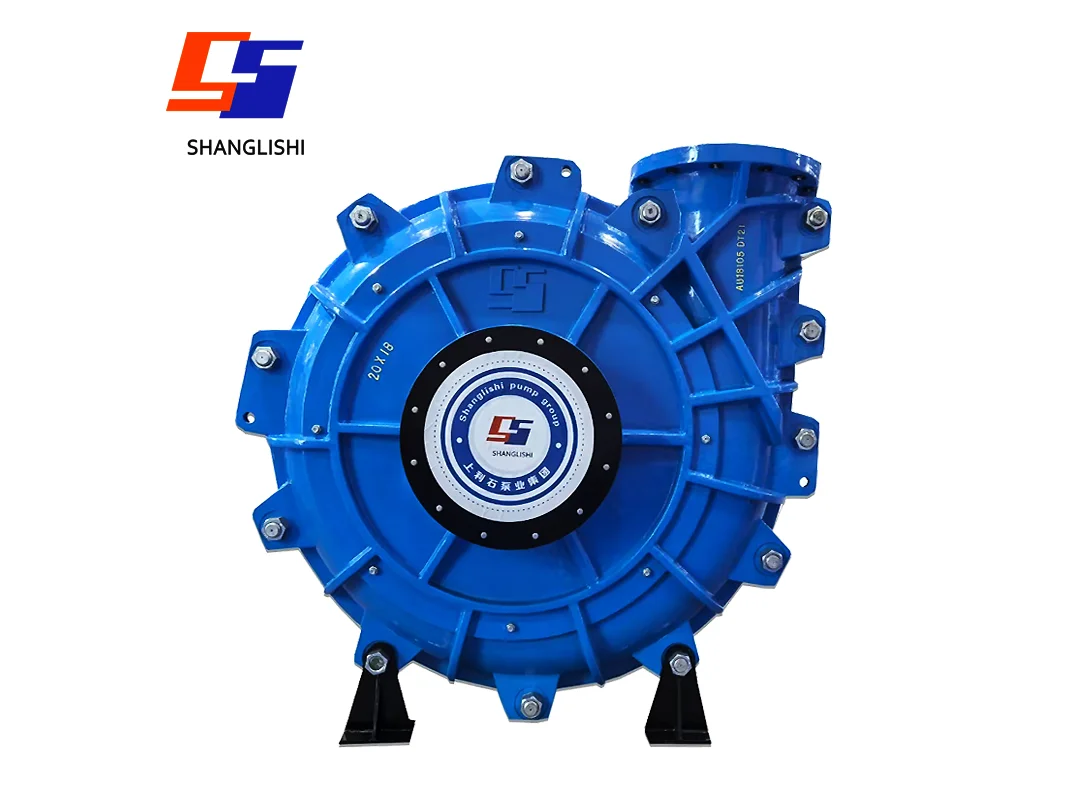
FGD Slurry Pump for Power Plant Desulfurization
In power-plant wet FGD, absorber-recirculation pumps move limestone/gypsum slurry at high flow against low-pH corrosion and gypsum abrasion, running continuously.
Wet flue-gas desulphurisation — absorber recirculation moves limestone and gypsum slurry at high flow, low head and low pH. The pump is selected for corrosion first and abrasion second.
- A49 anti-corrosive iron (≥600 MPa, HRC43) for pH ≥4 flue-gas duty
- A33 (HRC35) for oxidising slurry down to pH 1
- Rubber-lined wet ends where corrosion resistance must not depend on a passive layer
- High flow at low head — large impeller, moderate speed
- Continuous duty; wear parts sized for scheduled outages
- Ceramic (silicon carbide) available where wear and corrosion are both severe
CE · EAC · ISO 9001 · ISO 14001 · ISO 45001
What This Duty Demands
FGD slurry attacks a pump in two ways at once, and a material chosen for only one of them fails quickly. The limestone and gypsum particles are abrasive; the liquor is acidic. Corrosion attacks the matrix between the hard carbides, the carbides are then lost mechanically, and a high-hardness grade that would last well in a neutral circuit wears out early.
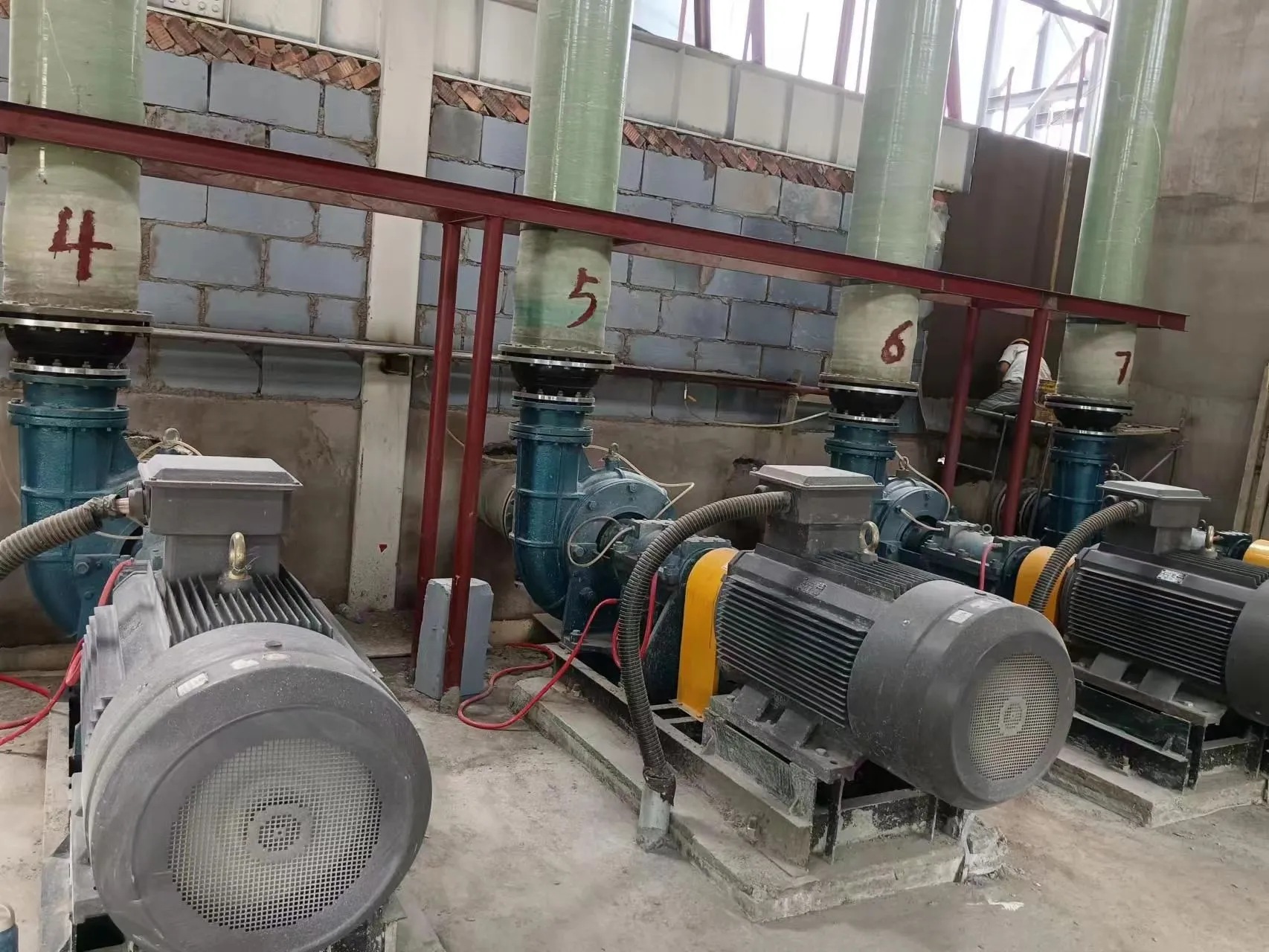
- Absorber recirculation — the highest-flow duty, running continuously between planned outages.
- Limestone slurry feed — finer solids, moderate flow.
- Gypsum bleed and dewatering — higher solids concentration, feeding hydrocyclones or filters.
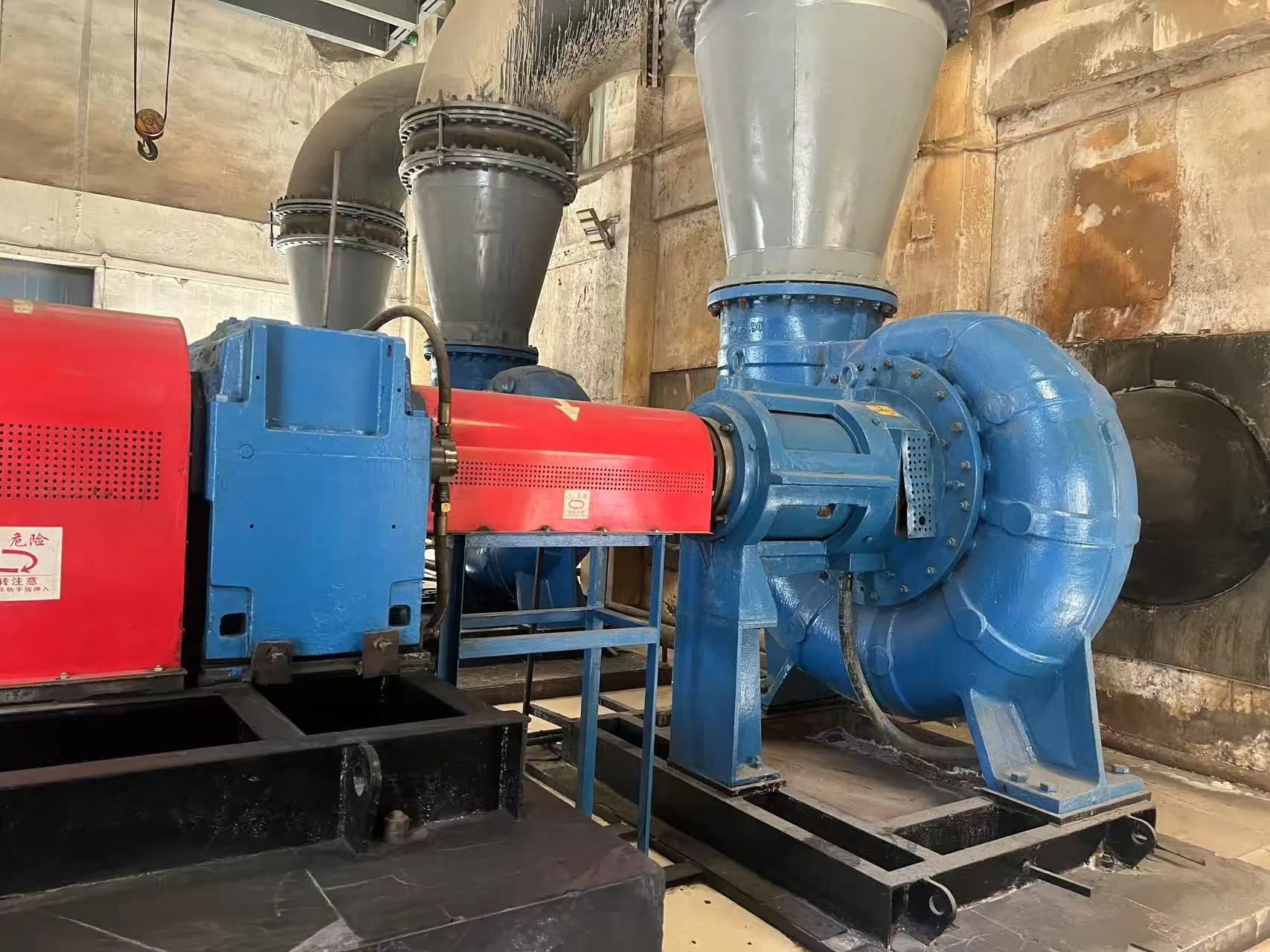
Recommended Pump & Material
Selection follows pH first. A49 anti-wear anti-corrosive iron (≥600 MPa, HRC43) is the standard grade for flue-gas and desulphurisation duty at pH ≥4. A33 (HRC35) covers oxidising slurry down to pH 1, including phosphogypsum and mineral acid media. Where corrosion resistance must not depend on a passive oxide layer, a rubber-lined wet end is the better answer, because the elastomer resists the liquor chemically rather than electrochemically.
For severe combined wear and corrosion, a ceramic (silicon carbide) wet end is available as a separate pump series.
Key Selection Parameters
| Slurry pH | The first selection criterion; decides between A05, A49, A33 and non-metallic |
|---|---|
| Chloride content | Affects material selection independently of pH |
| Solids concentration | Limestone and gypsum loading by weight |
| Particle size | Gypsum crystals are less abrasive than freshly ground limestone |
| Operating temperature | Absorber temperature and any excursion range |
| Duty point | High flow at low head is typical; confirm both design and maximum |
| Outage interval | Wear parts are sized against the planned maintenance window |
What to Send Us
Send the slurry pH, chloride content, solids concentration and particle size, the operating temperature, the flow and head required and the interval between planned outages. We will confirm the wear material and the sealing arrangement.
On Site
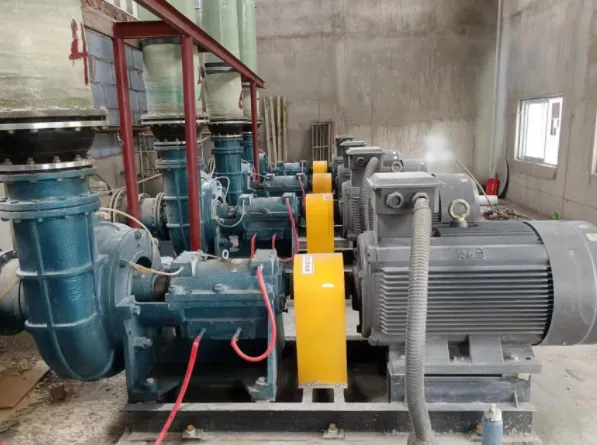
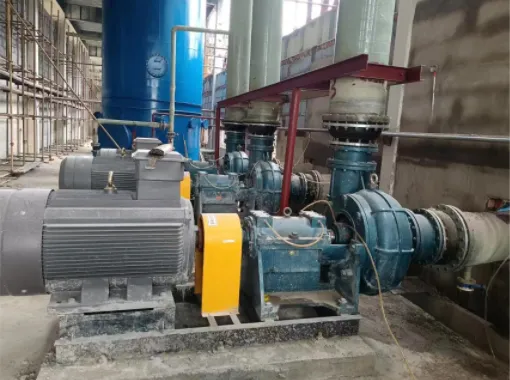
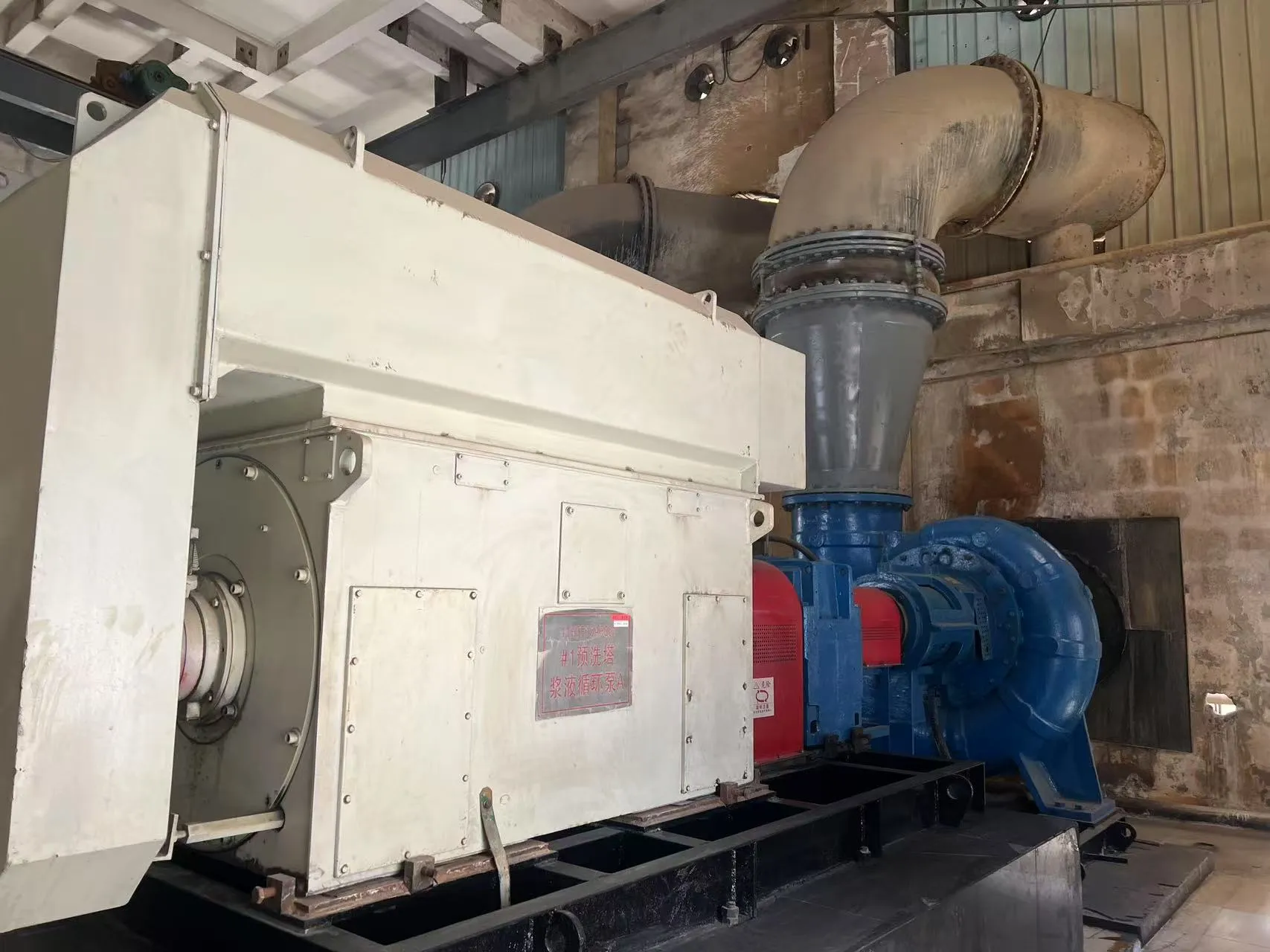
Send Your Enquiry
Why not use the hardest available material?
Because corrosion attacks the matrix between the hard carbides; the carbides are then lost mechanically. Hardness alone does not address that mechanism. A49 and A33 combine erosion resistance with corrosion resistance.
At what pH does high-chrome stop being suitable?
High-chrome white irons are specified for pH 5–12. Below that, use A49 at pH ≥4 or A33 at pH ≥1.
Is a rubber wet end appropriate for FGD?
Yes where the solids are fine and rounded. Rubber resists the liquor chemically rather than relying on a passive layer, which is an advantage in acidic duty.
What about severe wear and corrosion together?
A ceramic silicon-carbide wet end is available as a separate pump series for that combination.
Manufacturer-direct supply · Technical pump-selection support · Export documentation on request.