Submersible Slurry Pump for Mining Dewatering
Mine dewatering removes abrasive, solids-laden water from pits, sumps and shafts continuously; a submersible slurry pump avoids priming and handles solids.
Mine dewatering — removing abrasive, solids-laden water from pits, sumps and shafts, continuously, as the level and the working face both change. Suction lift and priming are the constraints a submersible removes.
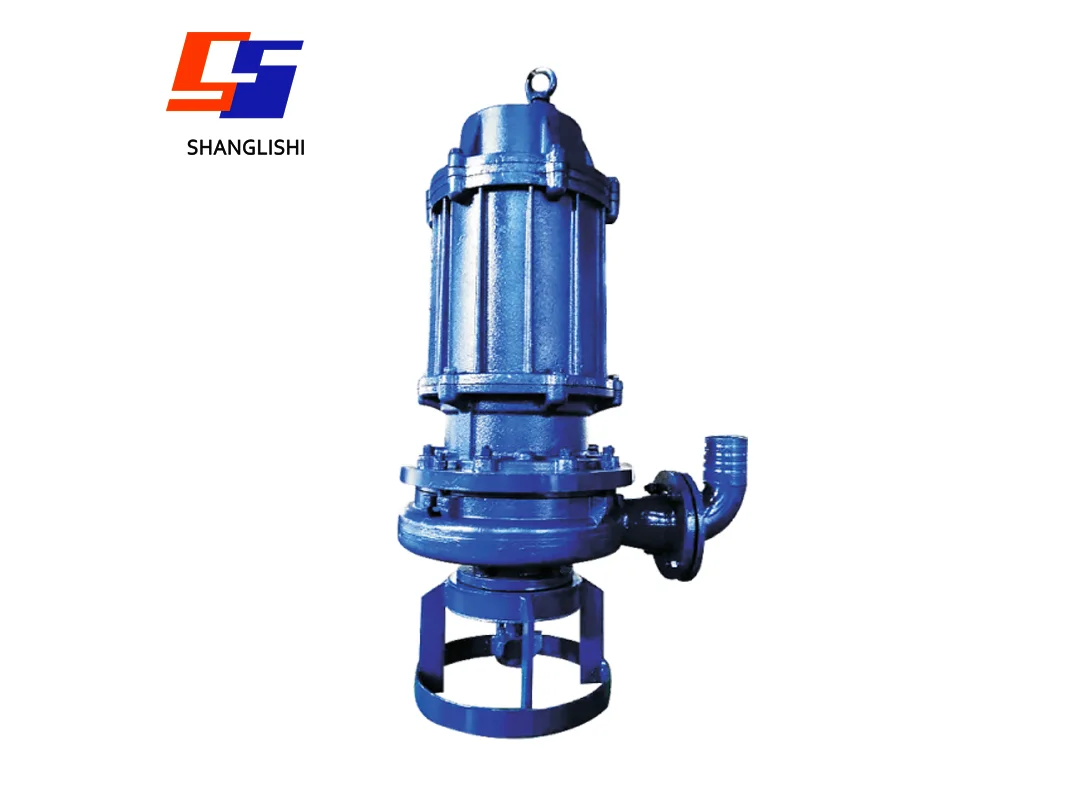
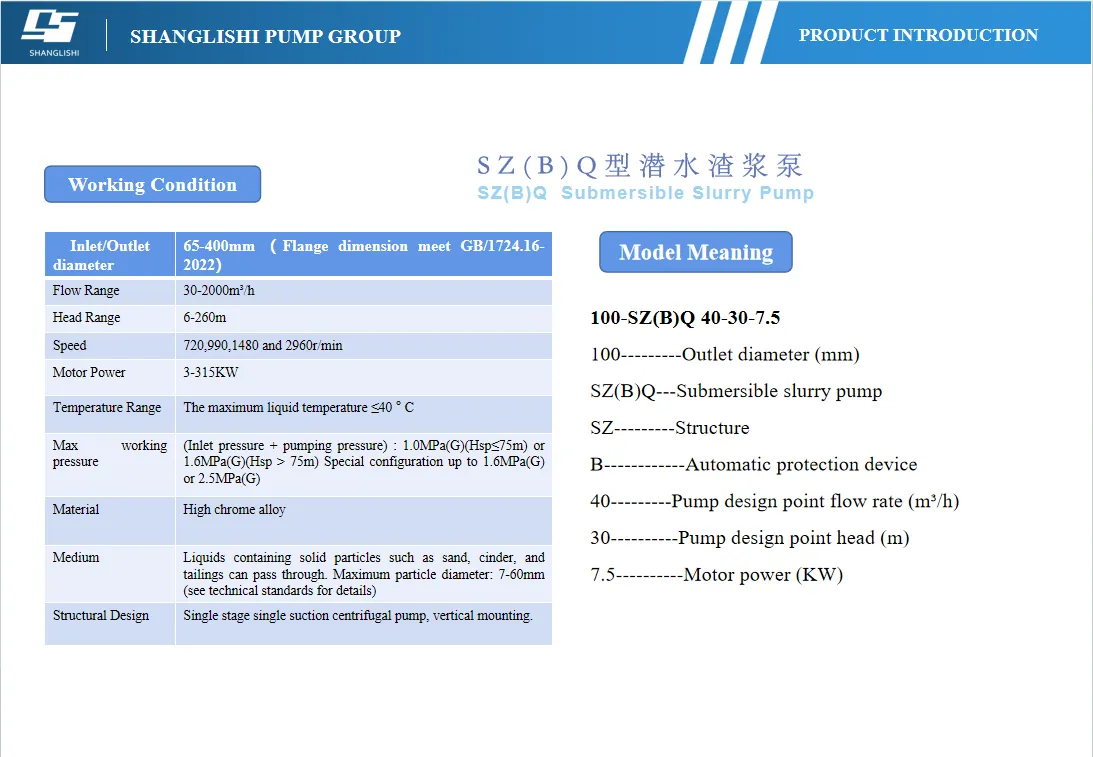
- SZ(B)Q submersible slurry pump, discharge 65–400 mm, head to 260 m
- Flow 30–2000 m³/h; motor 3–315 kW
- Particle size 7–60 mm depending on model
- High-chrome A05 wet end for abrasive mine water
- Motor cooled by the pumped medium — specify run-dry sensing where level falls
- Overload, phase-loss, leakage and winding over-temperature protection
CE · EAC · ISO 9001 · ISO 14001 · ISO 45001
What This Duty Demands
Mine water is not clean water. It carries rock fines, sand and drilling residue, it is often acidic, and the sump level moves through the shift. A surface pump loses suction as the level falls; a clear-water submersible wears out on the solids.
- Open pit sumps — rainfall-driven, with high sediment loading after storms.
- Underground stations — high head, continuous duty, difficult access for service.
- Shaft bottom — the highest head requirement; often a series arrangement.
- Development headings — portable duty, moved as the face advances.
Recommended Pump & Material
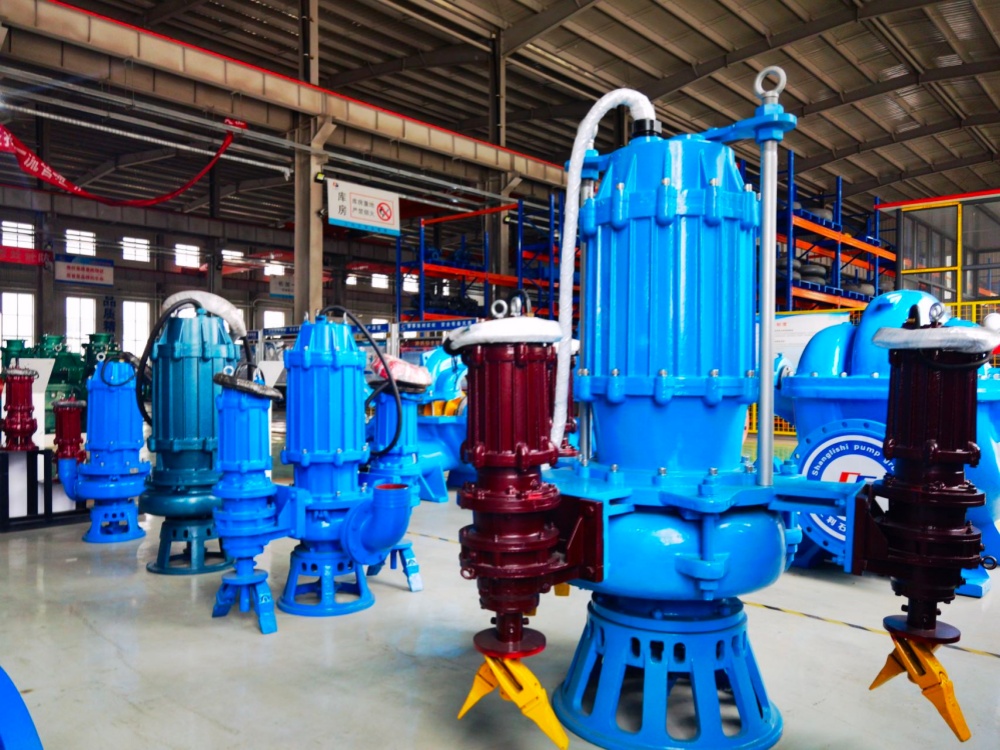
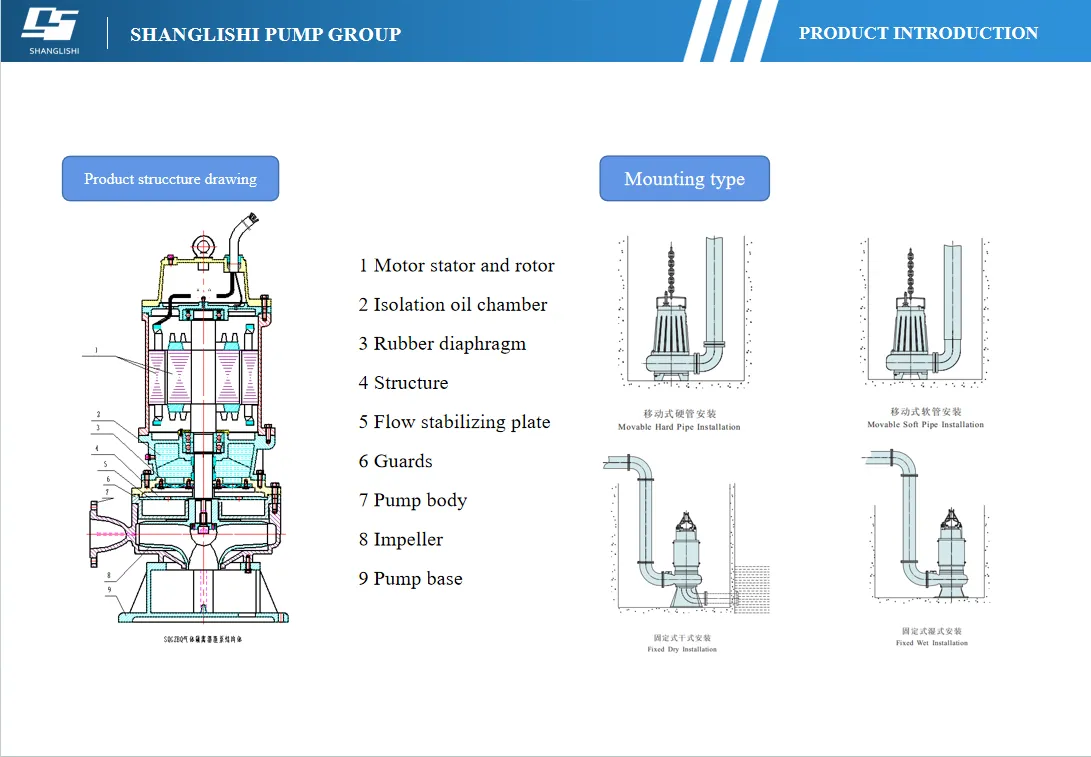
The SZ(B)Q submersible slurry pump covers 30–2000 m³/h at 6–260 m head with motors from 3 to 315 kW. The wet end is high-chrome alloy rather than the cast iron used in clear-water submersibles, which is the difference that matters on mine water.
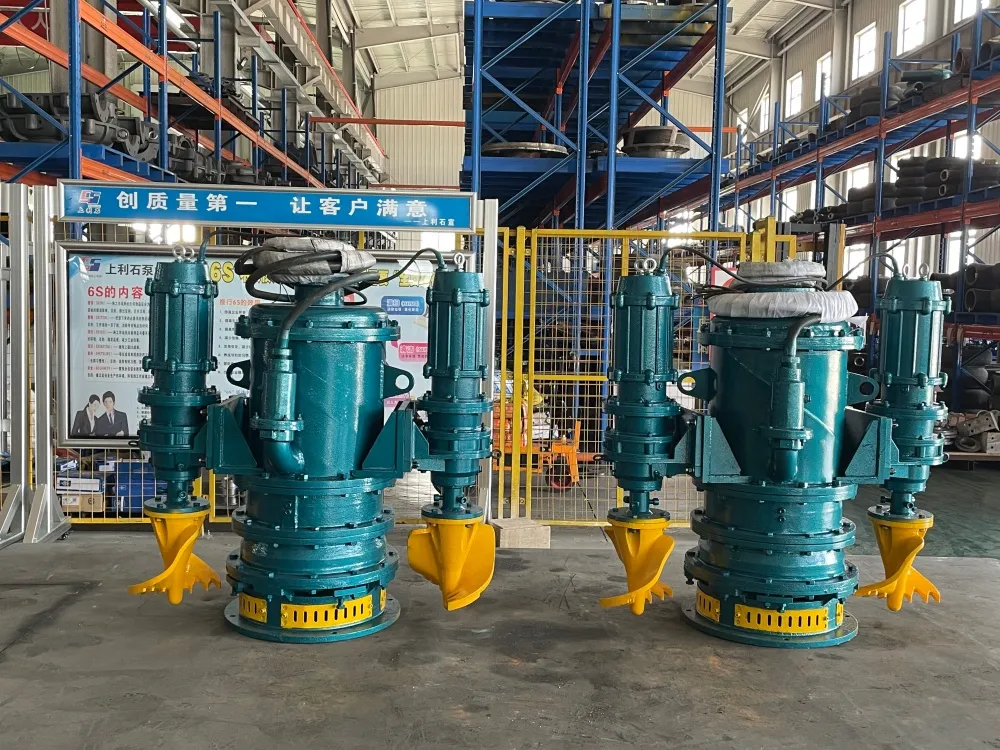
Cooling is by the pumped medium through the stator casing, so minimum immersion must be maintained — on a falling sump specify run-dry sensing. Where the deposit at the sump floor consolidates between pumping cycles, add an agitator so the pump removes the solids rather than skimming the water above them.
Key Selection Parameters
| Water chemistry | pH and dissolved solids; acidic mine water changes the material selection |
|---|---|
| Solids loading | Concentration and particle size, including after-storm peaks |
| Head required | Static lift plus line loss; shaft duty may need a series arrangement |
| Sump geometry | Depth, minimum working level and whether the pump can stay immersed |
| Duty cycle | Continuous or level-triggered |
| Power supply | 380 V 50 Hz standard; 380–600 V and 50/60 Hz available |
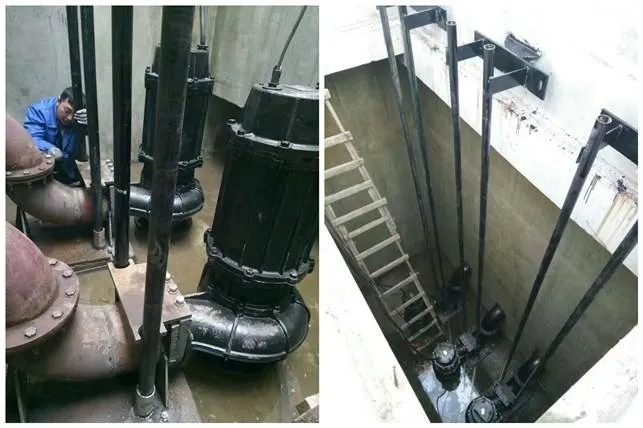
| Access for service | Decides between guide-rail and mobile installation |
What to Send Us
Send the flow and head required, the water chemistry and solids loading, the sump depth and minimum working level, the duty cycle and the available power supply. We will confirm the model, the wet-end material and the protection configuration.
On Site
Send Your Enquiry
Why not use a clear-water submersible?
Mine water carries rock fines and sand. A clear-water pump has a cast iron wet end and wears out quickly; the SZ(B)Q uses a high-chrome alloy wet end for abrasive duty.
What happens when the sump runs dry?
Cooling depends on the stator casing staying immersed, so dry running must be avoided. Specify run-dry sensing where the level can fall below the motor.
Do we need an agitator?
If the sump floor deposit consolidates between cycles, yes. Without agitation the pump removes water and leaves the solids, and the working volume of the sump shrinks.
What head can a single pump reach?
Up to 260 m depending on model. For shaft duty beyond that, specify a series arrangement at enquiry.
Manufacturer-direct supply · Technical pump-selection support · Export documentation on request.