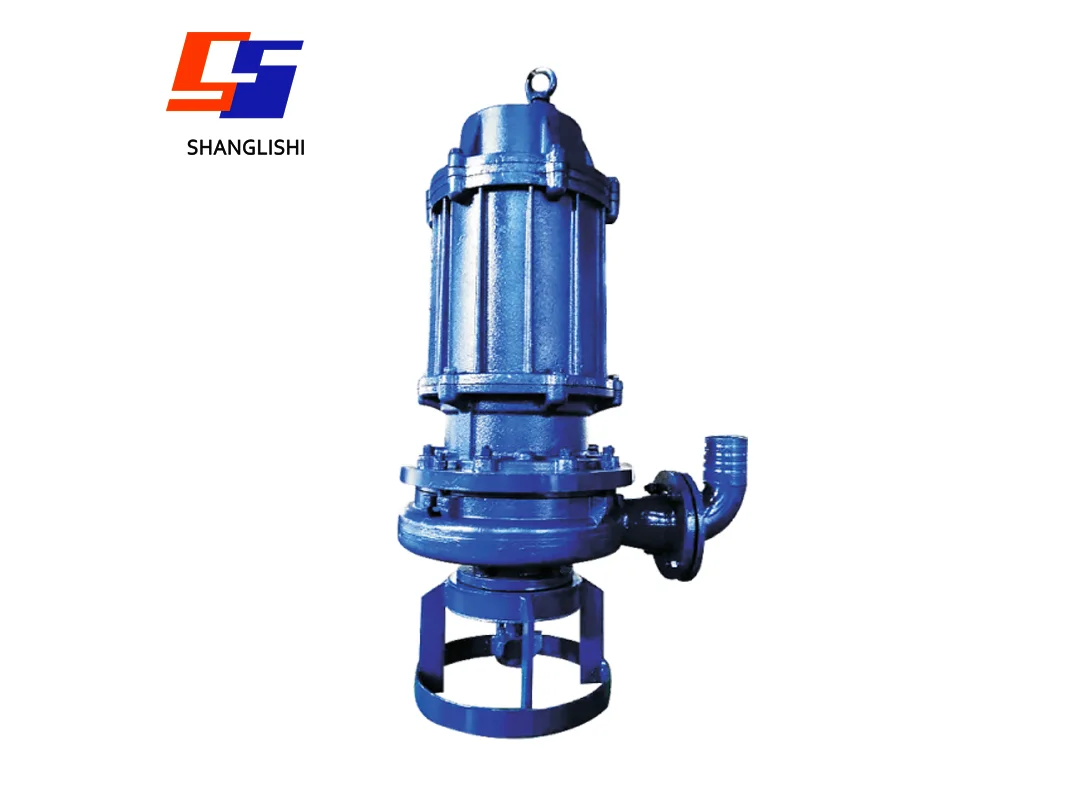
Submersible Sewage Cutter Pump
SWQ submersible cutter pump with a cutting impeller that shreds fibrous solids to prevent clogging in municipal/industrial sewage; flow to 4000 m³/h, solids not exceeding 50 % of the outlet diameter, IPX8 Class-F.
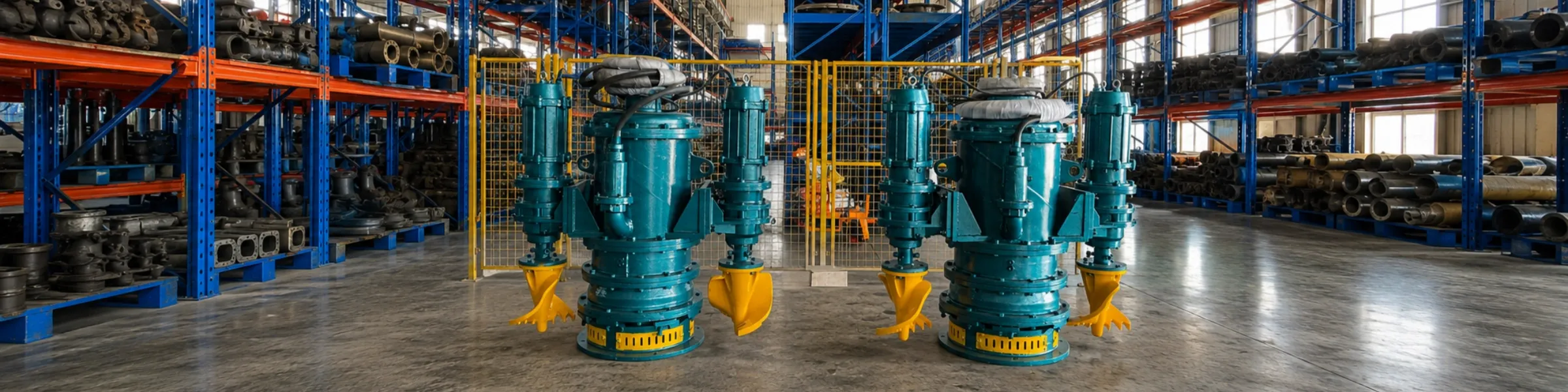
Cutter-equipped submersible pump — where the well collects material that has already consolidated, a pump alone draws liquid and leaves the deposit. The cutting agitator reduces it at the intake so it can be pumped away.
- External cutting agitator for compacted and matted deposits
- Mixing wheel alternative for loose settled sludge and sand
- Selection follows the state of the deposit, not the pump size
- High-chrome wet end, impeller and casing matched on test
- Two seals in series with oil-chamber barrier and leakage probe
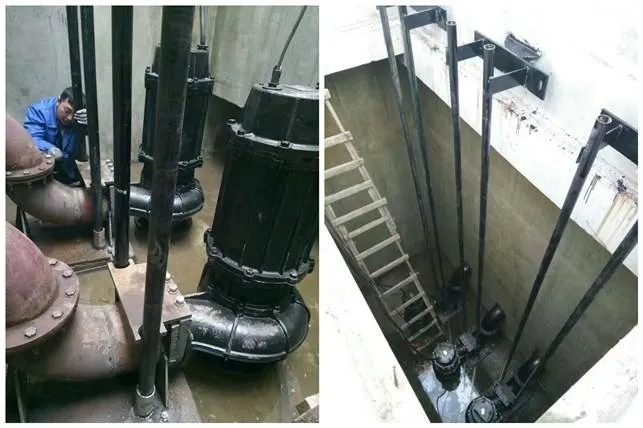
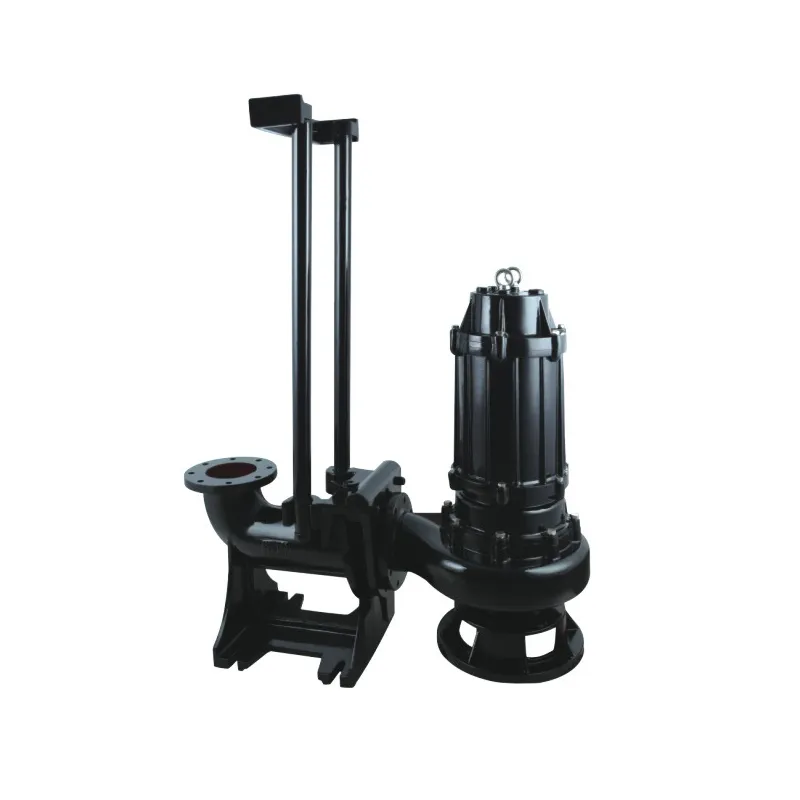
- Five installation arrangements including automatic coupling on guide rod
CE · EAC · ISO 9001 · ISO 14001 · ISO 45001
Overview
Where a wet well collects material that has already consolidated — compacted sludge, matted fibre, settled sand — a pump on its own will draw liquid and leave the deposit behind. This configuration carries a cutting agitator at the intake, which breaks the deposit down and returns it to suspension so it can be pumped away instead of accumulating.
Working conditions
| Inlet / outlet diameter | 50–600 mm |
|---|---|
| Flow range | 15–4000 m³/h |
| Head range | 7–40 m |
| Speed | 720, 990, 1480 and 2960 r/min |
| Motor power | 0.75–315 kW |
| Temperature range | Medium temperature ≤ 40 °C; medium density ≤ 1200 kg/m³; pH 5–9 |
| Maximum working pressure | Inlet pressure + pumping pressure: 1.0 MPa(G) for Hsp ≤ 75 m, or 1.6 MPa(G) for Hsp > 75 m. Special configuration to 1.6 MPa(G) or 2.5 MPa(G) |
| Material | Cast iron, SS304, SS316 |
| Medium | Wastewater with solid particles and long fibres, sewage, rainwater |
| Structural design | Single-stage single-suction centrifugal pump, vertical mounting |
Model designation
Example: 50SWQ15-8-0.75
| 50 | Drain aperture in millimetres |
|---|---|
| SWQ | Submersible sewage pump |
| 15 | Capacity, m³/h |
| 8 | Head, m |
| 0.75 | Power of fitted motor, kW |
Cutting Agitator
- External cutting agitator — mounted at the pump intake for compacted and hardened deposits. It reduces the material before it reaches the impeller, which keeps the flow passage clear and the duty point stable.
- Mixing wheel alternative — for loose settled sludge and sand, a mixing wheel at the bottom of the pump is sufficient. It fluidises the deposit into a moving suspension for extraction, combining submerged operation, agitation and solids pumping in one unit.
- Selection — the choice between cutting agitator and mixing wheel follows the state of the deposit, not the pump size.
Wet End
The casing and impeller are cast in high-chrome wear-resistant, corrosion-resistant alloy for abrasive service, and are matched on test so that the power curve remains flat and the unit is not easily overloaded as solids loading varies. Impellers are balanced to keep vibration low, which matters where intake loading is intermittent by nature. Single-vane, two-vane and three-vane impeller forms are available against the duty.
Sealing and Protection
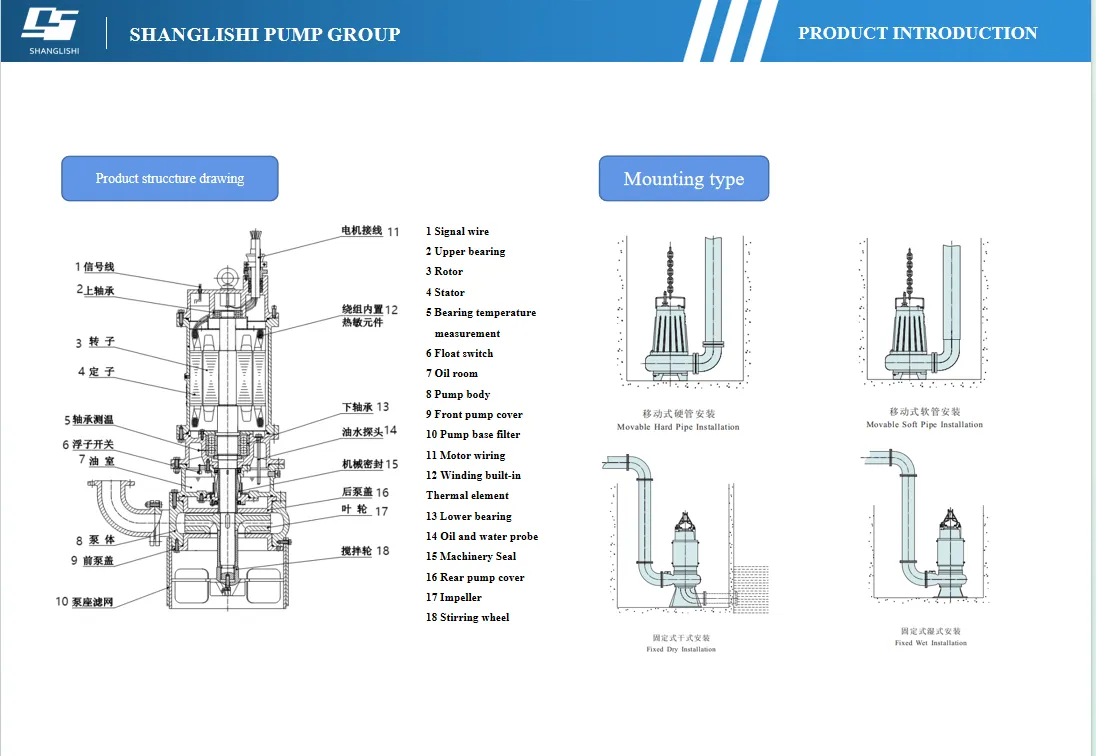
Two mechanical seals run in series and work independently: pump side tungsten carbide against tungsten carbide, motor side graphite against silicon carbide, with an oil chamber between them that lubricates and cools both faces. Stator temperature is monitored by three series thermal switches opening at 125 °C, the oil chamber carries a leakage probe with alarm and automatic shutdown, and a float switch in the motor cavity detects motor-side seal leakage.
Installation
Five arrangements are available: automatic coupling on a guide rod, mobile hard pipe, mobile hose, fixed dry and fixed wet. Automatic coupling suits permanent wet wells where the pump must be lifted for service without draining; the mobile arrangements suit sites where one unit serves several wells. Fixed dry installation requires a cooling system.
Typical Applications
- Wet wells and sumps where sludge consolidates at the floor between pumping cycles.
- Industrial effluent pits carrying matted fibre and settled solids.
- Sewage treatment works handling sediment and screenings.
- Mine and quarry sumps with settled sand and rock fines.
- River, lake and harbour desilting.
Selection
Describe the deposit — what it is, how consolidated it becomes, the particle size and the fibre content — together with flow, head, medium temperature and power supply. We will confirm whether a cutting agitator or a mixing wheel is required and issue the selection.
Send Your Enquiry
| Series | SWQ submersible sewage pump |
|---|---|
| Maximum solid size | 50 mm diameter |
| Flow | To 4000 m³/h |
| Medium temperature | Up to 40 °C |
| Motor insulation | Class F, maximum working temperature 155 °C |
| Motor enclosure | IPX8 |
| Bearings | SKF or NTN |
| Mechanical seal | Two seals in series, working independently. Pump side tungsten carbide / tungsten carbide; motor side graphite / silicon carbide |
| Impeller options | Single-vane, two-vane or three-vane, selected against the duty |
| Stator thermal protection | Three thermal switches in series embedded in the stator, normally open, opening at 125 °C stator temperature |
| Leak detection | Oil-chamber leakage probe with alarm and automatic shutdown; cable-gland leakage probe fitted in the motor terminal box from 30 kW upward |
| Installation | Five arrangements: automatic coupling, mobile hard pipe, mobile hose, fixed dry, fixed wet |
Cutting agitator or mixing wheel?
A cutting agitator suits compacted or hardened deposits and matted fibre. A mixing wheel suits loose settled sludge and sand. The state of the deposit decides, not the pump size.
Does the agitator add wear?
The wet end including the agitator is cast in high-chrome alloy for abrasive duty and the wear parts are replaceable. The sealing arrangement is unchanged from the standard unit.
Can the unit be lifted for service without draining the well?
Yes, with the automatic coupling arrangement. The pump is lowered along a guide rod and connects automatically to the discharge pipework, so it can be raised for service and re-seated without draining.
Which impeller forms are available?
Single-vane, two-vane and three-vane. Fewer vanes give the largest free passage; the form is selected against the medium.
Manufacturer-direct supply · Technical pump-selection support · Export documentation on request.