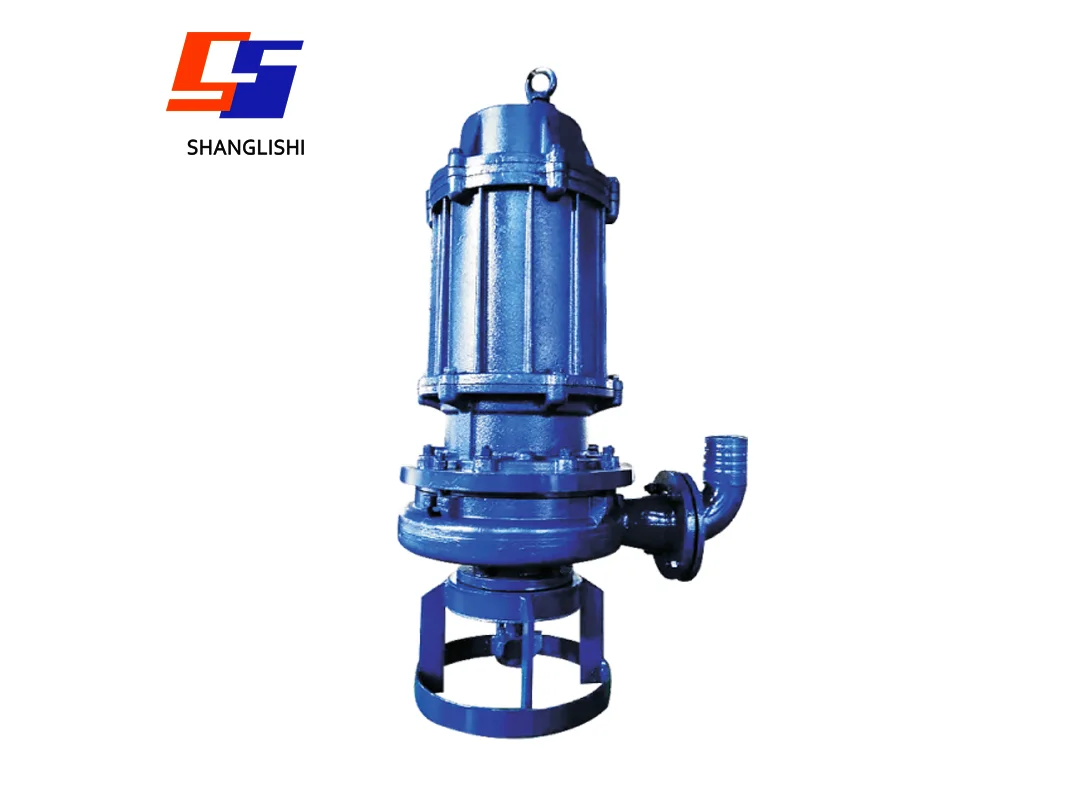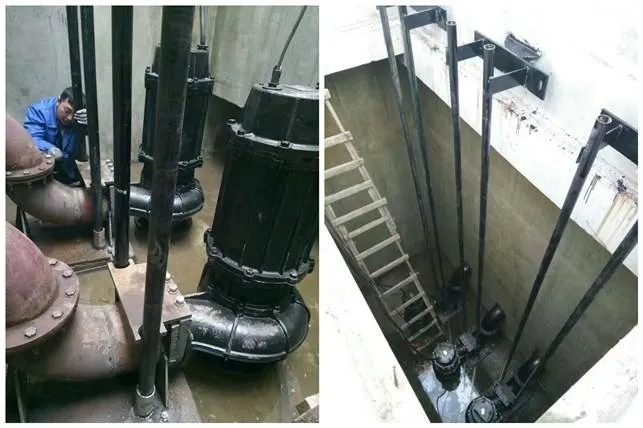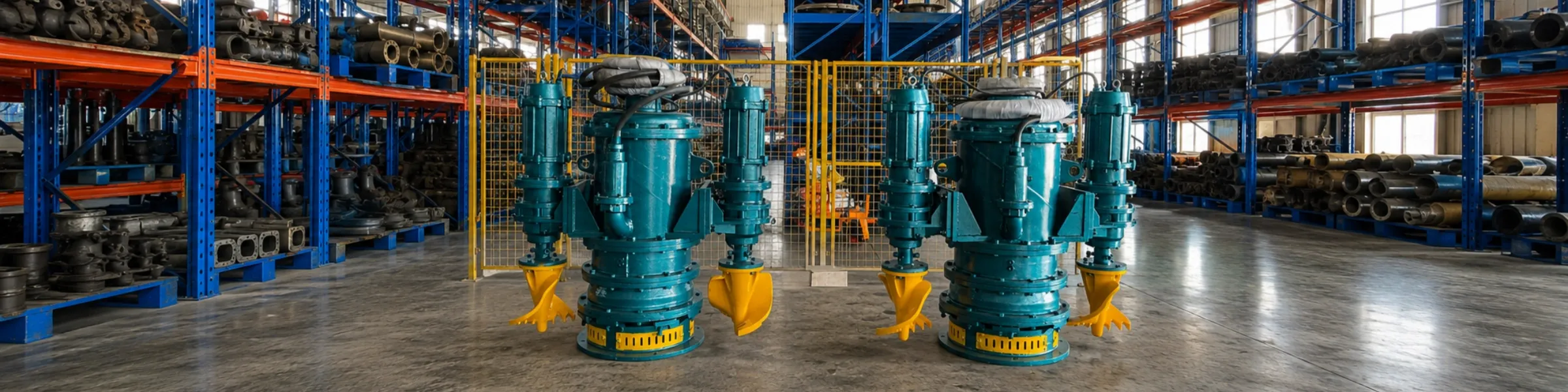
Non-Clog Submersible Sewage Pump
SWQ non-clog sewage pump with single/double/three-leaf channel impeller that passes solids without blockage — flow to 4000 m³/h, solids not exceeding 50 % of the outlet diameter, IPX8.
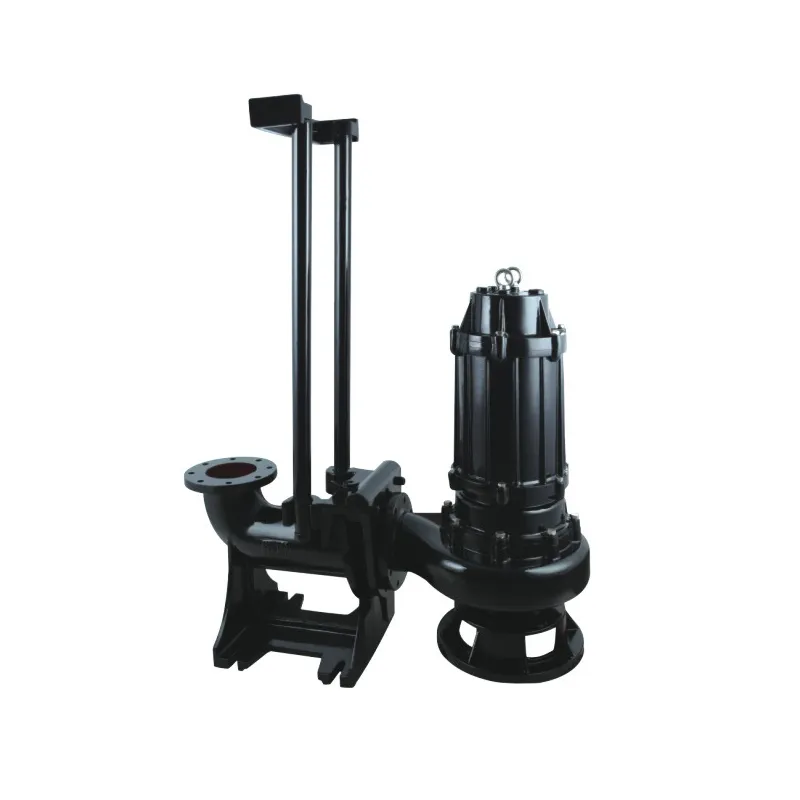
Non-clogging submersible sewage pump — for liquids carrying hard solids and long fibre, and for dirty, sticky or greasy media. Clogging is addressed in the hydraulic design rather than by screening upstream.
- SWQ / SWQ series — solids to 50 mm, flow to 500 m³/h
- Single-, two- and three-vane impellers — fewer vanes give the largest free passage
- Anti-winding form passes long-fibre waste instead of collecting it
- CAD/CAM casing profile holds the modelled flow path
- Three stator thermal switches in series, opening at 125 °C
- Two mechanical seals in series: WC/WC pump side, graphite/SiC motor side
CE · EAC · ISO 9001 · ISO 14001 · ISO 45001
Overview
The SWQ submersible sewage pump is built for liquids that carry hard solids and long fibre, and for dirty, sticky or greasy media that block conventional pumps. It handles solids to 50 mm diameter at flows to 500 m³/h, and is installed directly in the wet well without a surface pump house.
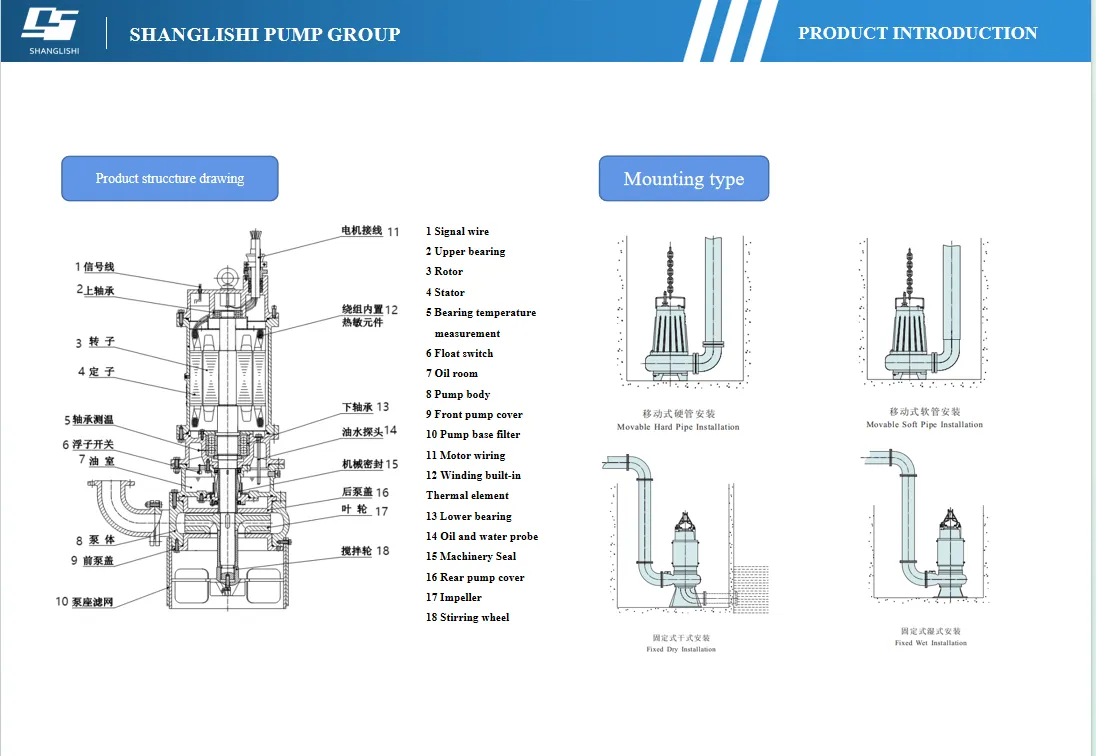
Working conditions
| Inlet / outlet diameter | 50–600 mm |
|---|---|
| Flow range | 15–4000 m³/h |
| Head range | 7–40 m |
| Speed | 720, 990, 1480 and 2960 r/min |
| Motor power | 0.75–315 kW |
| Temperature range | Medium temperature ≤ 40 °C; medium density ≤ 1200 kg/m³; pH 5–9 |
| Maximum working pressure | Inlet pressure + pumping pressure: 1.0 MPa(G) for Hsp ≤ 75 m, or 1.6 MPa(G) for Hsp > 75 m. Special configuration to 1.6 MPa(G) or 2.5 MPa(G) |
| Material | Cast iron, SS304, SS316 |
| Medium | Wastewater with solid particles and long fibres, sewage, rainwater |
| Structural design | Single-stage single-suction centrifugal pump, vertical mounting |
Model designation
Example: 50SWQ15-8-0.75
| 50 | Drain aperture in millimetres |
|---|---|
| SWQ | Submersible sewage pump |
| 15 | Capacity, m³/h |
| 8 | Head, m |
| 0.75 | Power of fitted motor, kW |
Non-Clogging Hydraulics
Clogging in sewage duty comes from two directions: solids that will not pass the flow channel, and fibre that wraps around the impeller. Both are addressed in the hydraulic design rather than by screening upstream.
- Impeller selection — single-vane, two-vane and three-vane impellers are available. Fewer vanes give the largest free passage for solids and fibre; more vanes give a smoother duty curve. The impeller is chosen against the actual medium rather than supplied as a single standard.
- Free passage sized to the solid — the pump is selected so that the flow channel accepts the largest solid expected in the well, up to 50 mm.
- Anti-winding form — the impeller and casing form is intended to pass long-fibre waste rather than collect it at the vane inlet.
- Casing developed by CAD/CAM — the casing profile is machined to the modelled form, keeping the flow path clean and wear even.
Protection Against Blockage Damage
A blockage that is not detected becomes a motor failure. Four independent devices monitor for it:
- Three thermal switches in series embedded in the stator winding, normally open at ambient and opening when stator temperature reaches 125 °C.
- An oil-chamber leakage probe that raises an alarm and cuts power when the oil-water ratio in the chamber reaches the set concentration.
- A float switch in the motor cavity that signals motor-side seal leakage.
- Bearing temperature monitoring.
Sealing Arrangement
Two mechanical seals run in series and work independently, isolating the motor from the pumped medium with two barriers rather than one. The pump-side seal uses tungsten carbide against tungsten carbide; the motor-side seal uses graphite against silicon carbide. Oil in the chamber between them lubricates and cools both faces and prevents liquid reaching the motor. A volume of air is retained in the chamber to limit pressure rise.
Typical Applications
- Municipal wastewater collection and sewage treatment works.
- Industrial effluent carrying solids and fibre.
- Building, ditch, dam, tunnel and land drainage.
- Raw water, mixed water and mud water transfer.
- Sewage sediment handling, recirculation duty and screenings transfer.
- Open-pit mine water level control.
Selection
Give us the largest solid size and the fibre content in the well, the flow and head required, the medium temperature and the available power supply. We will confirm the impeller form, the model and the installation arrangement.
Send Your Enquiry
| Series | SWQ submersible sewage pump |
|---|---|
| Maximum solid size | 50 mm diameter |
| Flow | To 4000 m³/h |
| Medium temperature | Up to 40 °C |
| Motor insulation | Class F, maximum working temperature 155 °C |
| Motor enclosure | IPX8 |
| Bearings | SKF or NTN |
| Mechanical seal | Two seals in series, working independently. Pump side tungsten carbide / tungsten carbide; motor side graphite / silicon carbide |
| Impeller options | Single-vane, two-vane or three-vane, selected against the duty |
| Stator thermal protection | Three thermal switches in series embedded in the stator, normally open, opening at 125 °C stator temperature |
| Leak detection | Oil-chamber leakage probe with alarm and automatic shutdown; cable-gland leakage probe fitted in the motor terminal box from 30 kW upward |
| Installation | Five arrangements: automatic coupling, mobile hard pipe, mobile hose, fixed dry, fixed wet |
Which impeller form should be specified?
Single-vane gives the largest free passage for solids and fibre; two- and three-vane forms give a smoother curve where the medium is less demanding. Describe the medium and we will confirm the form.
What is the largest solid the pump will pass?
50 mm diameter. The pump should be selected so the flow channel accepts the largest solid actually present in the well.
What happens if the pump does block?
Stator temperature is monitored by three thermal switches that open at 125 °C, and bearing temperature is monitored separately, so the unit stops before overheating damages the winding.
Can it handle greasy or sticky media?
Yes. The series is intended for dirty, sticky and greasy liquids as well as solids- and fibre-bearing sewage.
Manufacturer-direct supply · Technical pump-selection support · Export documentation on request.