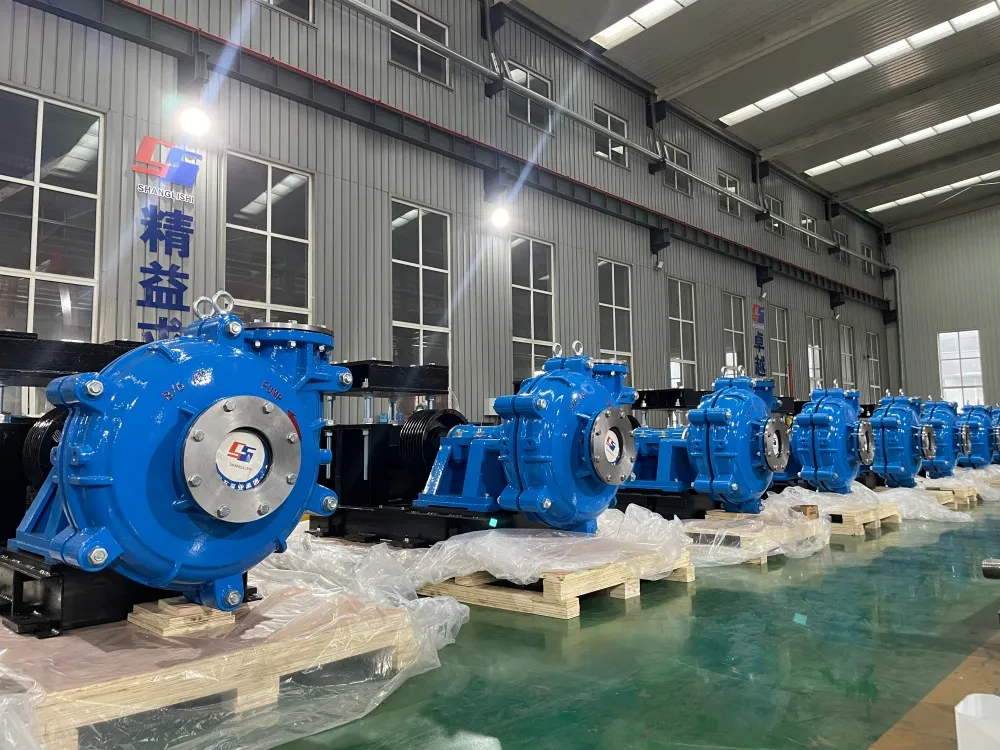
Rubber-Lined Horizontal Slurry Pumps — Elastomer Wet Ends
Elastomer wet ends for fine, rounded, high-concentration slurry, and where corrosion resistance must not depend on a passive layer.
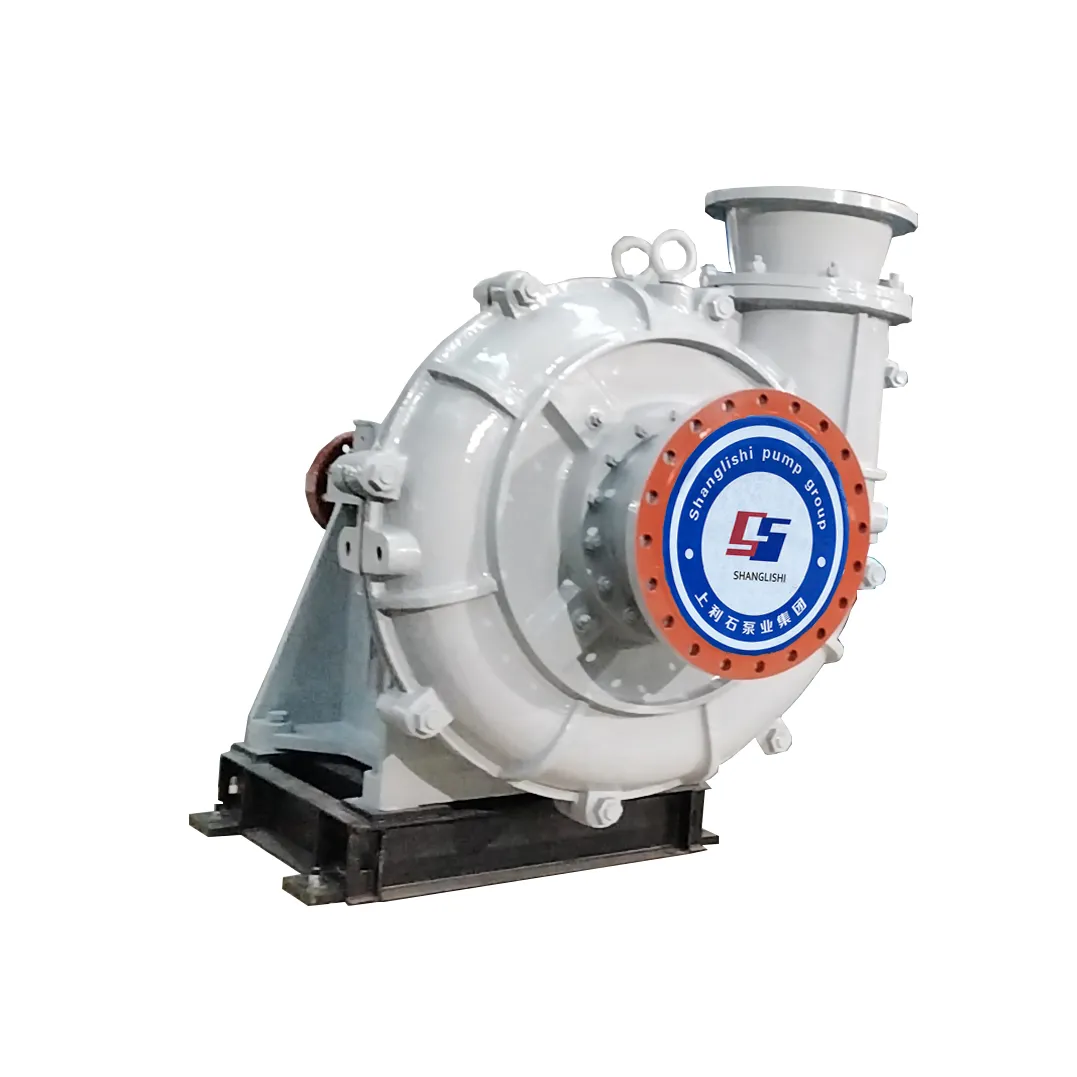
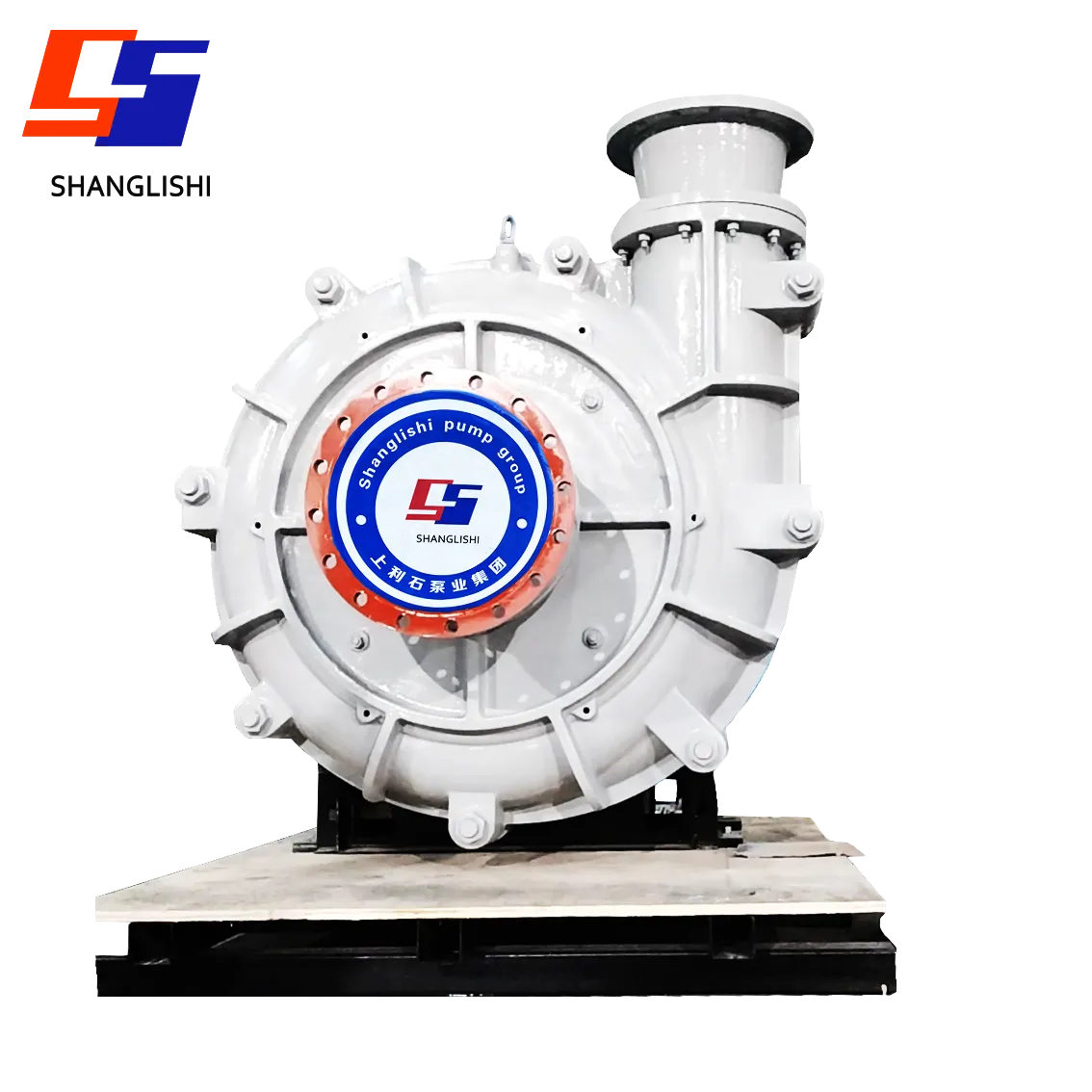
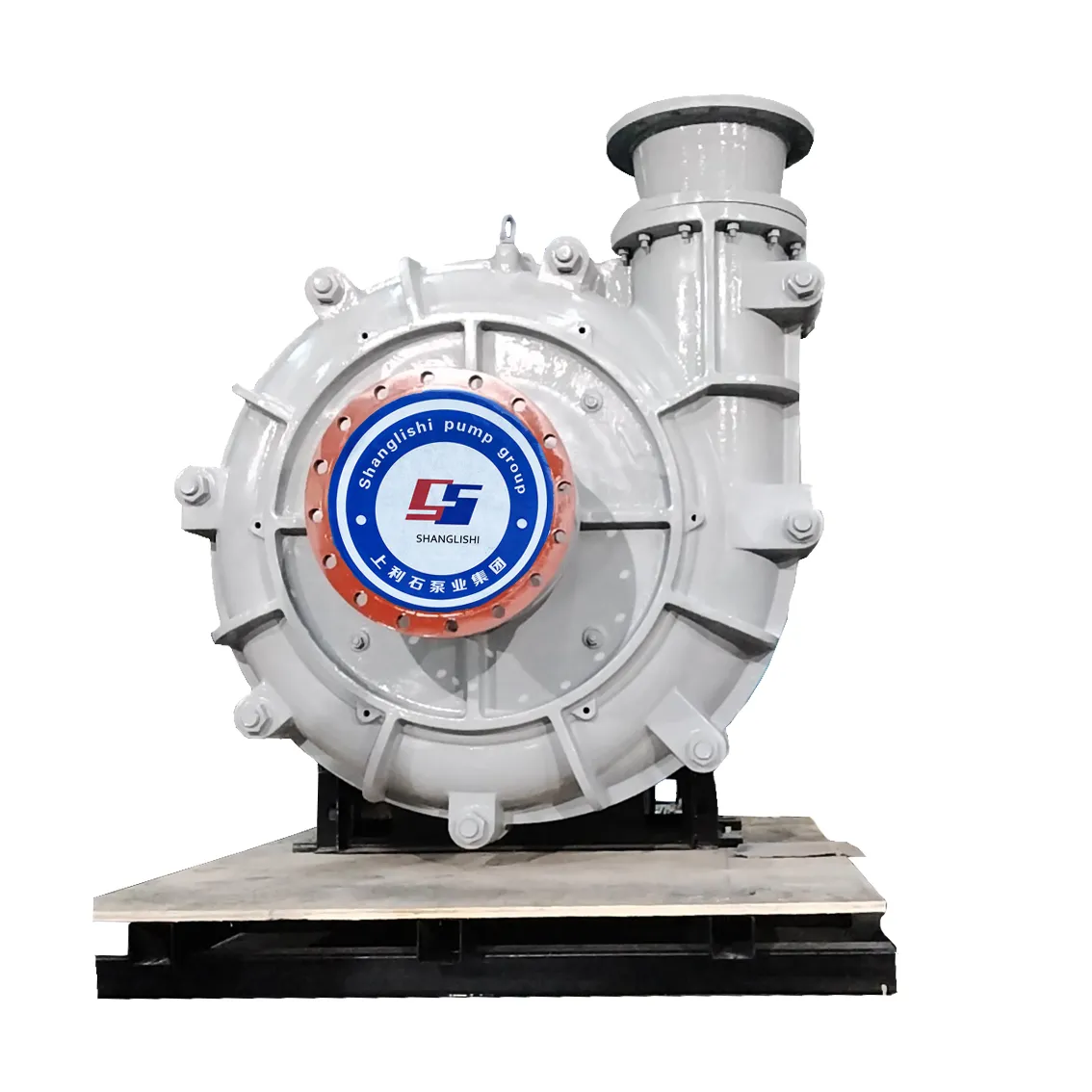
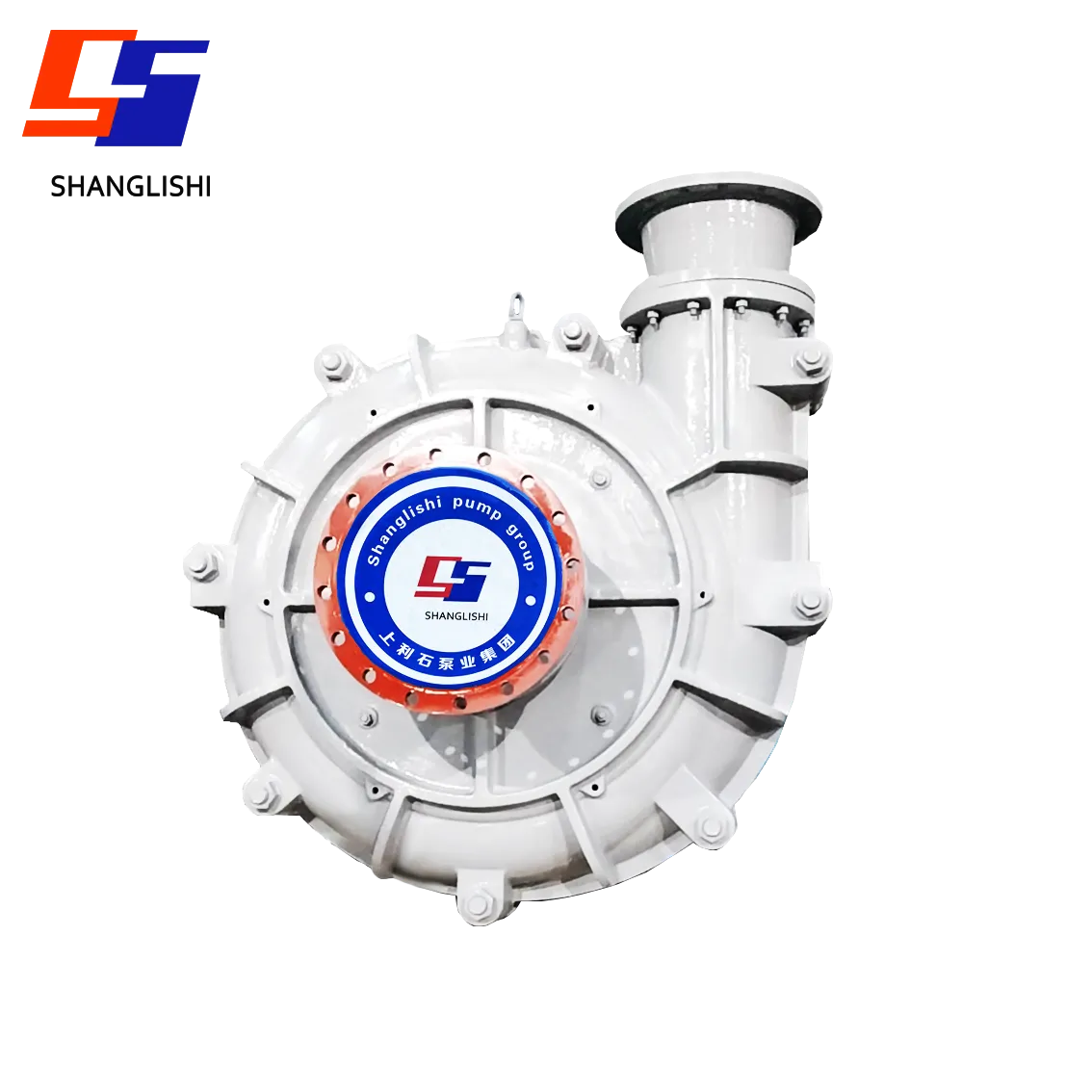
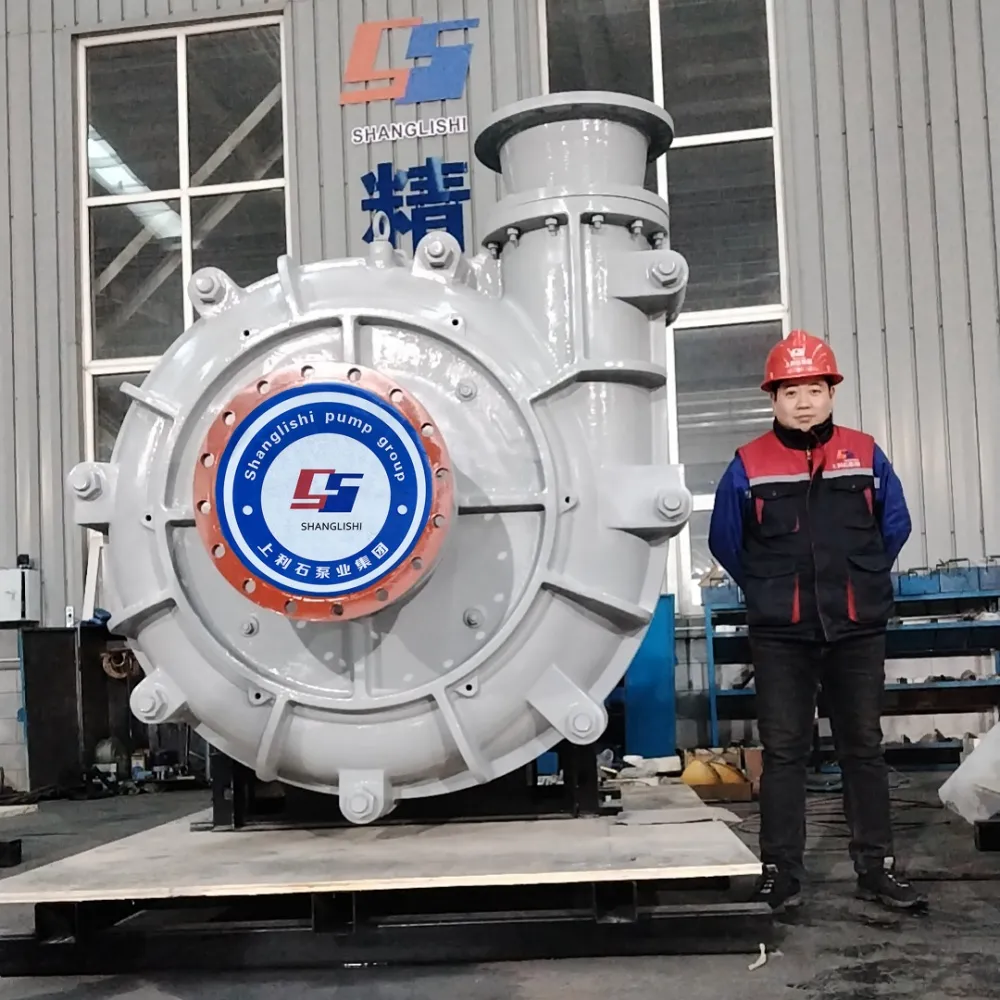
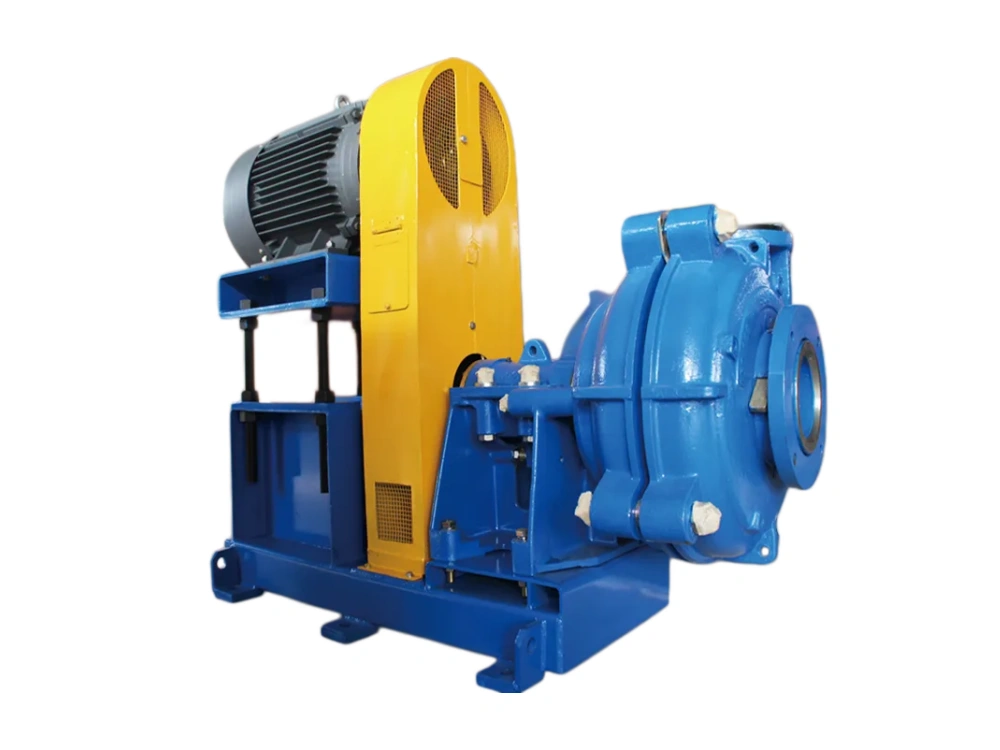
Rubber-lined horizontal slurry pump — same double-casing construction as the metal build, with elastomer wear elements. Correct for fine, high-concentration abrasive slurry; wrong for coarse angular solids.
- Rubber impeller, suction liner, frame plate liner, cover plate liner, volute liner
- Body, cover, bracket, bearing assembly and mounting common with metal builds
- Installation envelope identical — convert without touching baseplate, drive or pipework
- Particle shape decides the choice, not particle hardness
- Polyurethane liner sets available for sliding-wear duty
- All three shaft seals available: expeller, packing, mechanical
CE · EAC · ISO 9001 · ISO 14001 · ISO 45001
Overview
A rubber-lined horizontal slurry pump uses the same double-casing construction as the metal-lined build, with elastomer wear elements in place of high-chrome ones. It is the correct selection for fine, high-concentration abrasive slurry, and the wrong one for coarse angular solids — elastomer resists wear by deflecting particles, and a particle large or sharp enough to cut instead of bounce removes that advantage.
Construction
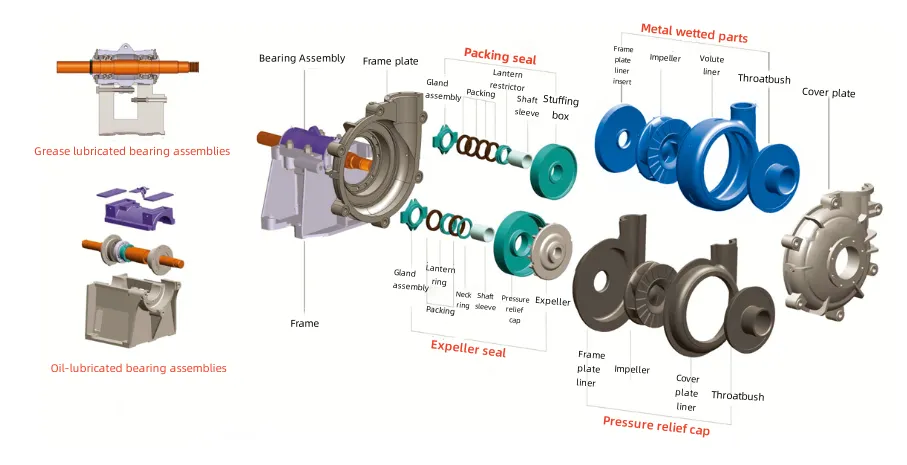
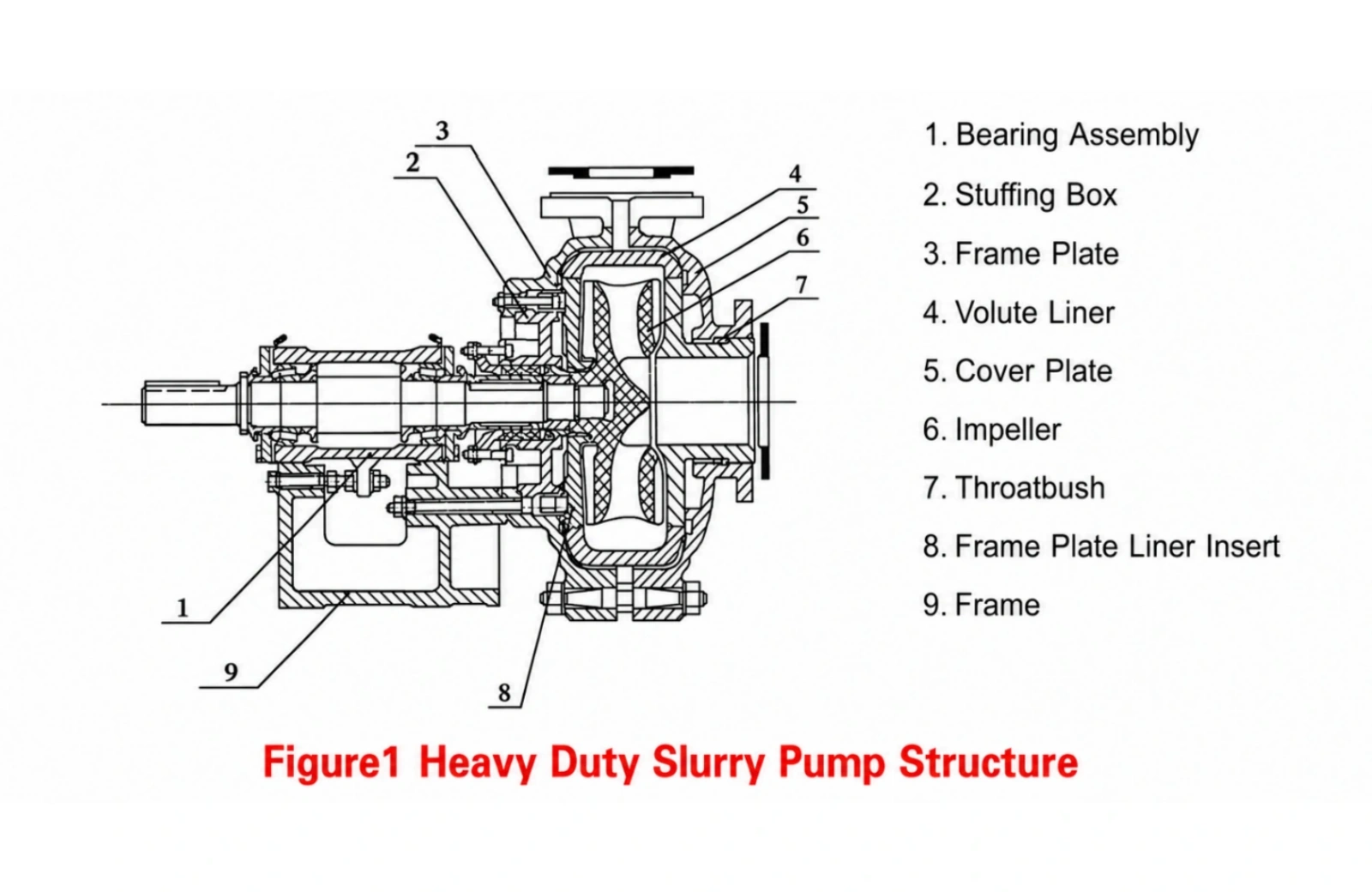
Pump body and cover are cast in grey iron or ductile iron according to working pressure, split vertically and bolted, with the body bolted to the bracket against a stop. Inside, the replaceable wear elements are elastomer: rubber impeller, rubber suction liner (front), rubber frame plate liner (rear), rubber cover plate liner and rubber volute liner. The expeller and expeller ring are fitted where a dynamic shaft seal is used.
Body and cover are common with the heavy-duty and light-duty metal-lined pumps, and the transmission parts, bracket, bearing assembly and mounting form are identical. The installation envelope is therefore the same, and an existing pump can be converted between metal and rubber wet ends without touching the baseplate, drive or pipework.
Where Rubber Outlasts Metal
- Fine particles at high concentration — the service the lining is designed for.
- Rounded rather than angular solids — particle shape decides, not particle hardness.
- Corrosive slurry — the liners resist corrosion as well as wear.
- Noise-sensitive installations — an elastomer wet end runs quieter on the same duty.
Where Metal Is the Correct Choice
- Coarse solids, sharp or angular particles, anything approaching gravel size.
- High-impact duty — A05 high-chrome white iron (≥HRC62, tensile ≥700 MPa).
- Temperature beyond the elastomer limit.
- Variable or unknown particle size distribution, where metal is the safer default.
Polyurethane Alternative
Polyurethane liner sets are available in the same envelope for fine abrasive slurry in sliding-wear duty, sitting between rubber and metal in character.
Shaft Sealing
All three sealing arrangements are available: expeller seal, where inlet positive pressure does not exceed 10 % of discharge pressure and no gland water is needed; packing seal, which requires shaft seal water at a rate set by frame size; and mechanical seal, the most stable over long running cycles.
Selection
Send the particle size distribution and shape, the solids concentration, the medium pH and temperature, and the flow and head required. Where a metal wet end is wearing quickly on fine slurry, describe the wear pattern — that is usually where a change to rubber is worth quoting.
Is rubber lining a lower-cost substitute for metal?
No. It is a different wear mechanism. On fine high-concentration slurry with rounded particles it outlasts metal; on coarse or angular solids metal is correct.
Can an existing metal pump be converted?
Yes. Body, cover, transmission parts, bracket and mounting form are common. Only the wet-end elements change.
Which elements are rubber in this build?
Impeller, suction liner, frame plate liner, cover plate liner and volute liner.
Does the envelope change?
No. It matches the metal-lined pump of the same size, so pipework and baseplate are unaffected.
Manufacturer-direct supply · Technical pump-selection support · Export documentation on request.