
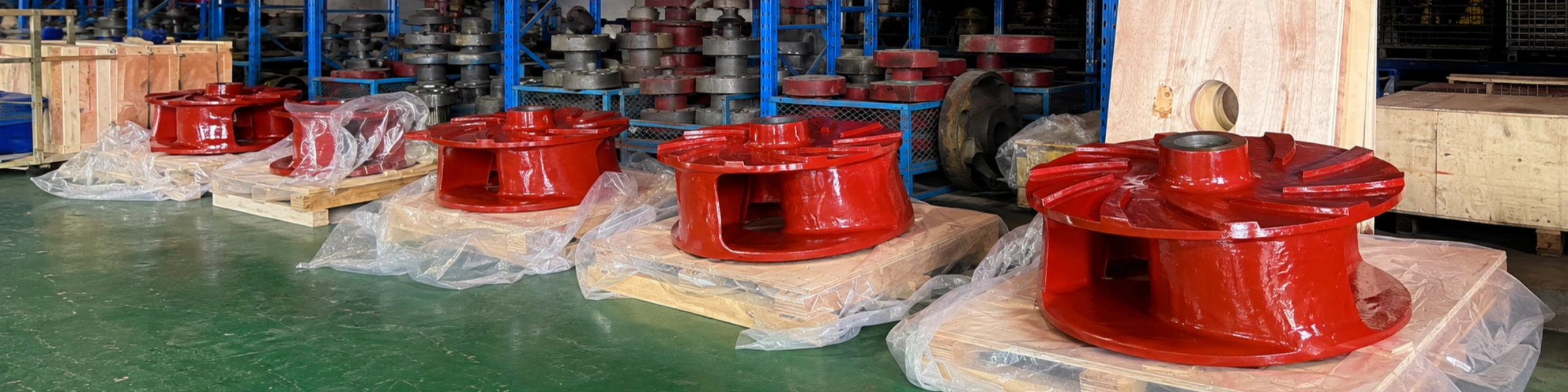
What Drives Wear Life in Abrasive Duty
Clearance, vane count and how close the pump runs to its selection point often matter more to wear-part life than the hardness figures on a grade table.
Material is one factor. Clearance, speed and how close the pump runs to its selection point often matter more to wear-part life than the hardness figures on a grade table.
Overview
Buyers often treat wear life as a question of liner material. Material matters — but on a pump that is actually running, three things usually decide wear life before material does: the running clearance, the running speed, and whether the pump is working near its selection point.
This is how those three behave, and how to tell a worn pump from a blocked one.
Clearance — the performance you can get back
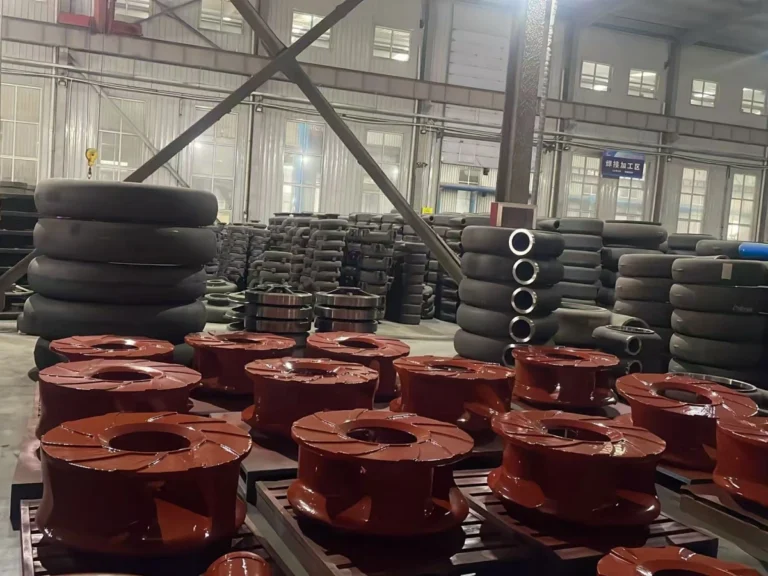
As wear opens the gap between the impeller and the front liner, efficiency falls and the duty point moves. The pump still turns; it just delivers less.
The useful part is that much of that loss can be recovered without new parts. The impeller is designed to be adjusted forward in service to restore the running clearance. Reset the clearance to 0.5–1 mm at scheduled maintenance and most of the loss comes back.
Available axial adjustment depends on frame size — from about 0.05–0.15 mm on the smallest frames to 0.5–0.6 mm on the largest.
Always adjust with the drive isolated.
Vane count follows the medium, not the flow
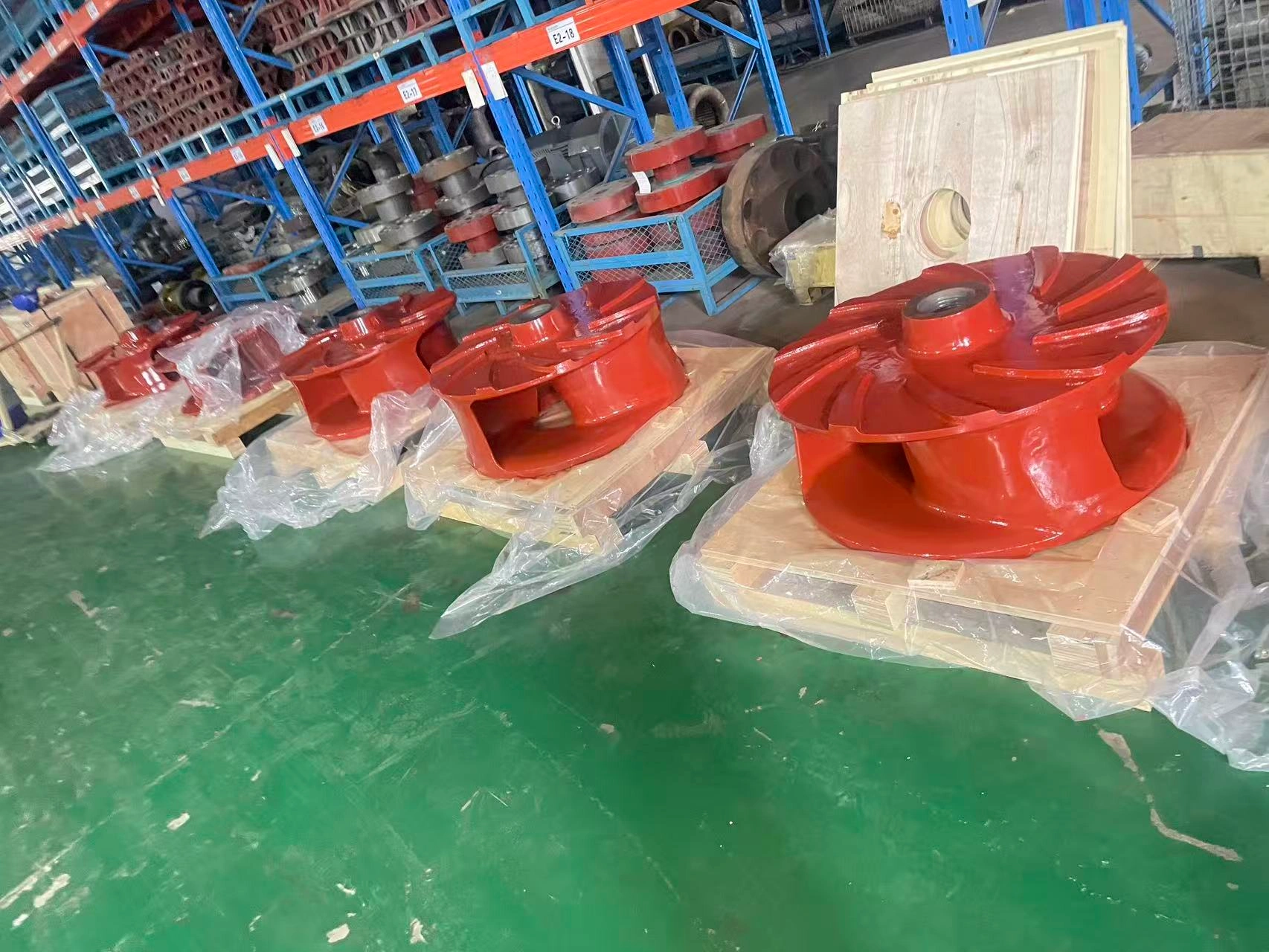
Vane count is selected against what is in the slurry:
- Fewer vanes give the largest free passage — coarse solids and fibre
- More vanes give a smaller passage but smoother hydraulics
That is a trade between blockage risk and running smoothness, not an efficiency trade.
The impeller sits inside a double casing as a replaceable wear element, so it is renewed without disturbing the pressure-containing body or the drive train.
Back vanes reduce recirculation
Back vanes on both shrouds cut recirculation across the shroud faces. That lowers leakage loss and extends wear life — in slurry duty the second effect is worth more than the small efficiency gain.
Reading the symptoms — worn, blocked or unbalanced
| What you see | What it usually means |
|---|---|
| Sudden change with rising temperature | Blockage |
| Gradual fall in duty point at unchanged speed | Wear |
| Vibration above 7.1 mm/s | Imbalance, usually from uneven wear |
An unbalanced impeller needs rebalancing or replacement. Running on passes the damage to the bearings and the shaft seal.
What wears first, and what that tells you
In a correctly selected pump the throatbush wears first — velocity is highest at the inlet.
If the impeller or volute wears ahead of it, the pump is usually running away from its best efficiency point: throttled, oversped, or oversized for the duty. A harder material postpones the symptom without removing the cause.
When you order a replacement impeller
Tell us the pump model, the current impeller diameter, the material now fitted, and why it is being replaced — even wear, impact damage, corrosion, or a change of duty.
Where the duty has changed, a different diameter or material may be a better answer than a like-for-like replacement. Dimensional data for matching existing installations is available on request.
Can efficiency be recovered without new parts?
Often, yes. Performance falls as the impeller-to-liner clearance opens with wear. Adjusting the impeller forward to restore 0.5–1 mm clearance recovers much of the loss.
How do I know the impeller is worn rather than blocked?
A blockage usually appears as a sudden change with rising temperature. Wear appears as a gradual fall in duty point at unchanged speed. Vibration above 7.1 mm/s points to imbalance instead.
Why do back vanes matter?
They reduce recirculation across the shroud faces. That lowers leakage loss and extends wear life, which in slurry duty matters more than the small efficiency gain.
Manufacturer-direct supply · Technical pump-selection support · Export documentation on request.