Double Suction Pump for High-Flow Irrigation
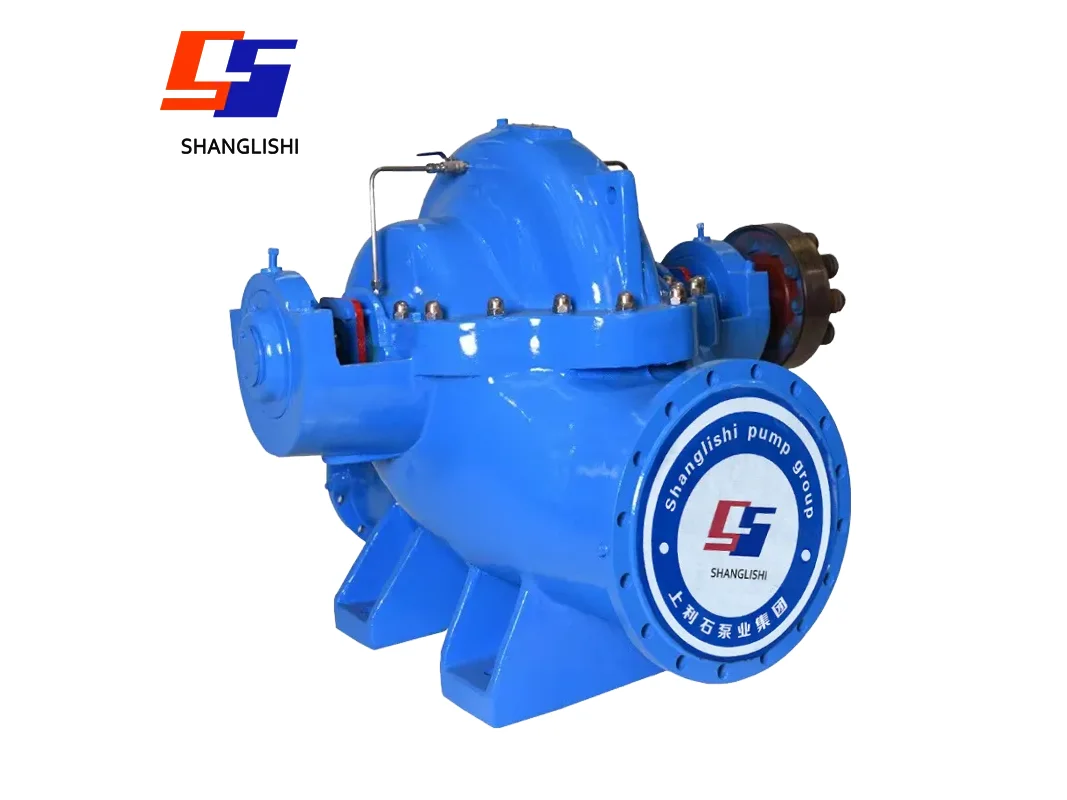
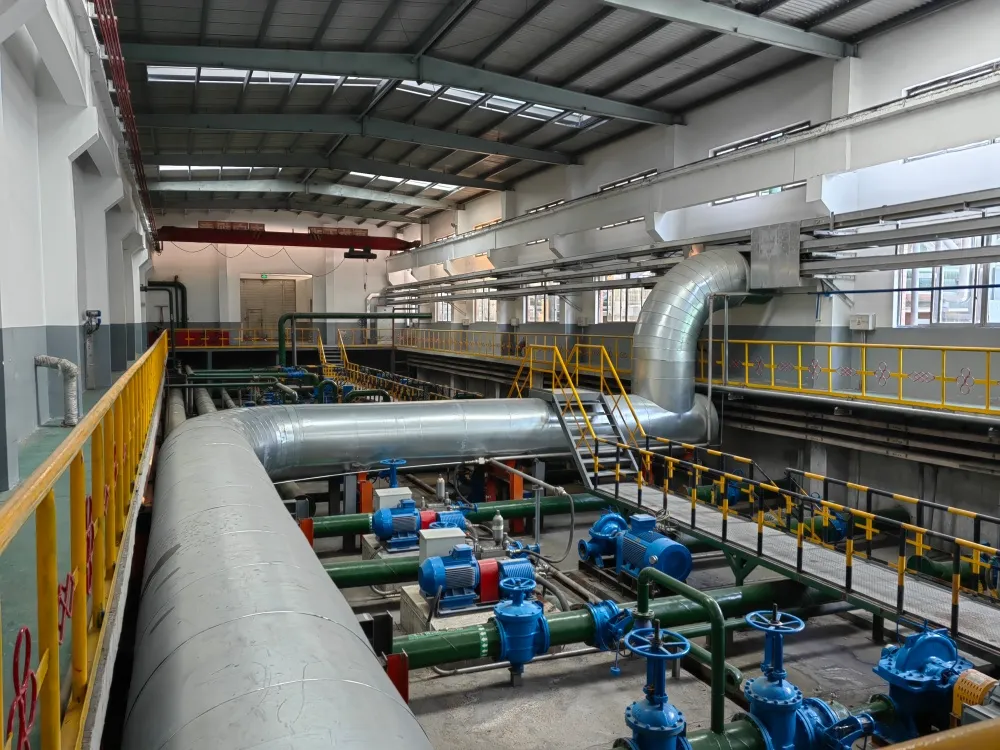
Large-scale irrigation and flood control move very high flows of clear/river water; a double-suction split-case pump delivers the flow with balanced thrust and easy servicing.
Large-scale irrigation and flood control — very high flows of river or canal water at low to moderate head, often seasonal, often unattended for long periods.
- SOM double-suction pump, flow to 23,500 m³/h
- Connections 150–1600 mm; power 15–2500 kW
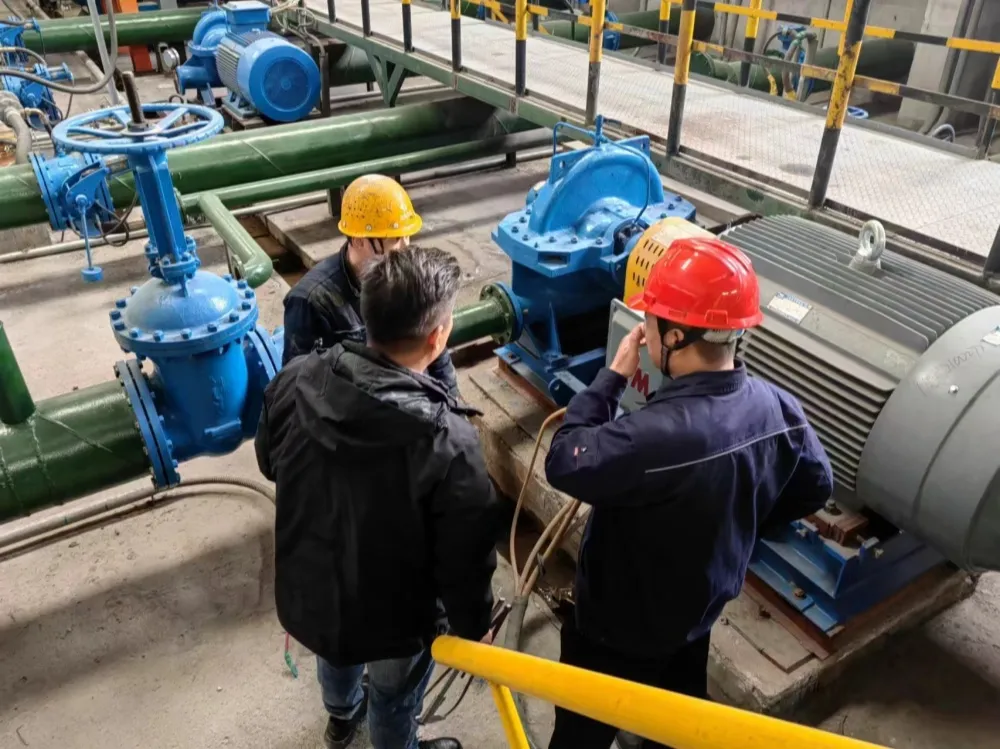
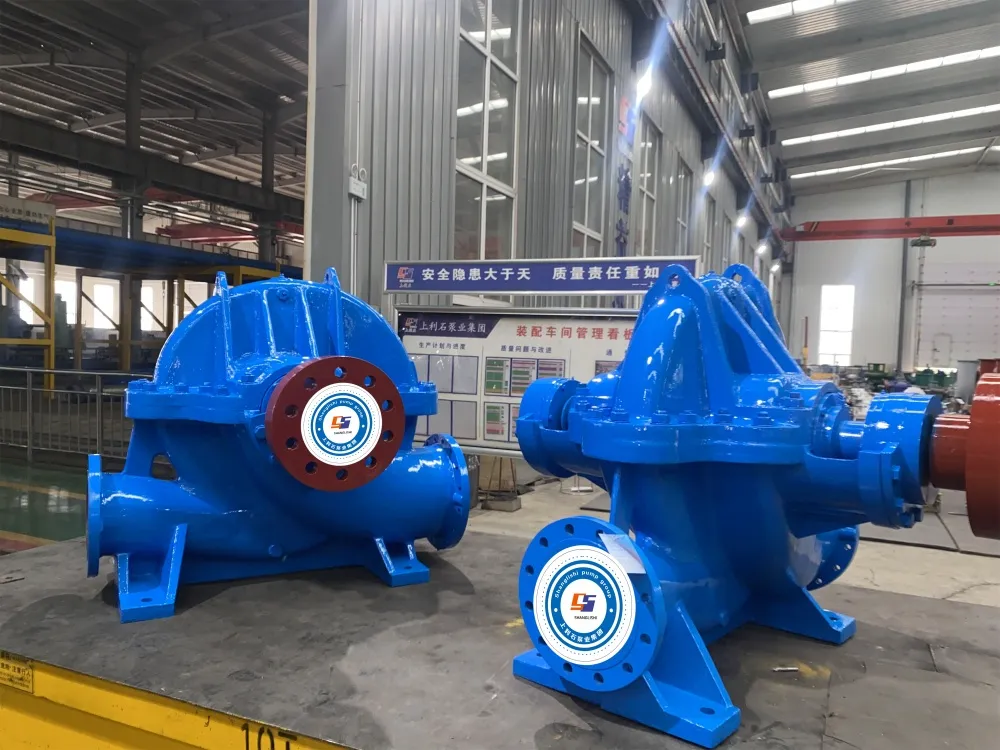
- Split casing — rotor removed without disturbing pipework
- Cast iron standard; stainless steel where the water is aggressive
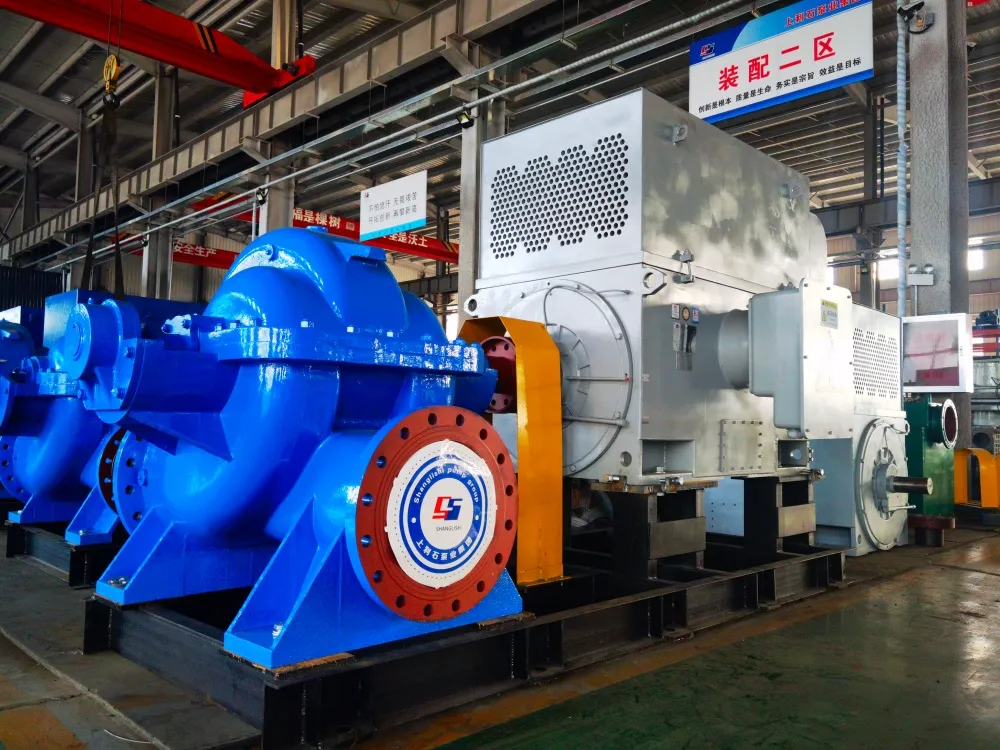
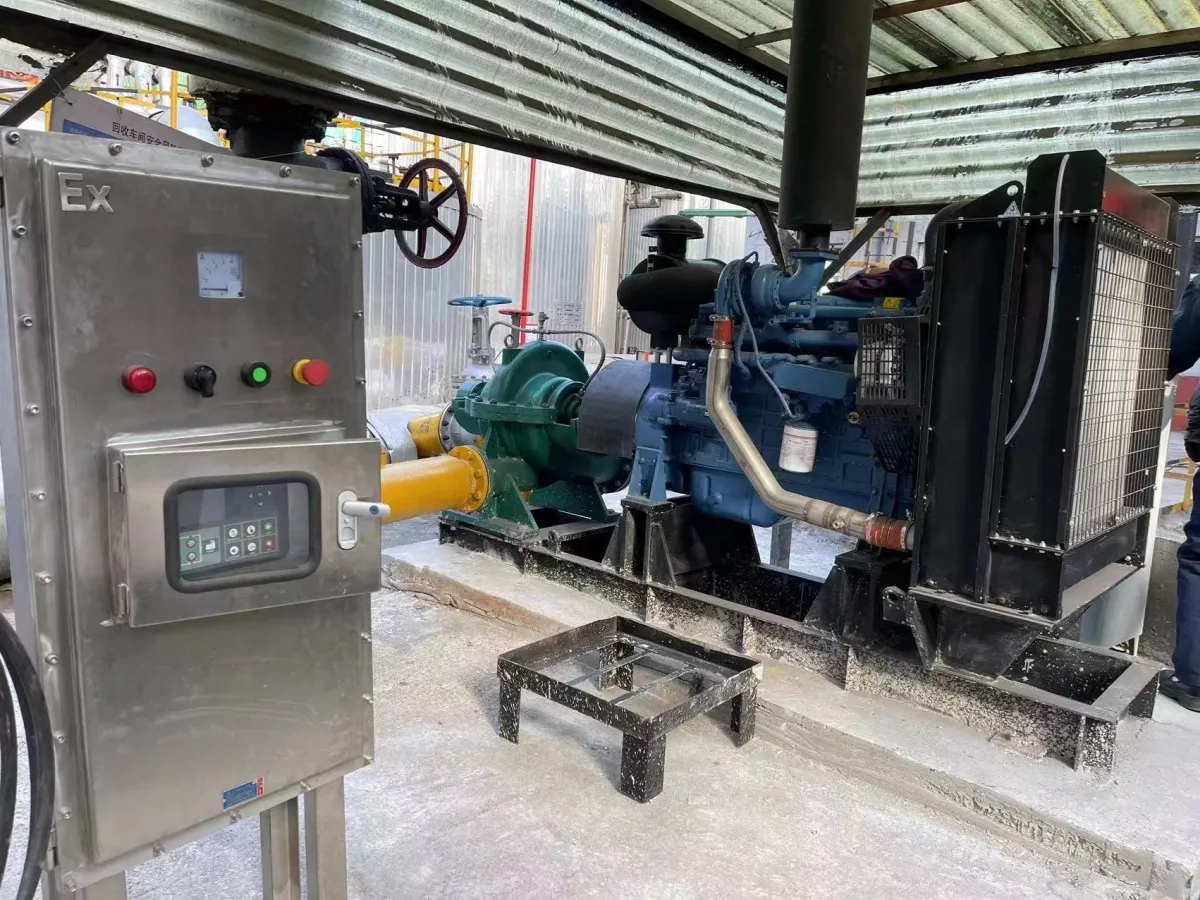
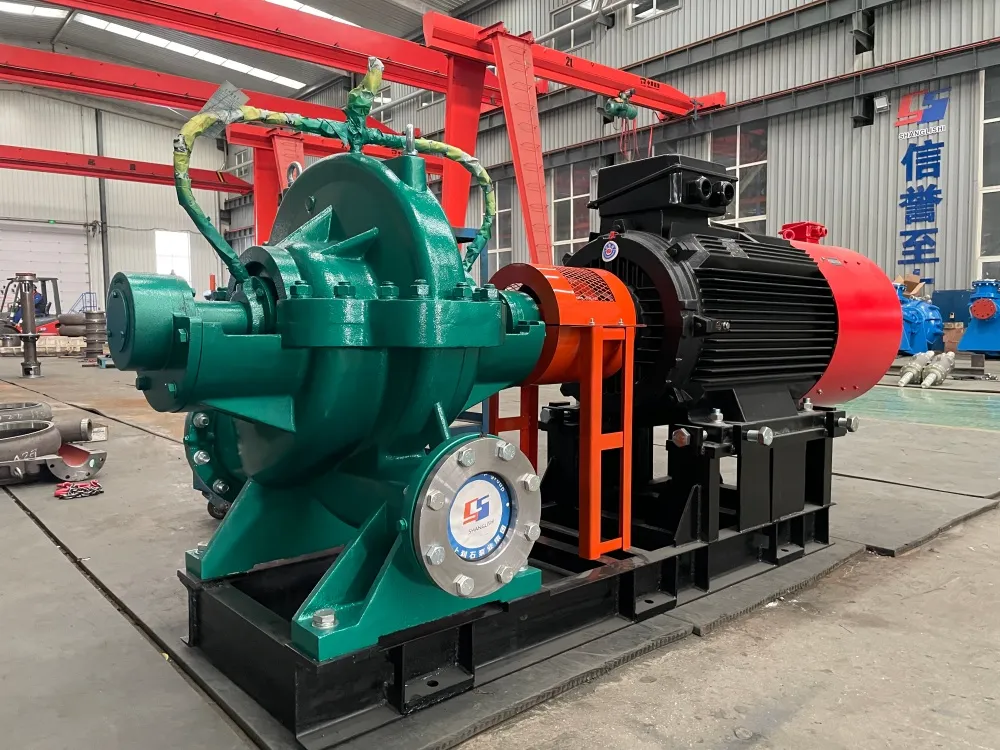
- Driver can be an electric motor or an internal combustion engine
- Seasonal duty — specify storage and restart requirements
CE · EAC · ISO 9001 · ISO 14001 · ISO 45001
What This Duty Demands
Irrigation and flood duty differ from process pumping in three ways. The flows are very large and the head is low, which pushes the selection toward big slow-running impellers. The water is river or canal water, so it carries silt and occasional debris even when it is nominally clean. And the duty is seasonal — the pump may stand idle for months and then be expected to start reliably.
- Canal and field irrigation — highest volumes, lowest head, long seasonal runs.
- Flood control and drainage — intermittent but must start on demand.
- Reservoir transfer — steady duty, moderate head.
- Land reclamation supply — water with higher suspended solids.
Recommended Pump & Material
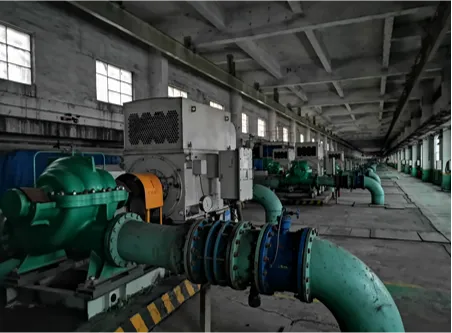
The SOM double-suction pump covers this range at 74–23,500 m³/h. For irrigation the important characteristics are the flat efficiency curve across a wide flow band, and the split casing that allows the rotor to be inspected between seasons without disturbing the pipework.
Where the site has no electricity supply, the driver can be an internal combustion engine rather than a motor, mounted on either side of the pump as the layout requires. Where the water carries appreciable silt, specify the material accordingly at enquiry rather than assuming clear-water duty.
Key Selection Parameters
| Flow and static lift | Design point and the seasonal range |
|---|---|
| Water source | Canal, river or reservoir; silt loading differs greatly |
| Suspended solids | Even nominally clean river water carries silt |
| Driver available | Electric motor or internal combustion engine |
| Seasonal pattern | Months of idle standing affect storage and restart requirements |
| Suction arrangement | Flooded suction or suction lift, and available NPSH |
| Pipework and baseplate | If replacing an existing unit, send the existing details |
What to Send Us
Send the flow and static lift, the water source and its silt loading, the driver available, the seasonal duty pattern and the suction arrangement. We will confirm the model and the material, and issue the performance curve with the quotation.
On Site
Send Your Enquiry
Can the pump be engine-driven?
Yes. The driver can be an electric motor or an internal combustion engine, and can be set to the left or right of the pump as the layout requires.
What if the water carries silt?
Specify it at enquiry. River and canal water carries silt even when nominally clean, and the material selection should reflect that rather than assume clear-water duty.
What is the maximum flow available?
23,500 m³/h across the series, with power to 2500 kW and connections to 1600 mm.
How is the pump inspected between seasons?
The casing splits along the shaft axis, so the rotating assembly lifts out without disturbing the suction and discharge pipework.
Manufacturer-direct supply · Technical pump-selection support · Export documentation on request.